
Silent, Serene and Slow: The New Luxury is Slow Living as India’s Elite Reclaim Time Through High-End Real Estate
Silent, Serene and Slow: The New Luxury is Slow Living as India’s Elite Reclaim Time Through High-End Real Estate
From the quiet Himalayan ridges to the languid coasts of Goa and Alibaug, slow living has become the quietest, and perhaps most coveted, form of luxury.
Prashanti Moktan
- Nov 7, 2025,
- Updated Nov 7, 2025 7:07 PM IST
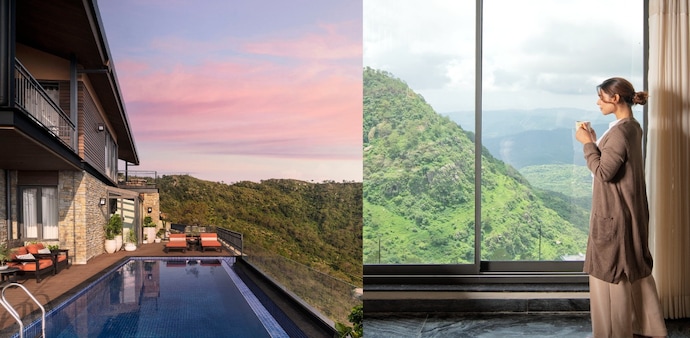
Wake up to the hum of birds, breathe in air so crisp it quiets the mind, and watch the rolling hills blush under a sky painted in shifting hues. Or leave a trail of footprints on sun-warmed sand, slip into the water as the horizon dissolves where sea meets sky, and let night fall to the buzz of cicadas or the rhythmic pulse of waves. For a growing number of India’s wealthy, the new symbol of success is time as they measure the days not in meetings, but in moments. From the quiet Himalayan ridges to the languid coasts of Goa and Alibaug, slow living has become the quietest, and perhaps most coveted, form of luxury.
Advertisement
Once defined by marble floors and skyline views, high-end real estate is being reimagined around stillness, sustainability, and design that dissolves into nature. A generation of HNIs and UHNIs, people who have built, sold, and travelled enough, are seeking homes that give them back what their success took away: calm.
In the Lap of the Himalayas
“Luxury in the metros has always meant space, design, and access,” says Amar Kapoor, CEO of Terra Grande by Eldeco, a new 30-acre luxury project tucked into the pine-draped slopes of Sirmaur, Himachal Pradesh. He highlights how in places like this, it’s about disconnection, being able to unwind, admire nature, and rediscover the slowness city life has taken away.
This project, Eldeco’s first foray into ultra-luxury, grew out of the pandemic years, when confinement turned introspection into aspiration. As everyone wanted space to breathe, the vision for the real estate firm was to build a community of like-minded people who can come together and enjoy moments away from the hustle of city life. “We started looking for land where people could step outside and just admire everything around them… When we came across this particular land— it had scale, it had great views, it had great height,” says Kapoor.
Advertisement
At Terra Grande, designed by Studio Lotus, that vision materialised in estate villas built from Himalayan stone and reclaimed wood, their sloping roofs mirroring the mountain lines. The design blurs boundaries between indoors and outdoors; natural water pathways and existing trees were left undisturbed as much as possible, and even excavated stone was reused in façades and retaining walls. Kapoor believes it’s all about striking a fine balance. He adds, “Building in sync with nature was also very important — to respect nature while we were doing that."
The development follows a low-density model, which accommodates only three villas per acre with a private infinity pool, walking trails, reading lounges, sports courts, clubhouse and a wellness spa where residents can pause between their old lives and new rhythms. Beyond the homes themselves, Kapoor lays emphasis on how a comprehensive layer of services is provided so that owners never feel burdened by upkeep. This includes housekeeping, pool maintenance, horticulture, and optional property management.
Advertisement
Primarily, the buyers for Terra Grande are in their mid-40s to mid-50s, UHNIs and HNIs who have travelled extensively, achieved what they set out to, and are now seeking a place to disconnect and breathe.
Many are based in Delhi-NCR and Chandigarh, looking for a smooth, accessible drive to a second home. “We also have NRIs who plan to move back to India post-retirement,” adds Kapoor. Most of their buyers don’t need to be in office every day, so “remote living” and “work-from-home” are very much part of the lifestyle the slow living community supports.
With villas ranging from ₹7 crore to ₹10 crore in Phase I, Terra Grande has entered the market as a high-end wellness retreat with business fundamentals to match its aesthetic promise. Eldeco has earmarked ₹300 crore for the project, including ₹120–150 crore invested in Phase I, and is projecting a topline of ₹650 crore. The scale underscores both the financial ambition and the market confidence behind Eldeco’s slow-living bet.
For buyers, the appeal is not only aesthetic but philosophical. “Terra Grande is not a financial instrument,” says Kapoor boldly. He adds with a smile, “It doesn’t appreciate in dollars… It appreciates in well-being.”
Advertisement
Slow-Living by the Sea
If Himachal offers altitude, Goa and Alibaug offer the horizon and Isprava Group has captured that mood effectively. Founded by brothers Nibhrant Shah and Dhimaan Shah in 2016, for the luxury real estate developer, the meaning of luxury is undergoing a decisive shift. As Nibhrant Shah, MD & Co-CEO of Isprava, explains, “Luxury today is shifting from conspicuous consumption to slow living, from possessions to experiences that last a lifetime.” For their clientele in Goa and Alibaug, luxury is no longer about status-led ownership but about time, privacy and calm. Shah adds that “discerning buyers increasingly prize craftsmanship, longevity and neighbourhoods of like-minded people that allow them to embrace slow living”.
This reflects a larger mindset change among India’s wealthiest families. “Over the last several years we’ve seen clients mindfully choose well-curated experiences, beautifully made villas, homes that prioritise privacy, gardens, neighbourhoods and second homes that function as true retreats rather than status trophies,” says Shah. He adds how conversations now centre on how a place makes you feel on an ordinary Tuesday morning, not just how it photographs. In Goa and Alibaug, Isprava translates these values into design. Shah describes how they design with intentional pauses and sequences like the entrance patios, shaded verandahs, semi-covered terraces and green pockets that choreograph movement and stillness. Their masterplans avoid density; instead, “small clusters of homes” create communities where solitude and connection coexist naturally. Inside the villas, private garden rooms, cross-ventilated living spaces framed by arches and wide openings, and material palettes (laterite, timber, rattan, patterned tiles) that age gracefully and invite barefoot, tactile living embody the philosophy of slow living. Ecology and local context are integral. As Shah puts it, “Ecological sensitivity is non-negotiable.” Their approach begins with orienting structures to reduce artificial cooling, preserving mature trees, and protecting natural water flows. In Goa and Alibaug, this has meant retaining native vegetation, using local laterite and reclaimed timber and designing rainwater harvesting and effective drainage to handle monsoon run-off. Shah notes, “At several of our Goa projects we used locally sourced stone and reclaimed wood for cladding.”
Advertisement
While Isprava’s core buyer remains a discerning urban family or professional who values privacy and design, the demographic is broadening. “Over the last few years we’ve definitely seen younger buyers enter the market—founders, creatives and tech executives who prioritise wellbeing, work-life integration and experiential value,” says Shah. These buyers appreciate homes that combine craftsmanship, functionality and a turnkey lifestyle.New Hubs of Quiet Luxury This quiet recalibration of desire is reshaping the country’s luxury map. According to data from leading property consultancies, inquiries for second homes in non-urban destinations, such as Goa, the Nilgiris, Alibaug, Coorg, and Himachal, have risen steadily since 2021. The profile of the buyer is consistent: mid-40s to early-50s, globally travelled, professionally accomplished, digitally untethered.
Kapoor highlights that India has many potential slow-living pockets but the criteria must be right: a good drivable distance (4–6 hours), proximity to an airport, availability of basic infrastructure like hospitals and shops, and natural beauty. Terra Grande is already working on a project in Rishikesh of river-facing homes with an even steeper price tag that starts at Rs 15 crore and can go up to Rs 25 crore.
Advertisement
In a similar vein, Shah talks about how these emerging hubs attract UHNI buyers seeking design-led second homes with curated services, including security, concierge and maintenance through Isprava’s hospitality arm.
What unites these ventures is a recognition that the true scarcity for the affluent isn’t money or access, it’s the quietude. As India’s cities grow louder and faster, its wealthiest citizens are buying time by the acre: homes where Wi-Fi meets wilderness, and where the reward for success is the luxury of slowing down.
Wake up to the hum of birds, breathe in air so crisp it quiets the mind, and watch the rolling hills blush under a sky painted in shifting hues. Or leave a trail of footprints on sun-warmed sand, slip into the water as the horizon dissolves where sea meets sky, and let night fall to the buzz of cicadas or the rhythmic pulse of waves. For a growing number of India’s wealthy, the new symbol of success is time as they measure the days not in meetings, but in moments. From the quiet Himalayan ridges to the languid coasts of Goa and Alibaug, slow living has become the quietest, and perhaps most coveted, form of luxury.
Advertisement
Once defined by marble floors and skyline views, high-end real estate is being reimagined around stillness, sustainability, and design that dissolves into nature. A generation of HNIs and UHNIs, people who have built, sold, and travelled enough, are seeking homes that give them back what their success took away: calm.
In the Lap of the Himalayas
“Luxury in the metros has always meant space, design, and access,” says Amar Kapoor, CEO of Terra Grande by Eldeco, a new 30-acre luxury project tucked into the pine-draped slopes of Sirmaur, Himachal Pradesh. He highlights how in places like this, it’s about disconnection, being able to unwind, admire nature, and rediscover the slowness city life has taken away.
This project, Eldeco’s first foray into ultra-luxury, grew out of the pandemic years, when confinement turned introspection into aspiration. As everyone wanted space to breathe, the vision for the real estate firm was to build a community of like-minded people who can come together and enjoy moments away from the hustle of city life. “We started looking for land where people could step outside and just admire everything around them… When we came across this particular land— it had scale, it had great views, it had great height,” says Kapoor.
Advertisement
At Terra Grande, designed by Studio Lotus, that vision materialised in estate villas built from Himalayan stone and reclaimed wood, their sloping roofs mirroring the mountain lines. The design blurs boundaries between indoors and outdoors; natural water pathways and existing trees were left undisturbed as much as possible, and even excavated stone was reused in façades and retaining walls. Kapoor believes it’s all about striking a fine balance. He adds, “Building in sync with nature was also very important — to respect nature while we were doing that."
The development follows a low-density model, which accommodates only three villas per acre with a private infinity pool, walking trails, reading lounges, sports courts, clubhouse and a wellness spa where residents can pause between their old lives and new rhythms. Beyond the homes themselves, Kapoor lays emphasis on how a comprehensive layer of services is provided so that owners never feel burdened by upkeep. This includes housekeeping, pool maintenance, horticulture, and optional property management.
Advertisement
Primarily, the buyers for Terra Grande are in their mid-40s to mid-50s, UHNIs and HNIs who have travelled extensively, achieved what they set out to, and are now seeking a place to disconnect and breathe.
Many are based in Delhi-NCR and Chandigarh, looking for a smooth, accessible drive to a second home. “We also have NRIs who plan to move back to India post-retirement,” adds Kapoor. Most of their buyers don’t need to be in office every day, so “remote living” and “work-from-home” are very much part of the lifestyle the slow living community supports.
With villas ranging from ₹7 crore to ₹10 crore in Phase I, Terra Grande has entered the market as a high-end wellness retreat with business fundamentals to match its aesthetic promise. Eldeco has earmarked ₹300 crore for the project, including ₹120–150 crore invested in Phase I, and is projecting a topline of ₹650 crore. The scale underscores both the financial ambition and the market confidence behind Eldeco’s slow-living bet.
For buyers, the appeal is not only aesthetic but philosophical. “Terra Grande is not a financial instrument,” says Kapoor boldly. He adds with a smile, “It doesn’t appreciate in dollars… It appreciates in well-being.”
Advertisement
Slow-Living by the Sea
If Himachal offers altitude, Goa and Alibaug offer the horizon and Isprava Group has captured that mood effectively. Founded by brothers Nibhrant Shah and Dhimaan Shah in 2016, for the luxury real estate developer, the meaning of luxury is undergoing a decisive shift. As Nibhrant Shah, MD & Co-CEO of Isprava, explains, “Luxury today is shifting from conspicuous consumption to slow living, from possessions to experiences that last a lifetime.” For their clientele in Goa and Alibaug, luxury is no longer about status-led ownership but about time, privacy and calm. Shah adds that “discerning buyers increasingly prize craftsmanship, longevity and neighbourhoods of like-minded people that allow them to embrace slow living”.
This reflects a larger mindset change among India’s wealthiest families. “Over the last several years we’ve seen clients mindfully choose well-curated experiences, beautifully made villas, homes that prioritise privacy, gardens, neighbourhoods and second homes that function as true retreats rather than status trophies,” says Shah. He adds how conversations now centre on how a place makes you feel on an ordinary Tuesday morning, not just how it photographs. In Goa and Alibaug, Isprava translates these values into design. Shah describes how they design with intentional pauses and sequences like the entrance patios, shaded verandahs, semi-covered terraces and green pockets that choreograph movement and stillness. Their masterplans avoid density; instead, “small clusters of homes” create communities where solitude and connection coexist naturally. Inside the villas, private garden rooms, cross-ventilated living spaces framed by arches and wide openings, and material palettes (laterite, timber, rattan, patterned tiles) that age gracefully and invite barefoot, tactile living embody the philosophy of slow living. Ecology and local context are integral. As Shah puts it, “Ecological sensitivity is non-negotiable.” Their approach begins with orienting structures to reduce artificial cooling, preserving mature trees, and protecting natural water flows. In Goa and Alibaug, this has meant retaining native vegetation, using local laterite and reclaimed timber and designing rainwater harvesting and effective drainage to handle monsoon run-off. Shah notes, “At several of our Goa projects we used locally sourced stone and reclaimed wood for cladding.”
Advertisement
While Isprava’s core buyer remains a discerning urban family or professional who values privacy and design, the demographic is broadening. “Over the last few years we’ve definitely seen younger buyers enter the market—founders, creatives and tech executives who prioritise wellbeing, work-life integration and experiential value,” says Shah. These buyers appreciate homes that combine craftsmanship, functionality and a turnkey lifestyle.New Hubs of Quiet Luxury This quiet recalibration of desire is reshaping the country’s luxury map. According to data from leading property consultancies, inquiries for second homes in non-urban destinations, such as Goa, the Nilgiris, Alibaug, Coorg, and Himachal, have risen steadily since 2021. The profile of the buyer is consistent: mid-40s to early-50s, globally travelled, professionally accomplished, digitally untethered.
Kapoor highlights that India has many potential slow-living pockets but the criteria must be right: a good drivable distance (4–6 hours), proximity to an airport, availability of basic infrastructure like hospitals and shops, and natural beauty. Terra Grande is already working on a project in Rishikesh of river-facing homes with an even steeper price tag that starts at Rs 15 crore and can go up to Rs 25 crore.
Advertisement
In a similar vein, Shah talks about how these emerging hubs attract UHNI buyers seeking design-led second homes with curated services, including security, concierge and maintenance through Isprava’s hospitality arm.
What unites these ventures is a recognition that the true scarcity for the affluent isn’t money or access, it’s the quietude. As India’s cities grow louder and faster, its wealthiest citizens are buying time by the acre: homes where Wi-Fi meets wilderness, and where the reward for success is the luxury of slowing down.
Read more!