
A case for self-reliance: Ashwani Mahajan, National Co-Convener, Swadeshi Jagran Manch and Former Professor, PGDAV College
A case for self-reliance: Ashwani Mahajan, National Co-Convener, Swadeshi Jagran Manch and Former Professor, PGDAV College
The degree of import dependence is not uniform across sectors, but in some areas, it has reached dangerous levels.
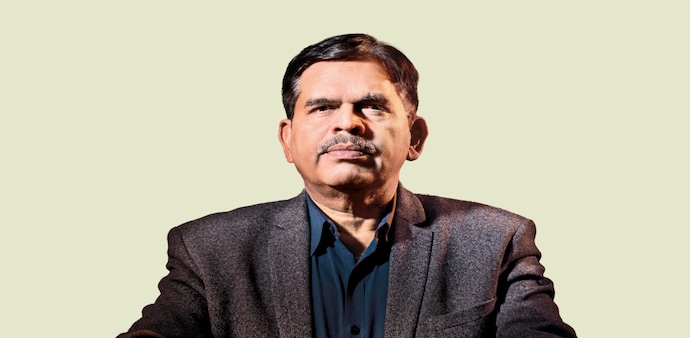
Ashwani Mahajan
- Jul 2, 2026,
- Updated Jul 2, 2026 11:40 AM IST
Since the war between the US-Israel alliance and Iran began three months ago, the rupee has witnessed a sharp decline, dipping past 96 to fresh all-time lows. While the pace of depreciation accelerated significantly during the war, FY26 had already proven hugely unfavourable for the Indian currency. Between April 1, 2025, and March 31, 2026, it depreciated 10.7%, and this has continued.
Advertisement
During the war, our foreign exchange reserves have also fallen by $47 billion to $681 billion in the week ended May 22. The major reasons for the decline in the rupee, apart from the war, have been a significant increase in imports and stagnating export growth, leading to an increase in the merchandise trade deficit by nearly $50 billion over the last year.
No doubt, imports kept rising faster than exports and the current account deficit (CAD) continued to cause depreciation of the rupee, but the average rate of depreciation was around 4% in the past three-and-a-half decades. Now, when net FDI has turned negative, concerns are being raised about the rupee’s stability.
The moot question is: can our nation afford a continuous and major depreciation of the rupee?
Advertisement
The continuing dependence on foreign countries for various products is creating yet another problem. The major players in the global value chains (GVCs) have started threatening our production system, weaponising GVCs. Recently, China refused to supply rare earth materials to India and the rest of the world. In the past few years, the shortage of semiconductors hit our industry very badly. Even in active pharmaceutical ingredients (APIs), in which our Chinese dependence grew manifold after 2004, India has started facing the heat in the form of high prices.
The nation had set a target of taking manufacturing’s share of GDP to 25%, but, in fact, from 17–18% of GDP in 1991, it has come down to 14%.
This has started impacting our employment and GDP growth. Therefore, unless we ensure self-reliance in manufacturing with regard to APIs, rare earth materials, semiconductors, organic and inorganic chemicals, machinery, electronics and telecom, our dependence on imports will not reduce. By ensuring self-reliance we can defeat the designs of China and some other countries aimed at ruining our domestic industry.
Advertisement
Self-Reliance
Though India is relatively self-reliant in many sectors, in many others, its import dependence is concerning. The degree of dependence is not uniform across sectors, but in some areas and products it has reached dangerous levels. We must understand that India’s dependence on foreign manufactured goods is not momentary, it’s a structural issue, rooted in its development strategy, industrial ecosystem, and global trade integration.
If we look at individual sectors like electronics and telecom, our import dependence is huge. If our overall merchandise trade deficit is $333 billion, electronics imports alone contributes $116 billion, growing 17.8% last year. In FY26, for the first time in our independent history, electronics have displaced petroleum products as the largest item in our import basket. If we add digital services outflow—including cloud, software, advertising, royalties, and AI services—of approximately $50 billion, roughly half of India’s entire merchandise trade deficit is now electronics and digital.
India today imports 80–90% of its semiconductors from China, Taiwan, and South Korea, though efforts are continuing towards building self-reliance in semiconductors. Of course, it is true that India has been exporting smartphones, but most of the components, including chips, displays and sensors come from abroad.
Advertisement
In solar modules and cells, 70–80% of our domestic requirements are fulfilled by imports. There has been a strong dependence on China for polysilicon, wafers and cells. Recently, efforts to increase domestic capacity have started bearing fruit, and it’s expected that India will soon be significantly self-reliant in solar.
Cut Foreign Dependence
Dependence on imports cannot be reduced with a business-as-usual approach. We must understand that there are many unethical practices being adopted by our foreign suppliers, which include dumping, supply of low-priced inferior and counterfeit commodities and adopting strategies that do not allow our industries to take off, so that India continues to serve as their market.
Though remedies are available, for reasons best known to the government, these are being avoided. For instance, in 2025, the Ministry of Commerce’s Directorate General of Trade Remedies (DGTR) recommended anti-dumping duties on 41 products, out of which duties were granted only on 24 products, meaning thereby a rejection rate of 41.5%.
Similarly, several Quality Control Orders (QCOs) were also introduced by the commerce ministry over the years to discourage low quality imports. Forty-nine of them were either withdrawn, suspended or deferred between last July and December.
Advertisement
In sectors where India has efficient production capacity, we can conveniently adopt measures to curb imports. This can help increase manufacturing in the country and save valuable foreign exchange, reduce balance of payment deficit, and thereby save the rupee from further depreciation.
Views are personal
Since the war between the US-Israel alliance and Iran began three months ago, the rupee has witnessed a sharp decline, dipping past 96 to fresh all-time lows. While the pace of depreciation accelerated significantly during the war, FY26 had already proven hugely unfavourable for the Indian currency. Between April 1, 2025, and March 31, 2026, it depreciated 10.7%, and this has continued.
Advertisement
During the war, our foreign exchange reserves have also fallen by $47 billion to $681 billion in the week ended May 22. The major reasons for the decline in the rupee, apart from the war, have been a significant increase in imports and stagnating export growth, leading to an increase in the merchandise trade deficit by nearly $50 billion over the last year.
No doubt, imports kept rising faster than exports and the current account deficit (CAD) continued to cause depreciation of the rupee, but the average rate of depreciation was around 4% in the past three-and-a-half decades. Now, when net FDI has turned negative, concerns are being raised about the rupee’s stability.
The moot question is: can our nation afford a continuous and major depreciation of the rupee?
Advertisement
The continuing dependence on foreign countries for various products is creating yet another problem. The major players in the global value chains (GVCs) have started threatening our production system, weaponising GVCs. Recently, China refused to supply rare earth materials to India and the rest of the world. In the past few years, the shortage of semiconductors hit our industry very badly. Even in active pharmaceutical ingredients (APIs), in which our Chinese dependence grew manifold after 2004, India has started facing the heat in the form of high prices.
The nation had set a target of taking manufacturing’s share of GDP to 25%, but, in fact, from 17–18% of GDP in 1991, it has come down to 14%.
This has started impacting our employment and GDP growth. Therefore, unless we ensure self-reliance in manufacturing with regard to APIs, rare earth materials, semiconductors, organic and inorganic chemicals, machinery, electronics and telecom, our dependence on imports will not reduce. By ensuring self-reliance we can defeat the designs of China and some other countries aimed at ruining our domestic industry.
Advertisement
Self-Reliance
Though India is relatively self-reliant in many sectors, in many others, its import dependence is concerning. The degree of dependence is not uniform across sectors, but in some areas and products it has reached dangerous levels. We must understand that India’s dependence on foreign manufactured goods is not momentary, it’s a structural issue, rooted in its development strategy, industrial ecosystem, and global trade integration.
If we look at individual sectors like electronics and telecom, our import dependence is huge. If our overall merchandise trade deficit is $333 billion, electronics imports alone contributes $116 billion, growing 17.8% last year. In FY26, for the first time in our independent history, electronics have displaced petroleum products as the largest item in our import basket. If we add digital services outflow—including cloud, software, advertising, royalties, and AI services—of approximately $50 billion, roughly half of India’s entire merchandise trade deficit is now electronics and digital.
India today imports 80–90% of its semiconductors from China, Taiwan, and South Korea, though efforts are continuing towards building self-reliance in semiconductors. Of course, it is true that India has been exporting smartphones, but most of the components, including chips, displays and sensors come from abroad.
Advertisement
In solar modules and cells, 70–80% of our domestic requirements are fulfilled by imports. There has been a strong dependence on China for polysilicon, wafers and cells. Recently, efforts to increase domestic capacity have started bearing fruit, and it’s expected that India will soon be significantly self-reliant in solar.
Cut Foreign Dependence
Dependence on imports cannot be reduced with a business-as-usual approach. We must understand that there are many unethical practices being adopted by our foreign suppliers, which include dumping, supply of low-priced inferior and counterfeit commodities and adopting strategies that do not allow our industries to take off, so that India continues to serve as their market.
Though remedies are available, for reasons best known to the government, these are being avoided. For instance, in 2025, the Ministry of Commerce’s Directorate General of Trade Remedies (DGTR) recommended anti-dumping duties on 41 products, out of which duties were granted only on 24 products, meaning thereby a rejection rate of 41.5%.
Similarly, several Quality Control Orders (QCOs) were also introduced by the commerce ministry over the years to discourage low quality imports. Forty-nine of them were either withdrawn, suspended or deferred between last July and December.
Advertisement
In sectors where India has efficient production capacity, we can conveniently adopt measures to curb imports. This can help increase manufacturing in the country and save valuable foreign exchange, reduce balance of payment deficit, and thereby save the rupee from further depreciation.
Views are personal
Read more!