
Aiming for the Sun: How the $11.75 billion Organon buy is cementing Dilip Shanghvi’s legacy
Aiming for the Sun: How the $11.75 billion Organon buy is cementing Dilip Shanghvi’s legacy
Sun Pharmaceutical Industries has struck its largest global deal to acquire US-based Organon for $11.75 billion. This deal expands Sun Pharma's footprint to 150 markets. Will it pay off?
Neetu Chandra Sharma
- May 13, 2026,
- Updated Jun 8, 2026 4:05 PM IST
In a single stroke, the deal takes Sun Pharma from being India’s largest drugmaker to a top-tier global pharmaceutical company doubling its annual revenue to $12 billion, increasing its presence to 150 countries, and giving it a 24,000-strong commercial sales force operating on the same field as Pfizer and AstraZeneca.
Advertisement
Whether it cements Shanghvi’s legacy as the architect of India’s first truly global pharma major, or whether, after four decades of disciplined wins, it finally tests the limits of his manual, will mould what comes next not just for Sun Pharma—where a new generation is ready to take on more—but also for the Indian pharmaceutical industry.
“I’m happy, excited, also a little bit anxious. It is a large transaction that we are entering into,” Shanghvi said at a press conference announcing the deal.
A man who has spent over four decades being almost pathologically cautious is now writing the largest cheque of his life, a contrast that traces back to a wholesale medicine shop in the dust and din of Kolkata’s bustling Dawa Bazar. It is also the first time he is stepping into businesses and geographies where Sun has limited prior operating experience.
Advertisement
With Organon, Shanghvi is taking Sun into a different league, competing not just with the world’s largest generics manufacturers, but increasingly with multinational pharmaceutical companies that control innovation, brands and commercial reach.
“As a company, we always want to compete with players bigger than us,” Shanghvi had told Business Today in an earlier interaction. “In each of the businesses we are present in, like generics, we have become a very big player because we continue to grow.”
For a businessman who began with five psychiatry products and one salesman, the scale of the leap has been extraordinary.
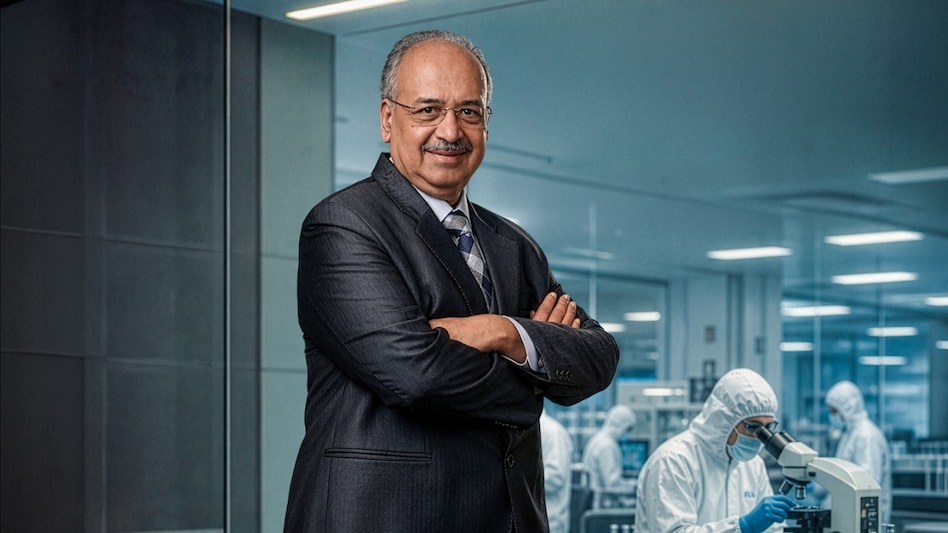
At 70, Dilip Shanghvi is placing the most consequential wager of his 43-year career, an $11.75-billion all-cash (including debt) acquisition of Organon & Co.
Advertisement
From Dawa Bazar to Big Pharma
Shanghvi’s father, Shantilal, ran a small medicine distributorship business in Kolkata, where the young Dilip, by his own account, would pore over drug labels and wonder how the molecules inside the bottles were made. For most boys growing up in such a setting, the predictable arc would have been to inherit the shop, marry well, and settle into the comfortable rhythms of the city’s wholesale trade. Shanghvi chose a different path.
In the summer of 1983, the 28-year-old borrowed Rs 10,000 from his father, packed up for Vapi in Gujarat, and set up a small drug manufacturing unit with five psychiatry products. He named the company Sun Pharmaceutical Industries. “The sun is the perennial source of all energy ,” he says.
Shanghvi is known for a personal, measured and understated style. He dresses simply, with little to suggest the scale of the business he runs. He avoids corporate social circuits and keeps a tightly controlled routine, but is fond of idlis from a South Indian joint in Mumbai that friends occasionally drop off at his home. His biography, The Reluctant Billionaire, is aptly titled. And yet the reluctance has always been selective. On the big calls, like the acquisition of Israel-based Taro in 2010, Ranbaxy in 2015, and now Organon, Shanghvi has shown a willingness to move single-mindedly in ways that stand in stark contrast to his otherwise cautious nature.
Advertisement
When Sun Pharma went through its toughest phase between 2014 and 2018—coinciding with the acquisition of the embattled Ranbaxy, pricing collapse in the US generics market, warning letters from the US FDA, and a 70% crash in profits in FY18—Shanghvi did what he has always done: he fought, in his low-profile but unyielding manner.
For instance, Sun lost nearly a billion dollars in revenue as pricing pressure intensified in the US generics market amid customer consolidation and increased competition. It responded by building newer profit streams through specialty medicines, increasing its presence in emerging markets and expanding its portfolio in India.
The net profit fell from Rs 4,777 crore in FY17 to Rs 3,301 crore in FY18. And revenue from Rs 27,518 crore to Rs 26,066 crore. In FY25, the net profit was around Rs 11,000 crore, on a revenue of over Rs 55,000 crore, with specialty medicines continuing to drive growth.
How Shanghvi Builds
The Organon bet draws directly from the operating philosophy Shanghvi has built over the years—disciplined scaling, incremental improvement and long-term positioning rather than short-term market applause.
Advertisement
“Each of our businesses should focus on improving its performance last year,” Shanghvi had told BT in an earlier interaction.
Sun’s push into innovative medicines began more than a decade ago as the company sought to move beyond pure generics and create additional growth engines. “We have demonstrated our ability to find a way to grow the business,” Shanghvi said in the investor call after the accouncement of the recent deal.
Organon may be the biggest expression yet of that philosophy. For Shanghvi, the acquisition is not just a scale play but continuation of a strategy he has been building for over a decade. The transaction is structured with the financial discipline that has become a Sun signature.
For FY25, Sun Pharma reported gross sales of Rs 52,041 crore (around $6 billion). With the proposed Organon acquisition, combined revenue is expected to cross $12 billion, implying an increase of more than 100% over Sun Pharma’s current size. Organon operates in around 140 countries, while the combined Sun Pharma-Organon company will have presence in about 150 countries.
The acquisition will be funded through internal cash accruals and committed bank financing from lenders including Citigroup, JPMorgan and MUFG. The transaction will be executed through the merger of Organon with a Sun Pharma subsidiary, with Organon continuing as the surviving entity under Sun Pharma ownership. The eventual operating structure and integration roadmap, however, will evolve over time as the combined business is integrated.
Advertisement
Both companies have comparable Ebitda margins. In fact, Organon’s adjusted Ebitda is slightly higher than Sun’s. This transaction is expected to be EPS-accretive from the first year.
-Jayashree Satagopan,Chief Financial Officer, Sun Pharmaceutical Industries
Organon’s existing $8.6 billion debt, combined with Sun’s acquisition financing, will leave the company at roughly 2.3 times net debt to Ebitda in its first full year.
Shanghvi said Organon’s size and profitability were comparable to Sun’s, but the valuation gap reflected the different growth trajectories of the two companies. While Sun has been expanding consistently, Organon’s businesses have been largely stagnant, creating what he described as an opportunity to revive growth. “We know that for us to create value, the key driver is to find a way to grow this business much better than what it has been able to do,” he said.
Shanghvi acknowledged investor concerns around the scale of debt required for the acquisition. Sun has historically operated as a low-debt or a cash-positive company, but the management believes leverage is justified if it helps fundamentally alter the company’s direction. “As a company, we ourselves are debt-averse. However, we are not risk-averse…personally, I am not comfortable with debt. I would try and find a way to deliver the company so that we are able to minimise or eliminate the debt.”
However, he added that the leverage remained manageable in the context of the combined earnings and cash generation, and that Sun would remain focused on repaying the debt as early as possible. “Even the debt we got as a result of the Ranbaxy acquisition, we found a way to repay in the shortest possible time.”
The timing reflects two structural shifts in the global pharmaceutical industry. The first is the imminent biosimilar boom, with $320-330 billion worth of biologic products expected to lose patent protection between now and 2035, opening up a $60-70 billion opportunity.
The second is the consolidation of global pharmaceutical distribution. What Sun lacked was a large international commercial presence. Organon, in one transaction, supplies it.
Shanghvi said the acquisition dramatically accelerates Sun’s ability to commercialise products globally and build relationships across markets that would otherwise have taken years to establish.“For Sun, on its own, it would have taken much longer to reach where we can potentially reach post the Organon acquisition.”
“The acquisition would provide scale across innovative medicines, biosimilars and established brands, while also strengthening Sun’s presence in China and women’s health,” say HDFC Securities analysts Mehul Sheth and Divyaxa Agnihotri. “However, reviving growth in Organon’s established brands and managing integration would remain key challenges,” they say.
The transaction also marks one of the boldest attempts by an Indian pharmaceutical company to acquire a global branded healthcare business at scale.
The other key players which led the deal are Kirti Ganorkar, Managing Director, and Jayashree Satagopan, Chief Financial Officer, Sun Pharma. Ganorkar, who was closely involved in the Ranbaxy integration and now leads this one, framed the Organon transaction as an expansion of Sun’s innovative business.
The deal also resolves a long-standing limitation in Sun’s specialty business. Ilumya, the company’s flagship dermatology drug, has been launched in only 35 countries, partly because Sun had to depend on out-licensed commercial partners in markets where it lacked its own sales force.
“Organon is giving the company a platform to commercialise its own innovative products across multiple markets,” Ganorkar tells BT.
The acquisition also adds a meaningful China presence. Organon generates over $800 million from China, roughly 13% of its business, primarily through established brands in cardiovascular, respiratory and fertility segments.
Organon’s portfolio is heavily weighted towards mature established brands, many of which face slower growth and pricing pressure across markets. Sun’s independent presence in China is negligible at present.
What Sun Is Buying
For Shanghvi, the attraction lies in how Organon’s three businesses fit into Sun’s long-term strategy. The first is innovative medicines, anchored by Organon’s women’s health portfolio, which contributed $1.75 billion to Organon’s 2025 revenues. Its flagship product Nexplanon generated $921 million. Combined with Sun’s existing innovative portfolio, the innovative segment grows from 20% to 27% of total combined revenues.
The second is the established brands portfolio, which accounted for over 51% of Organon’s revenues, or $3.69 billion, in 2025. These brands have declined 2% annually since 2021. “This part of the business is not growing, but there is an opportunity for us to grow it,” says Ganorkar. Around 15 of Organon’s established brands generate more than $100 million a year each.
“The way we have played in the branded generic market, we can play in the established brands business to make it grow further,” he says. The third is biosimilars, at $691 million in 2025, and growing at a 13% CAGR since 2021.
“The reason why we were not investing in biosimilars was lack of clarity about substitution as well as interchangeability. There is now greater regulatory clarity on both these issues,” Shanghvi said. Substitution refers to replacing an originator biologic with a biosimilar at the pharmacy level, while interchangeability means the biosimilar has demonstrated equivalent safety and efficacy even when patients switch between the two medicines multiple times. Greater regulatory clarity on these aspects improves commercial confidence for biosimilar investments.
He added that improving regulatory clarity and the possibility of reduced clinical-study requirements could significantly lower the cost of bringing biosimilars to the market. The acquisition makes Sun the seventh-largest biosimilar player globally.
Making the Deal Work
Shanghvi’s approach to integration draws heavily from his experience with Ranbaxy, where scale came with immense complexity.
Ganorkar divides the integration into two phases. The first is portfolio integration, reviewing the combined catalogue and deciding what to promote and what to rationalise. The overlap between Sun and Organon is negligible. “With Ranbaxy, we were able to review the entire global portfolio within six to twelve months,” he says. “The same approach applies here.” The second, and harder, phase is people and culture.
Sun’s culture, performance-driven, lean, frugal and intensely execution-focused, is different from Organon’s. The US-based company carries the legacy of a Merck & Co. spin-off, with a New Jersey headquarters and a 4,000-strong field force built around a Western multinational operating structure. “Everybody wants to succeed in life,” Shanghvi said. “Many times, if they are not successful, it is not because they do not want to, it is because they do not know how to.”
Ganorkar says Sun does not intend to impose its culture on Organon. “Sun’s leadership is open and flexible. Both companies’ culture will drive the future business,” he says. “After two to three years [with Ranbaxy], both the teams were fully integrated. The same outcome is the goal here.” He adds it will take two-four years to bring the business back to strong growth during which revenue growth may dip.
The financial architecture of the deal reflects a balance between growth and discipline.
“Both companies have comparable Ebitda margins. In fact, Organon’s adjusted Ebitda is slightly higher than Sun’s,” says Satagopan. “This transaction is expected to be EPS-accretive from the first year itself.” Organon’s 2025 adjusted Ebitda margin was 30.7%.
Sun’s gross margin is roughly 80%, while Organon’s adjusted gross margin is approximately 60%. The blended gross margin is estimated at about 71%, a compression of roughly 960 basis points.
On debt, Satagopan said Sun will manage leverage while reducing it over time. “Sun has historically stayed cash positive, and we will be very disciplined in managing this debt. Our focus will be on deleveraging as quickly as possible while continuing to invest in growth,” she said.
Organon’s existing debt carries roughly 6% interest, which Sun expects to refinance at 5–5.5%. Sun is acquiring Organon at roughly six times EV/Ebitda, compared with about 20 times for comparable Indian pharmaceutical assets.
“We paid for that acquisition through a much more expensive currency, our stock, leading to dilution,” Shanghvi had said earlier while about the Ranbaxy acquisition.
“Typically, you acquire a business either for its own growth trajectory, or because you want to acquire an asset which helps you achieve your long-term objective,” he said. “In the case of Organon, I think we are achieving a long-term strategic objective and acquiring a business at a valuation that will become EPS-accretive from the first year,” he added.
Brokerage Geojit Financial Services said Sun Pharma’s continued investments in specialty medicines, complex generics and innovation-led products, along with a healthy pipeline and strong execution, are expected to support long-term growth.
Sun’s leadership is open and flexible. It is not only Sun’s culture that will drive the future business; both companies’ culture will drive the future business.
-Kirti Ganorkar,Managing Director, Sun Pharmaceutical Industries
The Biggest Bet Yet
For Shanghvi, this is also the most complex integration he has attempted.
Execution will determine whether the wager pays off. Organon’s revenues have remained broadly flat for five years. Established brands are struggling with a structural decline. Nexplanon is facing a patent cliff that the five-year duration approval has only deferred.
Set against these risks is Sun’s track record. Shanghvi has built the company through disciplined capital allocation, acquiring underperforming businesses and improving them over time, including Ranbaxy and Taro Pharmaceutical Industries. “We invest in long-term value creation, so we are not looking at everything in terms of six months or one year,” Shanghvi had said earlier while discussing Sun’s investment philosophy. “But we see a huge opportunity to transform the company over the longer term,” he said after the Organon deal. “In turbulent times, you have an opportunity to do things which generally would be difficult if times were normal,” he said.
“Integration of two large businesses, Organon’s slower-growing established brands portfolio, scaling the biosimilars business and servicing nearly $8.5 billion of debt would remain among the near-term challenges for the combined entity,” say Sheth and Agnihotri.
What is different this time is the geography, scale and operating context.
The Next Gen
That brings us to what Shanghvi has not said publicly but what the deal makes impossible to ignore: this is also a bet on what Sun Pharma becomes after him. Shanghvi’s son Aalok, the COO, leads the emerging markets business, and has overseen the company’s expansion across nearly 80 countries and led launches of specialty products across APAC and parts of Europe. His daughter Vidhi, Vice President and Head of Consumer Healthcare and Nutrition, has worked across marketing and distribution. Around them is a layer of professional management, including Ganorkar and Satagopan, that Shanghvi has carefully assembled. “Any decision that I take now, I keep my family involved as they will have to live with the implications of those decisions, because I may possibly not be there at some point,” Shanghvi said.
“What I’m excited about is the opportunity to be able to also strengthen the existing management capability of Sun because we will have a large number of performing managers coming in from Organon,” he added.
The Organon deal, seen through this lens, is not just about competing with Pfizer and AstraZeneca. It is about building a company large enough, global enough, and institutionally deep enough that it does not depend on any one person to run it, including the man who built it.
Writing the largest cheque of his life, Dilip Shanghvi is betting that Sun Pharma is the company to prove that.
@neetu_csharma
In a single stroke, the deal takes Sun Pharma from being India’s largest drugmaker to a top-tier global pharmaceutical company doubling its annual revenue to $12 billion, increasing its presence to 150 countries, and giving it a 24,000-strong commercial sales force operating on the same field as Pfizer and AstraZeneca.
Advertisement
Whether it cements Shanghvi’s legacy as the architect of India’s first truly global pharma major, or whether, after four decades of disciplined wins, it finally tests the limits of his manual, will mould what comes next not just for Sun Pharma—where a new generation is ready to take on more—but also for the Indian pharmaceutical industry.
“I’m happy, excited, also a little bit anxious. It is a large transaction that we are entering into,” Shanghvi said at a press conference announcing the deal.
A man who has spent over four decades being almost pathologically cautious is now writing the largest cheque of his life, a contrast that traces back to a wholesale medicine shop in the dust and din of Kolkata’s bustling Dawa Bazar. It is also the first time he is stepping into businesses and geographies where Sun has limited prior operating experience.
Advertisement
With Organon, Shanghvi is taking Sun into a different league, competing not just with the world’s largest generics manufacturers, but increasingly with multinational pharmaceutical companies that control innovation, brands and commercial reach.
“As a company, we always want to compete with players bigger than us,” Shanghvi had told Business Today in an earlier interaction. “In each of the businesses we are present in, like generics, we have become a very big player because we continue to grow.”
For a businessman who began with five psychiatry products and one salesman, the scale of the leap has been extraordinary.
At 70, Dilip Shanghvi is placing the most consequential wager of his 43-year career, an $11.75-billion all-cash (including debt) acquisition of Organon & Co.
Advertisement
From Dawa Bazar to Big Pharma
Shanghvi’s father, Shantilal, ran a small medicine distributorship business in Kolkata, where the young Dilip, by his own account, would pore over drug labels and wonder how the molecules inside the bottles were made. For most boys growing up in such a setting, the predictable arc would have been to inherit the shop, marry well, and settle into the comfortable rhythms of the city’s wholesale trade. Shanghvi chose a different path.
In the summer of 1983, the 28-year-old borrowed Rs 10,000 from his father, packed up for Vapi in Gujarat, and set up a small drug manufacturing unit with five psychiatry products. He named the company Sun Pharmaceutical Industries. “The sun is the perennial source of all energy ,” he says.
Shanghvi is known for a personal, measured and understated style. He dresses simply, with little to suggest the scale of the business he runs. He avoids corporate social circuits and keeps a tightly controlled routine, but is fond of idlis from a South Indian joint in Mumbai that friends occasionally drop off at his home. His biography, The Reluctant Billionaire, is aptly titled. And yet the reluctance has always been selective. On the big calls, like the acquisition of Israel-based Taro in 2010, Ranbaxy in 2015, and now Organon, Shanghvi has shown a willingness to move single-mindedly in ways that stand in stark contrast to his otherwise cautious nature.
Advertisement
When Sun Pharma went through its toughest phase between 2014 and 2018—coinciding with the acquisition of the embattled Ranbaxy, pricing collapse in the US generics market, warning letters from the US FDA, and a 70% crash in profits in FY18—Shanghvi did what he has always done: he fought, in his low-profile but unyielding manner.
For instance, Sun lost nearly a billion dollars in revenue as pricing pressure intensified in the US generics market amid customer consolidation and increased competition. It responded by building newer profit streams through specialty medicines, increasing its presence in emerging markets and expanding its portfolio in India.
The net profit fell from Rs 4,777 crore in FY17 to Rs 3,301 crore in FY18. And revenue from Rs 27,518 crore to Rs 26,066 crore. In FY25, the net profit was around Rs 11,000 crore, on a revenue of over Rs 55,000 crore, with specialty medicines continuing to drive growth.
How Shanghvi Builds
The Organon bet draws directly from the operating philosophy Shanghvi has built over the years—disciplined scaling, incremental improvement and long-term positioning rather than short-term market applause.
Advertisement
“Each of our businesses should focus on improving its performance last year,” Shanghvi had told BT in an earlier interaction.
Sun’s push into innovative medicines began more than a decade ago as the company sought to move beyond pure generics and create additional growth engines. “We have demonstrated our ability to find a way to grow the business,” Shanghvi said in the investor call after the accouncement of the recent deal.
Organon may be the biggest expression yet of that philosophy. For Shanghvi, the acquisition is not just a scale play but continuation of a strategy he has been building for over a decade. The transaction is structured with the financial discipline that has become a Sun signature.
For FY25, Sun Pharma reported gross sales of Rs 52,041 crore (around $6 billion). With the proposed Organon acquisition, combined revenue is expected to cross $12 billion, implying an increase of more than 100% over Sun Pharma’s current size. Organon operates in around 140 countries, while the combined Sun Pharma-Organon company will have presence in about 150 countries.
The acquisition will be funded through internal cash accruals and committed bank financing from lenders including Citigroup, JPMorgan and MUFG. The transaction will be executed through the merger of Organon with a Sun Pharma subsidiary, with Organon continuing as the surviving entity under Sun Pharma ownership. The eventual operating structure and integration roadmap, however, will evolve over time as the combined business is integrated.
Advertisement
Both companies have comparable Ebitda margins. In fact, Organon’s adjusted Ebitda is slightly higher than Sun’s. This transaction is expected to be EPS-accretive from the first year.
-Jayashree Satagopan,Chief Financial Officer, Sun Pharmaceutical Industries
Organon’s existing $8.6 billion debt, combined with Sun’s acquisition financing, will leave the company at roughly 2.3 times net debt to Ebitda in its first full year.
Shanghvi said Organon’s size and profitability were comparable to Sun’s, but the valuation gap reflected the different growth trajectories of the two companies. While Sun has been expanding consistently, Organon’s businesses have been largely stagnant, creating what he described as an opportunity to revive growth. “We know that for us to create value, the key driver is to find a way to grow this business much better than what it has been able to do,” he said.
Shanghvi acknowledged investor concerns around the scale of debt required for the acquisition. Sun has historically operated as a low-debt or a cash-positive company, but the management believes leverage is justified if it helps fundamentally alter the company’s direction. “As a company, we ourselves are debt-averse. However, we are not risk-averse…personally, I am not comfortable with debt. I would try and find a way to deliver the company so that we are able to minimise or eliminate the debt.”
However, he added that the leverage remained manageable in the context of the combined earnings and cash generation, and that Sun would remain focused on repaying the debt as early as possible. “Even the debt we got as a result of the Ranbaxy acquisition, we found a way to repay in the shortest possible time.”
The timing reflects two structural shifts in the global pharmaceutical industry. The first is the imminent biosimilar boom, with $320-330 billion worth of biologic products expected to lose patent protection between now and 2035, opening up a $60-70 billion opportunity.
The second is the consolidation of global pharmaceutical distribution. What Sun lacked was a large international commercial presence. Organon, in one transaction, supplies it.
Shanghvi said the acquisition dramatically accelerates Sun’s ability to commercialise products globally and build relationships across markets that would otherwise have taken years to establish.“For Sun, on its own, it would have taken much longer to reach where we can potentially reach post the Organon acquisition.”
“The acquisition would provide scale across innovative medicines, biosimilars and established brands, while also strengthening Sun’s presence in China and women’s health,” say HDFC Securities analysts Mehul Sheth and Divyaxa Agnihotri. “However, reviving growth in Organon’s established brands and managing integration would remain key challenges,” they say.
The transaction also marks one of the boldest attempts by an Indian pharmaceutical company to acquire a global branded healthcare business at scale.
The other key players which led the deal are Kirti Ganorkar, Managing Director, and Jayashree Satagopan, Chief Financial Officer, Sun Pharma. Ganorkar, who was closely involved in the Ranbaxy integration and now leads this one, framed the Organon transaction as an expansion of Sun’s innovative business.
The deal also resolves a long-standing limitation in Sun’s specialty business. Ilumya, the company’s flagship dermatology drug, has been launched in only 35 countries, partly because Sun had to depend on out-licensed commercial partners in markets where it lacked its own sales force.
“Organon is giving the company a platform to commercialise its own innovative products across multiple markets,” Ganorkar tells BT.
The acquisition also adds a meaningful China presence. Organon generates over $800 million from China, roughly 13% of its business, primarily through established brands in cardiovascular, respiratory and fertility segments.
Organon’s portfolio is heavily weighted towards mature established brands, many of which face slower growth and pricing pressure across markets. Sun’s independent presence in China is negligible at present.
What Sun Is Buying
For Shanghvi, the attraction lies in how Organon’s three businesses fit into Sun’s long-term strategy. The first is innovative medicines, anchored by Organon’s women’s health portfolio, which contributed $1.75 billion to Organon’s 2025 revenues. Its flagship product Nexplanon generated $921 million. Combined with Sun’s existing innovative portfolio, the innovative segment grows from 20% to 27% of total combined revenues.
The second is the established brands portfolio, which accounted for over 51% of Organon’s revenues, or $3.69 billion, in 2025. These brands have declined 2% annually since 2021. “This part of the business is not growing, but there is an opportunity for us to grow it,” says Ganorkar. Around 15 of Organon’s established brands generate more than $100 million a year each.
“The way we have played in the branded generic market, we can play in the established brands business to make it grow further,” he says. The third is biosimilars, at $691 million in 2025, and growing at a 13% CAGR since 2021.
“The reason why we were not investing in biosimilars was lack of clarity about substitution as well as interchangeability. There is now greater regulatory clarity on both these issues,” Shanghvi said. Substitution refers to replacing an originator biologic with a biosimilar at the pharmacy level, while interchangeability means the biosimilar has demonstrated equivalent safety and efficacy even when patients switch between the two medicines multiple times. Greater regulatory clarity on these aspects improves commercial confidence for biosimilar investments.
He added that improving regulatory clarity and the possibility of reduced clinical-study requirements could significantly lower the cost of bringing biosimilars to the market. The acquisition makes Sun the seventh-largest biosimilar player globally.
Making the Deal Work
Shanghvi’s approach to integration draws heavily from his experience with Ranbaxy, where scale came with immense complexity.
Ganorkar divides the integration into two phases. The first is portfolio integration, reviewing the combined catalogue and deciding what to promote and what to rationalise. The overlap between Sun and Organon is negligible. “With Ranbaxy, we were able to review the entire global portfolio within six to twelve months,” he says. “The same approach applies here.” The second, and harder, phase is people and culture.
Sun’s culture, performance-driven, lean, frugal and intensely execution-focused, is different from Organon’s. The US-based company carries the legacy of a Merck & Co. spin-off, with a New Jersey headquarters and a 4,000-strong field force built around a Western multinational operating structure. “Everybody wants to succeed in life,” Shanghvi said. “Many times, if they are not successful, it is not because they do not want to, it is because they do not know how to.”
Ganorkar says Sun does not intend to impose its culture on Organon. “Sun’s leadership is open and flexible. Both companies’ culture will drive the future business,” he says. “After two to three years [with Ranbaxy], both the teams were fully integrated. The same outcome is the goal here.” He adds it will take two-four years to bring the business back to strong growth during which revenue growth may dip.
The financial architecture of the deal reflects a balance between growth and discipline.
“Both companies have comparable Ebitda margins. In fact, Organon’s adjusted Ebitda is slightly higher than Sun’s,” says Satagopan. “This transaction is expected to be EPS-accretive from the first year itself.” Organon’s 2025 adjusted Ebitda margin was 30.7%.
Sun’s gross margin is roughly 80%, while Organon’s adjusted gross margin is approximately 60%. The blended gross margin is estimated at about 71%, a compression of roughly 960 basis points.
On debt, Satagopan said Sun will manage leverage while reducing it over time. “Sun has historically stayed cash positive, and we will be very disciplined in managing this debt. Our focus will be on deleveraging as quickly as possible while continuing to invest in growth,” she said.
Organon’s existing debt carries roughly 6% interest, which Sun expects to refinance at 5–5.5%. Sun is acquiring Organon at roughly six times EV/Ebitda, compared with about 20 times for comparable Indian pharmaceutical assets.
“We paid for that acquisition through a much more expensive currency, our stock, leading to dilution,” Shanghvi had said earlier while about the Ranbaxy acquisition.
“Typically, you acquire a business either for its own growth trajectory, or because you want to acquire an asset which helps you achieve your long-term objective,” he said. “In the case of Organon, I think we are achieving a long-term strategic objective and acquiring a business at a valuation that will become EPS-accretive from the first year,” he added.
Brokerage Geojit Financial Services said Sun Pharma’s continued investments in specialty medicines, complex generics and innovation-led products, along with a healthy pipeline and strong execution, are expected to support long-term growth.
Sun’s leadership is open and flexible. It is not only Sun’s culture that will drive the future business; both companies’ culture will drive the future business.
-Kirti Ganorkar,Managing Director, Sun Pharmaceutical Industries
The Biggest Bet Yet
For Shanghvi, this is also the most complex integration he has attempted.
Execution will determine whether the wager pays off. Organon’s revenues have remained broadly flat for five years. Established brands are struggling with a structural decline. Nexplanon is facing a patent cliff that the five-year duration approval has only deferred.
Set against these risks is Sun’s track record. Shanghvi has built the company through disciplined capital allocation, acquiring underperforming businesses and improving them over time, including Ranbaxy and Taro Pharmaceutical Industries. “We invest in long-term value creation, so we are not looking at everything in terms of six months or one year,” Shanghvi had said earlier while discussing Sun’s investment philosophy. “But we see a huge opportunity to transform the company over the longer term,” he said after the Organon deal. “In turbulent times, you have an opportunity to do things which generally would be difficult if times were normal,” he said.
“Integration of two large businesses, Organon’s slower-growing established brands portfolio, scaling the biosimilars business and servicing nearly $8.5 billion of debt would remain among the near-term challenges for the combined entity,” say Sheth and Agnihotri.
What is different this time is the geography, scale and operating context.
The Next Gen
That brings us to what Shanghvi has not said publicly but what the deal makes impossible to ignore: this is also a bet on what Sun Pharma becomes after him. Shanghvi’s son Aalok, the COO, leads the emerging markets business, and has overseen the company’s expansion across nearly 80 countries and led launches of specialty products across APAC and parts of Europe. His daughter Vidhi, Vice President and Head of Consumer Healthcare and Nutrition, has worked across marketing and distribution. Around them is a layer of professional management, including Ganorkar and Satagopan, that Shanghvi has carefully assembled. “Any decision that I take now, I keep my family involved as they will have to live with the implications of those decisions, because I may possibly not be there at some point,” Shanghvi said.
“What I’m excited about is the opportunity to be able to also strengthen the existing management capability of Sun because we will have a large number of performing managers coming in from Organon,” he added.
The Organon deal, seen through this lens, is not just about competing with Pfizer and AstraZeneca. It is about building a company large enough, global enough, and institutionally deep enough that it does not depend on any one person to run it, including the man who built it.
Writing the largest cheque of his life, Dilip Shanghvi is betting that Sun Pharma is the company to prove that.
@neetu_csharma
Read more!