
How Lightspeed has quietly evolved along with India’s start-up story
Lightspeed has quietly evolved along with India's start-up story, armed with a $2.3 billion playbook. Now, it awaits the ultimate prize: a market-defining IPO.
Palak Agarwal
- Sep 25, 2025,
- Updated Sep 29, 2025 4:51 PM IST
What do hotel-room aggregator OYO, educational platform PhysicsWallah, quick-commerce delivery firm Zepto and payments company Razorpay have in common?
Hey!
Already a subscriber? Sign In
THIS IS A PREMIUM STORY FROM BUSINESS TODAY.
Subscribe to Business Today Digital and continue enjoying India's premier business offering uninterrupted
only FOR
₹999 / Year
Unlimited Digital Access + Ad Lite Experience
Cancel Anytime
-
 Unlimited access to Business Today website
 -
 Exclusive insights on Corporate India's working, every quarter
 -
 Access to our special editions, features, and priceless archives
 -
 Get front-seat access to events such as BT Best Banks, Best CEOs and Mindrush
What do hotel-room aggregator OYO, educational platform PhysicsWallah, quick-commerce delivery firm Zepto and payments company Razorpay have in common?
For one thing, they all operate in internet businesses they have disrupted in more ways than one, and for another, they share a common backer in Venture Capital (VC) firm Lightspeed India, which has funded them all and is now looking forward to a key milestone: the first initial share sale by a portfolio firm.
Advertisement
An initial public offering (IPO) by a protégé is the one milestone that has eluded Lightspeed India Partners, the local unit of Silicon Valley-based Lightspeed Venture Partners. Of course, its parent shepherded the 2017 IPO of Indian Energy Exchange (IEX).
Lightspeed India may fill that gap in its otherwise impressive resume in 2026, when a string of its portfolio firms—PhysicsWallah, OYO, and contract manufacturer Zetwerk—gear up for public listings.
Make no mistake. The IPO is very important to Lightspeed India. As the Indian start-up ecosystem matures, the true test for a VC firm lies not just in spotting winners, but in finding meaningful exits at the right time.
“IPO timelines are not in Lightspeed’s control, but we could see a few portfolio companies go public in 2006-2007,” says an industry expert who doesn’t want to be named. “The firm is well-positioned with its portfolio. Ultimately, blockbuster IPOs are shaped by market cycles and are long-term events.”
Advertisement
Peers such as Accel and Prosus are among the top venture capitalists that have taken their firms public.
Technology is the future
Bejul Somaia, Senior Leader at Lightspeed Venture Partners and Partner, Global, swears by the future of technology in India. After all, the portfolio companies mentioned above have technology at the heart of their existence, whatever be the end product they are selling.
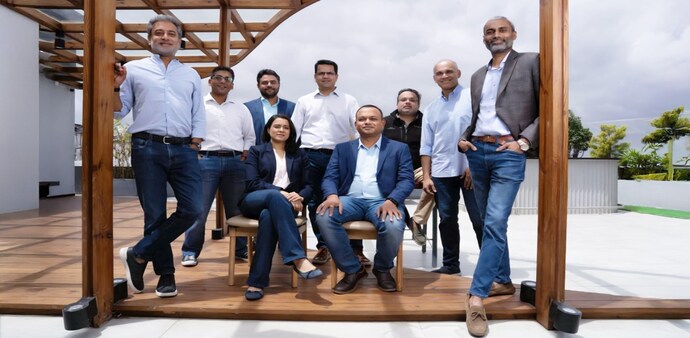
Sitting in Lightspeed India’s sleek new offices in Bengaluru’s upscale Indiranagar, Somaia posed a hypothetical question and proceeded to answer it himself.
“If I think about a decade from now in India, an economy like this, will technology be more prevalent in this country or less? It will be far more prevalent. I have no doubt about that,” he said.
Advertisement
A successful IPO will mark the culmination of an eventful journey in India for Lightspeed, and the road ahead offers an opportunity to take stock of how it—and the VC ecosystem—has grown in the country.
For over two decades, Lightspeed Venture Partners has been shaping the global start-up ecosystem. Its tryst with India started in 2007, with early bets for instance in IEX, a power trading platform for physical delivery of electricity.
The journey so far
What started as investments by Lightspeed’s global pool soon evolved into the dedicated arm, backing ventures across India and Southeast Asia. Since then, the investor has pumped $2.3 billion into Indian start-ups, delivering stellar returns, sometimes as high as 30X, from select portfolio companies.
Traditionally known for its seed-stage focus—underwriting modest investments in early-stage start-ups—it has steadily transformed into a growth-stage investor, signing cheques worth tens of millions of dollars.
Its first big leap into this arena came with OYO in 2015 and since then, the bets have only become bolder. From quick commerce to fintech and edtech, and the business-to-business (B2B) space to, more recently, artificial intelligence (AI), Lightspeed’s fingerprint is now visible across India’s most dynamic sectors.
Advertisement
In 2023, it backed Sarvam, one of the first start-ups selected under the IndiaAI Mission to build a foundational AI model—a clear signal of Lightspeed’s confidence in India’s deep-tech potential.
From identifying a promising start-up to hearing its pitch, backing it, and eventually strategising exits—a lot happens behind the scenes. But is it a one-man call or a collective effort?
Harsha Kumar, Partner at Lightspeed, says decisions are never taken in isolation. “Yes, formally the six partners take the call, but when a founder walks into the investment committee, it isn’t just us in the room. Close to 20 people—from platform and talent to finance, marketing, legal, and portfolio support—join in, ensuring every perspective is heard.”
This agility set Lightspeed apart at a time when marquee investors such as Tiger Global, SoftBank, Accel and Prosus either slowed investments or grappled with setbacks at some star portfolio firms—think Byju’s, the online coaching institute that is undergoing insolvency proceedings, or Good Glamm, the seller of personal care and cosmetic products that has shut down and is undergoing a sell off.
To its credit, Lightspeed has largely avoided such pitfalls. True, it had exposure to Byju’s, but at an early stage and with a “relatively small investment,” according to Lightspeed India Partners.
Advertisement
VC ecosystem
Remember, the VC ecosystem in India is a late bloomer. While global VCs began trickling into the country in the early 2000s, the flow of capital was restricted. India has never had homegrown versions of Meta, YouTube, or WhatsApp, partly because global funds were more inclined towards the West, where most of their capital came from.
What did catch investors’ attention were India’s traditional strengths—low-cost manufacturing, labour-intensive industries, and a vast consumer base.
Yet, it wasn’t until 2013–14 that the tide truly began to turn. With the tech ecosystem opening up and entrepreneurship becoming more mainstream, the flow of capital accelerated. That shift may have also prompted Lightspeed to up its bet on India.
Globally, Lightspeed has invested across sectors including the consumer economy, media, fintech, edtech, and even crypto currencies. In India, since 2008, the focus had largely been on enabling the consumer economy—payments, delivery and logistics.
The real inflection point came in 2016 with the launch of the Unified Payments Interface (UPI). India’s market expanded dramatically, driven by cheap data and a smartphone boom. The focus shifted from enabling technologies and e-commerce to newer frontiers: social media, where Lightspeed backed ShareChat; and B2B commerce with early bets in Udaan and Zetwerk, and enterprise software firms.
Advertisement
Lightspeed has been in the trenches with us during critical decisions, whether it’s navigating business complexities or scaling up internationally. They think in decades, not quarters.
-HARSHIL MATHUR,CO-FOUNDER, RAZORPAY SOFTWARE LTD
From seed to growth stage
Lightspeed’s move from seed to growth-stage investing was deliberate. The post-Covid years of 2021–22 saw an unprecedented flood of capital into Indian start-ups. In 2021, the Indian start-up ecosystem became the world’s third largest, breaking all records and receiving an inflow of $36 billion.
By 2023 the tide had turned, and fundraising beyond Series A began to slow. Between January-August 2025, the VC ecosystem had poured $3.8 billion into Indian start-ups, still lower than the same time last year when investments reached $4.9 billion, says financial information provider Tracxn.
Lightspeed beat a different path. In 2023, it backed Software as a Service (SaaS) management platform Zluri in a Series B funding round.
The following year, it made significant growth investments in PhysicsWallah and Zepto; SolarSquare, which installs solar energy equipment at homes and businesses, and health care services provider Qure.ai. Investments tapered in 2025, with a few select bets such as Snabbit, an on-demand home services platform, and a $170 million round in Weaver Services, a technology-first housing finance company, co-led with Premji Invest.
PhysicsWallah
Lightspeed’s bet on PhysicsWallah, which is preparing for a Rs 3,820-crore IPO following approval by market regulator Securities and Exchange Board of India, wasn’t without risks—especially in the shadow of Byju’s downfall. The comparison is inevitable, but Dev Khare, a partner at Lightspeed, is unequivocal in swearing by his confidence in PhysicsWallah.
PhysicsWallah faces its share of challenges, particularly in the largely unorganised offline coaching market, where a few of its Vidyapeeth (offline) centres have shut down. Vidyapeeth has a presence in 100 cities, but BT couldn’t independently verify the exact number of centres. What sets PhyicsWallah apart, Khare says, is that it represents the second wave of edtech in India—where high sales and marketing spending are giving way to low-cost customer acquisition.
Satish Meena of Datum Intelligence offers a different perspective. He says that, apart from PhysicsWallah, most of Lightspeed’s edtech bets have stumbled—Byju’s being the biggest write-off, despite once being hailed as a crown jewel of edtech.
PhysicsWallah now remains the only major player in the edtech space with the potential to deliver meaningful returns.
ZEpto
On the quick commerce front, Zepto, which started in 2021 has emerged as a key investment, with backing from several marquee VCs. The quick commerce delivery firm is among Lightspeed’s most prominent growth-stage bets. In 2024, Lightspeed, along with other investors, poured over $1 billion across two back-to-back rounds—the largest single funding spree in India’s start-up ecosystem.
Quick commerce itself has exploded—from a $100 million market in FY2020 to $3.5 billion in FY2023, and projected to hit $40 billion by FY30.
Rahul Taneja, a partner at Lightspeed who tracks “Bharat” markets, admits that the firm underestimated the trend. “Our assumption was that a very large business can be built in the top 15–20 cities. Beyond that, may be it will happen, may be it will not. But today, when you see Zepto, I am surprised,” he says.
One of the biggest challenges for Zepto has been profitability. Zepto’s losses as of December 2024 stood at Rs 1,214 crore, according to Tracxn.
Competition from listed giants Swiggy and Zomato to newer entrants like Flipkart Minutes, BigBasket, Amazon’s Tez, and Jio is mounting, likely a key reason for Zepto to hold back IPO plans.
For Lightspeed, Zepto’s eventual listing would be a landmark moment—validating its growth-stage strategy in India and potentially delivering one of its biggest payoffs in the market.
Caution the watchword
Even as Lightspeed has scaled from seed to growth-stage investing, its deal volume remains more measured than that of its peers. According to Tracxn, it has participated in 225 funding rounds across 105 Indian start-ups. In comparison, Accel has backed 210 companies through 574 rounds, while Peak XV Partners has invested in 189 companies across 485 rounds.
The same caution is visible in its exits. Lightspeed has recorded just one major exit—Innovaccer, with strong returns (approximately 30X)—and a partial exit from OYO. Accel and Peak XV, meanwhile, have been far more active, with nine and 19 exit rounds, respectively, says Neha Singh, co-founder and CEO of Tracxn.
Taneja says IPOs are a far more viable exit option today than five years ago, an avenue he believes will only widen in the next five. “This reflects the maturity of Indian public markets,” he says. “Investors now understand how startups operate, how their financial performance may differ from traditional companies, and how to value them. That’s evident from the way recent start-up IPOs have been wholeheartedly embraced by the market.”
AI, the new obsession
If the past decade for VCs was about payments, commerce, and content, the next one, will be about AI. India’s rapid adoption cycles have made it especially attractive for AI start-ups. As Hemant Mohapatra, another partner at Lightspeed, says, “The time it takes for transformational technologies to reach India has shrunk from 17 years to 12, then to 7, and now just 2–3. And the time to mass adoption has collapsed—from a decade for internet, to seven years for mobile, to three to four years for 4G/5G, and maybe two to three years for AI.”
The minuses: many elements of the foundational layer of AI-like large language models and graphic processing units are tightly controlled by Western entities, which have also begun to ring-fence strategic resources such as silicon design and talent mobility.
While Lightspeed India has taken a cautious approach to both investments and exits, 2026 could prove to be a watershed year for the company.
With a string of IPO-bound unicorns, the firm is on the cusp of proving that its bets were not just timely but transformational.
@PalakAgarwal64
Read more!