
How MPVs Are the New Favourite Productivity Pods of India’s Business Elites
How MPVs Are the New Favourite Productivity Pods of India’s Business Elites
India's business elites are swapping luxury sedans and SUVs for ultra-luxury multi-purpose vehicles as their favourite productivity pods.
Karan Dhar
- Jun 4, 2026,
- Updated Jun 9, 2026 3:55 PM IST
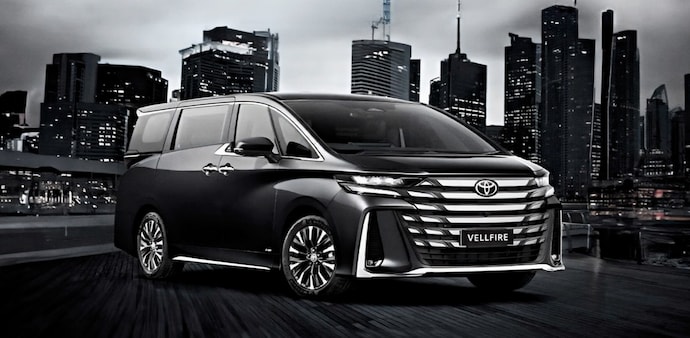
A suited executive steps into the captain seat of the tall-roof Toyota Vellfire multi-purpose vehicle (MPV), folds out the retractable table, plugs a laptop into the HDMI port, and watches a boardroom presentation on the rear screen. While the meeting is on, he picks up the smartphone-like control device on the armrest to switch on the massage function. Outside, Delhi’s traffic crawls through honking chaos. Inside, the highly insulated cabin is silent enough for a business meeting. The business promoter, who did not wish to be named, uses his “mobile office on wheels” to work while his chauffeur drives him to factory visits and client meetings.
Advertisement
For decades, India’s wealthy chose the comfort of luxury sedans as they headed to work. Then came the SUVs (sport utility vehicles), which offered better road presence, a higher seating position and enough ground clearance to navigate potholed roads. While both luxury sedans and SUVs continue to be in demand, a radical shift is unfolding at the top end of India’s luxury car market: the country’s elite are increasingly trading even their high-riding SUVs for ultra-luxury MPVs.
Reclining ottoman seats, fold-out tray tables, privacy partitions, HDMI port connectivity and conference-call-ready cabins are turning vehicles like the Toyota Vellfire and Mercedes-Benz V-Class, among others, into productivity pods for busy executives.
Advertisement
Luxury MPVs are clearly emerging as a fast-growing segment, indicating an early structural shift within India’s car market. Their volumes rose sharply from 1,061 units in FY24 to 4,061 units in FY26, while their share expanded from 2.3% to 7.2%, signalling rapid adoption, according to data from JATO Dynamics. In contrast, sedans’ share has dipped from 34.16% to 28.92% over the same period and they are growing slowly, while SUVs remain dominant but relatively stable.
Japan’s Toyota was the first carmaker to taste success with its Vellfire in India after a spate of Bollywood celebs opted for the luxury MPV. “With expansive interiors, superior ride comfort, and a high degree of discretion, these vehicles are particularly well-suited for chauffeur-driven use, enabling customers to utilise travel time more productively,” says Sabari Manohar, Executive Vice President, Sales-Service-Used Car Business, Toyota Kirloskar Motor.
Advertisement
As extended commute times become a part of daily life for many business leaders, the focus is shifting towards the overall in-cabin experience. This shift reflects a broader evolution in mobility preferences where the vehicle is an extension of one’s workspace, says Manohar. “We are seeing strong demand for the Vellfire from start-up founders, entrepreneurs from fintech, logistics and D2C sectors, as well as politicians, who are placing greater emphasis on practicality,” he explains.
While the Toyota Vellfire, priced from roughly Rs 1.3 crore (ex-showroom), continues to be the top-selling luxury MPV, its ultra-luxury cousin, the Lexus LM 350h is the most expensive one with prices starting at Rs 2.2 crore.
Even though the Japanese are ruling the roost in luxury MPVs, German carmaker Mercedes-Benz was the first one to bring a luxury MPV to India with the launch of Mercedes-Benz V-Class in 2019, which was discontinued in 2022 due to weak sales. However, Mercedes-Benz has re-entered the fast-growing MPV segment with the locally assembled V-Class in 2026.
Advertisement
“We are seeing a structural shift where affluent customers are seeking vehicles that go beyond traditional luxury sedans and SUVs, prioritising privacy, space and a more personalised travel experience,” says Santosh Iyer, MD & CEO, Mercedes-Benz India.
Iyer says the V-Class has seen strong response from celebrities, entrepreneurs and corporate leaders. These customers, he says, already own multiple luxury vehicles and are looking for a differentiated mobility solution that helps them do business on the move.
The V-Class, prices starting from Rs 1.4 crore, comes in both petrol and diesel variants. For those looking out for a cleaner ride, JSW MG Motor India sells the only luxury electric MPV in the country, the MG M9, priced at Rs 69.9 lakh.
Electrification will accelerate the expansion of luxury MPVs at an unprecedented pace, says Anurag Mehrotra, Managing Director of JSW MG Motor India. India’s luxury MPV segment has grown from under 500 units in 2020 to nearly 2,500 units in 2025, reflecting a fivefold expansion in just five years, according to Malhotra.
Advertisement
Luxury mobility is no longer defined solely by design or driving dynamics; it is increasingly shaped by the ability to work, relax and travel efficiently within the same space. “Luxury MPV buyers treat their commutes as an extension of their day where conference calls happen seamlessly while on the move,” says Mehrotra.
Many buyers who traditionally considered sedans are now actively evaluating luxury MPVs for space, rear-seat comfort and versatility. “The shift reflects changing lifestyle priorities where rear seat experience is becoming equally important as badge value,” says Mehrotra.
In India, South Korean carmaker Kia’s Carnival, prices starting from Rs 59.42 lakh, acted as a gateway into the luxury MPV space. Over 17,000 units of the Carnival have been sold since it was first launched in 2020. Professionals and entrepreneurs view these vehicles as ‘rolling boardrooms’, where time spent in traffic can be used productively, the South Korean carmaker says.
Advertisement
Indian luxury car buyers are indeed prioritising space, rear-seat experience, and exclusivity, especially for chauffeur-driven use cases, says Ravi G. Bhatia, President & Director of JATO Dynamics India. “While SUVs still dominate aspirational ownership, MPVs are carving out a distinct role where experience-led luxury trumps traditional status symbols, indicating a notable behavioural shift in top-tier consumers,” Bhatia adds.
The fact that India is among the few countries where most luxury cars are chauffeur-driven indicates that the future of luxury mobility in India is likely to gravitate towards luxury MPVs.
@karandhar11
A suited executive steps into the captain seat of the tall-roof Toyota Vellfire multi-purpose vehicle (MPV), folds out the retractable table, plugs a laptop into the HDMI port, and watches a boardroom presentation on the rear screen. While the meeting is on, he picks up the smartphone-like control device on the armrest to switch on the massage function. Outside, Delhi’s traffic crawls through honking chaos. Inside, the highly insulated cabin is silent enough for a business meeting. The business promoter, who did not wish to be named, uses his “mobile office on wheels” to work while his chauffeur drives him to factory visits and client meetings.
Advertisement
For decades, India’s wealthy chose the comfort of luxury sedans as they headed to work. Then came the SUVs (sport utility vehicles), which offered better road presence, a higher seating position and enough ground clearance to navigate potholed roads. While both luxury sedans and SUVs continue to be in demand, a radical shift is unfolding at the top end of India’s luxury car market: the country’s elite are increasingly trading even their high-riding SUVs for ultra-luxury MPVs.
Reclining ottoman seats, fold-out tray tables, privacy partitions, HDMI port connectivity and conference-call-ready cabins are turning vehicles like the Toyota Vellfire and Mercedes-Benz V-Class, among others, into productivity pods for busy executives.
Advertisement
Luxury MPVs are clearly emerging as a fast-growing segment, indicating an early structural shift within India’s car market. Their volumes rose sharply from 1,061 units in FY24 to 4,061 units in FY26, while their share expanded from 2.3% to 7.2%, signalling rapid adoption, according to data from JATO Dynamics. In contrast, sedans’ share has dipped from 34.16% to 28.92% over the same period and they are growing slowly, while SUVs remain dominant but relatively stable.
Japan’s Toyota was the first carmaker to taste success with its Vellfire in India after a spate of Bollywood celebs opted for the luxury MPV. “With expansive interiors, superior ride comfort, and a high degree of discretion, these vehicles are particularly well-suited for chauffeur-driven use, enabling customers to utilise travel time more productively,” says Sabari Manohar, Executive Vice President, Sales-Service-Used Car Business, Toyota Kirloskar Motor.
Advertisement
As extended commute times become a part of daily life for many business leaders, the focus is shifting towards the overall in-cabin experience. This shift reflects a broader evolution in mobility preferences where the vehicle is an extension of one’s workspace, says Manohar. “We are seeing strong demand for the Vellfire from start-up founders, entrepreneurs from fintech, logistics and D2C sectors, as well as politicians, who are placing greater emphasis on practicality,” he explains.
While the Toyota Vellfire, priced from roughly Rs 1.3 crore (ex-showroom), continues to be the top-selling luxury MPV, its ultra-luxury cousin, the Lexus LM 350h is the most expensive one with prices starting at Rs 2.2 crore.
Even though the Japanese are ruling the roost in luxury MPVs, German carmaker Mercedes-Benz was the first one to bring a luxury MPV to India with the launch of Mercedes-Benz V-Class in 2019, which was discontinued in 2022 due to weak sales. However, Mercedes-Benz has re-entered the fast-growing MPV segment with the locally assembled V-Class in 2026.
Advertisement
“We are seeing a structural shift where affluent customers are seeking vehicles that go beyond traditional luxury sedans and SUVs, prioritising privacy, space and a more personalised travel experience,” says Santosh Iyer, MD & CEO, Mercedes-Benz India.
Iyer says the V-Class has seen strong response from celebrities, entrepreneurs and corporate leaders. These customers, he says, already own multiple luxury vehicles and are looking for a differentiated mobility solution that helps them do business on the move.
The V-Class, prices starting from Rs 1.4 crore, comes in both petrol and diesel variants. For those looking out for a cleaner ride, JSW MG Motor India sells the only luxury electric MPV in the country, the MG M9, priced at Rs 69.9 lakh.
Electrification will accelerate the expansion of luxury MPVs at an unprecedented pace, says Anurag Mehrotra, Managing Director of JSW MG Motor India. India’s luxury MPV segment has grown from under 500 units in 2020 to nearly 2,500 units in 2025, reflecting a fivefold expansion in just five years, according to Malhotra.
Advertisement
Luxury mobility is no longer defined solely by design or driving dynamics; it is increasingly shaped by the ability to work, relax and travel efficiently within the same space. “Luxury MPV buyers treat their commutes as an extension of their day where conference calls happen seamlessly while on the move,” says Mehrotra.
Many buyers who traditionally considered sedans are now actively evaluating luxury MPVs for space, rear-seat comfort and versatility. “The shift reflects changing lifestyle priorities where rear seat experience is becoming equally important as badge value,” says Mehrotra.
In India, South Korean carmaker Kia’s Carnival, prices starting from Rs 59.42 lakh, acted as a gateway into the luxury MPV space. Over 17,000 units of the Carnival have been sold since it was first launched in 2020. Professionals and entrepreneurs view these vehicles as ‘rolling boardrooms’, where time spent in traffic can be used productively, the South Korean carmaker says.
Advertisement
Indian luxury car buyers are indeed prioritising space, rear-seat experience, and exclusivity, especially for chauffeur-driven use cases, says Ravi G. Bhatia, President & Director of JATO Dynamics India. “While SUVs still dominate aspirational ownership, MPVs are carving out a distinct role where experience-led luxury trumps traditional status symbols, indicating a notable behavioural shift in top-tier consumers,” Bhatia adds.
The fact that India is among the few countries where most luxury cars are chauffeur-driven indicates that the future of luxury mobility in India is likely to gravitate towards luxury MPVs.
@karandhar11
Read more!