
How Sanjeev Sharma and ABB India are riding the long industrial capex wave
How Sanjeev Sharma and ABB India are riding the long industrial capex wave
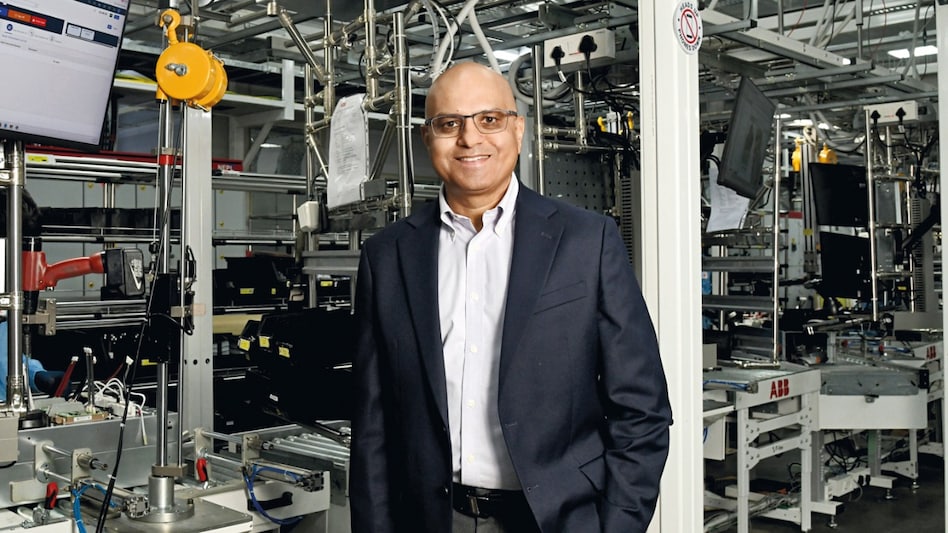
With localisation, service and technology at the core, Sanjeev Sharma is positioning ABB to capitalise on India's next industrial capex wave.
Palak Agarwal
- Apr 5, 2026,
- Updated Apr 5, 2026 7:01 PM IST
At a time when India’s industrial capex cycle is gaining momentum, Sanjeev Sharma has steered ABB India, the local arm of the Swiss engineering major, through a period of steady expansion and profitability. The company closed 2025 with its highest orders in five years, with inflows rising 52% to Rs 14,115 crore, while gross sales stood at Rs 13,065 crore. The consistent growth across orders, revenues, and profitability is one of the key reasons Sharma finds a place on the BT-PwC Best CEOs list this year.
Advertisement
On a quiet Wednesday afternoon in his office in Peenya, Bengaluru—about 32 km from the city centre—Sharma reflects on his four decades with the company. “It’s been fantastic,” he says. The engineer-turned-executive has spent his career largely within the organisation, taking on roles across geographies, including Germany and Southeast Asia, experiences that shaped both his professional outlook and leadership style.
ABB today employs around 10,000 people in India with the listed entity employing 4,500, making the country one of its top five locations.
In the past decade, Sharma has overseen a significant expansion of the company’s footprint. While ABB India operated in just eight market segments around 10 years ago, that number has now grown to 23. The company is widely recognised for manufacturing high-performance electric motors, robotics, and power technologies that support sectors ranging from manufacturing and infrastructure to emerging areas such as data centres.
Advertisement
“I won’t be surprised if new market segments open up, existing emerging segments become larger, and the core industries—which have not invested for a period of time—will invest heavily in the coming years,” says Sharma.
India’s industrial expansion closely aligns with ABB’s global strengths. “The country offers a broad and expanding industrial base that mirrors our global growth themes of electrification, automation, and sustainability,” he says.
The company’s recent performance reflects that alignment. Sharma attributes the December quarter performance partly to improving market conditions after a brief slowdown.
“If you look at the last calendar year, the first three quarters were timid. They were muted because of global uncertainties and some carry-over effects from 2024,” he says. “But we saw in the last quarter that the strength in the market has come back.”
Advertisement
Talking about the strategies behind scaling ABB India, Sharma places strong emphasis on servicing customers effectively. “Our theme and our understanding with all employees is that the customer is our only source of income. So, every day, from morning through evening, whenever we are spending time in the company, we think only of the customers and how to service them effectively.”
Another key lever driving growth is localisation. Recalling the Covid lockdown period, Sharma says the demand profile began to shift, prompting the firm to bring in more products.
“We suddenly found that the market had become far more sophisticated in its demands, with customers increasingly looking to localise,” he says. “That led to a strategic decision to localise our products. Importing complete units is more expensive, but when you localise, your dependence on external supply chains reduces and a domestic supply ecosystem gets built around you. Even if there are shocks, you are better able to manage them.”
Sharma says 90% of the business in India is localised. The intent is to continue localising at a much higher rate. The lower the dependency on dollar or euro imports, the higher the stability in prices.
Rishab Jain, Research Analyst at HDFC Securities, says ABB’s execution strength stems from a series of strategic initiatives, including an operating model that decentralises decision-making across 18 divisions, fostering agility and customer proximity, and a “local for local” strategy that leverages five manufacturing locations and 25 shop floors to build resilience. “The company has diversified its presence across 23 market segments, mitigating cyclical risks, while focusing on portfolio premiumisation through high-technology, energy-efficient products that align with sustainability goals,” he adds.
Advertisement
Echoing those views, Priyankar Biswas, Industrials and Logistics Research Analyst at JM Financials Institutional Securities Ltd, says the higher level of localisation and proactive build-up of inventory is a key strength.
On what keeps the company ahead despite intense competition, Sharma points to the strength of customer trust in ABB India’s products and solutions, an advantage rooted in its global capabilities and long-standing local presence.
“We have been manufacturing in India for 75 years, so customers see us as both a global and a local company,” Sharma says. “They know global quality products are available here. That’s our strength. Our serviceability is also very high compared to the competition.”
Another advantage, he adds, is the breadth of the product portfolio, which positions the firm well to grow with an expanding industrial economy. “Our portfolio is wide enough to support an aspiring country like India. We saw the same in China, where we grew rapidly alongside the country’s industrial expansion.”
Sharma also credits his team for providing stability. Many members of the leadership team have spent years—often decades—within the organisation, building deep institutional knowledge and a strong understanding of the company’s culture and customer-first approach.
Advertisement
According to Jain of HDFC Securities, ABB India’s earnings growth is expected to be broad-based, supported by momentum across several key segments. Data centres remain a primary structural driver, accounting for nearly 11% of the order book.
Growth is also expected from railways and metro projects, driven by propulsion systems for Indian Railways and electrification solutions for expanding urban metro networks. The electrification segment is another key pillar, supported by demand for smart power and distribution solutions across infrastructure and renewable energy projects.
Exports, which contribute 10–11% of revenue, remain a strategic focus as the firm expands into newer geographies on the African continent. Meanwhile, the automation business is likely to benefit from a recovery in core sectors such as metals, refining, and chemicals, along with increasing adoption of digitalisation and AI-led industrial solutions.
Under Sharma’s leadership, the company is betting that localisation, service and technology will remain its strongest competitive edge.
@PalakAgarwal64
At a time when India’s industrial capex cycle is gaining momentum, Sanjeev Sharma has steered ABB India, the local arm of the Swiss engineering major, through a period of steady expansion and profitability. The company closed 2025 with its highest orders in five years, with inflows rising 52% to Rs 14,115 crore, while gross sales stood at Rs 13,065 crore. The consistent growth across orders, revenues, and profitability is one of the key reasons Sharma finds a place on the BT-PwC Best CEOs list this year.
Advertisement
On a quiet Wednesday afternoon in his office in Peenya, Bengaluru—about 32 km from the city centre—Sharma reflects on his four decades with the company. “It’s been fantastic,” he says. The engineer-turned-executive has spent his career largely within the organisation, taking on roles across geographies, including Germany and Southeast Asia, experiences that shaped both his professional outlook and leadership style.
ABB today employs around 10,000 people in India with the listed entity employing 4,500, making the country one of its top five locations.
In the past decade, Sharma has overseen a significant expansion of the company’s footprint. While ABB India operated in just eight market segments around 10 years ago, that number has now grown to 23. The company is widely recognised for manufacturing high-performance electric motors, robotics, and power technologies that support sectors ranging from manufacturing and infrastructure to emerging areas such as data centres.
Advertisement
“I won’t be surprised if new market segments open up, existing emerging segments become larger, and the core industries—which have not invested for a period of time—will invest heavily in the coming years,” says Sharma.
India’s industrial expansion closely aligns with ABB’s global strengths. “The country offers a broad and expanding industrial base that mirrors our global growth themes of electrification, automation, and sustainability,” he says.
The company’s recent performance reflects that alignment. Sharma attributes the December quarter performance partly to improving market conditions after a brief slowdown.
“If you look at the last calendar year, the first three quarters were timid. They were muted because of global uncertainties and some carry-over effects from 2024,” he says. “But we saw in the last quarter that the strength in the market has come back.”
Advertisement
Talking about the strategies behind scaling ABB India, Sharma places strong emphasis on servicing customers effectively. “Our theme and our understanding with all employees is that the customer is our only source of income. So, every day, from morning through evening, whenever we are spending time in the company, we think only of the customers and how to service them effectively.”
Another key lever driving growth is localisation. Recalling the Covid lockdown period, Sharma says the demand profile began to shift, prompting the firm to bring in more products.
“We suddenly found that the market had become far more sophisticated in its demands, with customers increasingly looking to localise,” he says. “That led to a strategic decision to localise our products. Importing complete units is more expensive, but when you localise, your dependence on external supply chains reduces and a domestic supply ecosystem gets built around you. Even if there are shocks, you are better able to manage them.”
Sharma says 90% of the business in India is localised. The intent is to continue localising at a much higher rate. The lower the dependency on dollar or euro imports, the higher the stability in prices.
Rishab Jain, Research Analyst at HDFC Securities, says ABB’s execution strength stems from a series of strategic initiatives, including an operating model that decentralises decision-making across 18 divisions, fostering agility and customer proximity, and a “local for local” strategy that leverages five manufacturing locations and 25 shop floors to build resilience. “The company has diversified its presence across 23 market segments, mitigating cyclical risks, while focusing on portfolio premiumisation through high-technology, energy-efficient products that align with sustainability goals,” he adds.
Advertisement
Echoing those views, Priyankar Biswas, Industrials and Logistics Research Analyst at JM Financials Institutional Securities Ltd, says the higher level of localisation and proactive build-up of inventory is a key strength.
On what keeps the company ahead despite intense competition, Sharma points to the strength of customer trust in ABB India’s products and solutions, an advantage rooted in its global capabilities and long-standing local presence.
“We have been manufacturing in India for 75 years, so customers see us as both a global and a local company,” Sharma says. “They know global quality products are available here. That’s our strength. Our serviceability is also very high compared to the competition.”
Another advantage, he adds, is the breadth of the product portfolio, which positions the firm well to grow with an expanding industrial economy. “Our portfolio is wide enough to support an aspiring country like India. We saw the same in China, where we grew rapidly alongside the country’s industrial expansion.”
Sharma also credits his team for providing stability. Many members of the leadership team have spent years—often decades—within the organisation, building deep institutional knowledge and a strong understanding of the company’s culture and customer-first approach.
Advertisement
According to Jain of HDFC Securities, ABB India’s earnings growth is expected to be broad-based, supported by momentum across several key segments. Data centres remain a primary structural driver, accounting for nearly 11% of the order book.
Growth is also expected from railways and metro projects, driven by propulsion systems for Indian Railways and electrification solutions for expanding urban metro networks. The electrification segment is another key pillar, supported by demand for smart power and distribution solutions across infrastructure and renewable energy projects.
Exports, which contribute 10–11% of revenue, remain a strategic focus as the firm expands into newer geographies on the African continent. Meanwhile, the automation business is likely to benefit from a recovery in core sectors such as metals, refining, and chemicals, along with increasing adoption of digitalisation and AI-led industrial solutions.
Under Sharma’s leadership, the company is betting that localisation, service and technology will remain its strongest competitive edge.
@PalakAgarwal64
Read more!