
How Schaeffler India is pumping in €500 million over the next five years to boost capacity and increase localisation
How Schaeffler India is pumping in €500 million over the next five years to boost capacity and increase localisation
Bearings and transmission components maker Schaeffler India is pumping in euro 500 million over the next five years to boost capacity and increase localisation.
Priyanka Sangani
- May 27, 2026,
- Updated May 27, 2026 7:11 PM IST
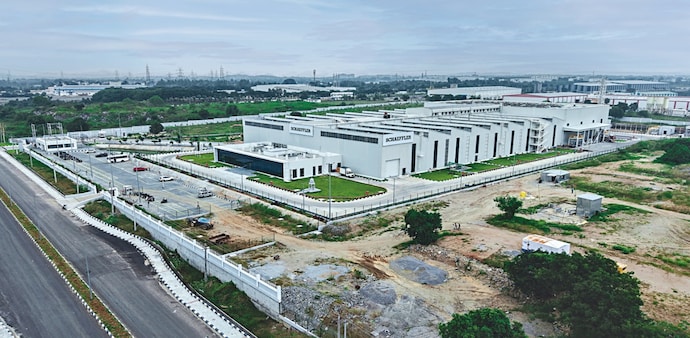
Last may, when German auto component maker Schaeffler inaugurated its fifth plant in the country at Shoolagiri, Tamil Nadu, it was an important step towards consolidating its long-term India strategy.
The facility expands its manufacturing presence in India and is part of the ongoing investments of €500 million (about `5,500 crore) that the company—which makes bearings and other engine and transmission components for automobile and industrial sectors—has earmarked for the next five years.
Advertisement
Though present in India since 1962 through FAG Bearings, in 2018, the company created a unified identity under the Schaeffler brand to tap into the growing India market.
The bet seems to be paying off. In 2018, Schaeffler had a turnover of about `4,500 crore and four manufacturing plants. By 2025, combined revenues had more than doubled to `9,395 crore. Profit was `1,196 crore, up 185% since 2018. Schaeffler India’s market capitalisation has jumped more than 450% over the period to more than `63,000 crore. The stock has risen 4% so far this calendar, trading at `3,980 a piece on May 18, compared with a 5% decline in the Nifty 500 index.
The company has six manufacturing plants now and three research and development (R&D) facilities as it evolves from a component maker to having a strong digital and engineering R&D ecosystem.
Advertisement
The target is to cash in on the burgeoning auto components market here. According to the Automotive Component Manufacturers Association of India, the domestic market has grown at a compound annual growth rate (CAGR) of 14% over the past five years to $80 billion and is projected to hit $200 billion by 2030. Likewise, the bearings industry, pegged at $5.2 billion in 2025, is expected to grow at a CAGR of 9.6% to more than double to $12 billion by 2034.
Beyond the numbers, there is a larger strategic shift that’s underway. The company is moving to newer technology areas, from providing purely mechanical solutions to electronics and mechatronics combined with software. “We’re graduating towards a sub-system player and into a system-level player,” says Harsha Kadam, Managing Director and CEO of Schaeffler India.
Advertisement
Schaeffler is adopting a lot of developments being powered from India globally. The 1,600-strong R&D team, split across Pune and Bengaluru, is working on cutting-edge research in areas like hydrogen fuel cells, electrolysers and humanoids, which Kadam says might not find use immediately in India, but can be deployed elsewhere.
Investment Focus
India’s strategic importance is reflected in the scale of the investments. Over the last five years, the company has, on average, invested `1,000 crore annually towards ramping up operations. The aim is to increase its manufacturing footprint and localise the product portfolio while meeting the growing demand in India. This year, it will invest `400-500 crore.
The plant in Tamil Nadu caters primarily to the auto industry, which accounts for about a third of the company’s turnover. It is meant to serve as a hub for production and expansion of conventional and electrified powertrain technologies.
Alongside, the engineering centres contribute to long-term programmes for the group. “While we are strengthening localisation across design and manufacturing, Schaeffler in India is also serving global needs,” says Madhurisha Vippatoori, Vice President (R&D) & CTO, Schaeffler India.
Analysts point out that the company has been growing consistently over the past few years aided by strong support from the parent entity. “Europe is ahead of India when it comes to adopting newer transmission systems. When Indian OEMs want to launch a new product, it’s easier for Schaeffler to import the core technology and adapt it locally, leading to a much faster time to market,” says an analyst.
Advertisement
The industry shift towards electrification and intelligent vehicles means higher feature integration, increased product efficiency and reliability.
-Madhurisha Vippatoori, Vice President (R&D) & CTO, Schaeffler India
“The company’s portfolio gives it an advantage as it operates at the premium end and has higher profitability and ROCE compared to most of its competitors,” says Deven Choksey, Managing Director of DRChoksey Finserv.
Kadam says there is a clear commitment on investments, including intellectual capabilities. And there is also a clear focus on transfer of technology and knowledge. For instance, while ICE technology is being phased out in Europe, demand remains robust in India. So, the company is moving certain production lines from Europe to India.
India Focus
Kadam says the past few years have been about creating a solid foundation in India, aided in part by acquisitions that helped fill certain capability gaps.
In 2023, it acquired Koovers (KRSV Innovative Auto Solutions), a Bengaluru-based business-to-business e-commerce platform, to enter the digital automotive aftermarket space. Last year, it bought Pune-based Dhruva Automation & Controls (now Schaeffler Digital), an engineering and service provider specialising in smart industrial automation and software solutions in the Asia Pacific region. It also acquired the Indian operations of the Vitesco Group, which operates in the power electronics segment. This was a global acquisition done by the parent company.
Advertisement
“Today, we are in a much stronger position to go to the customer to offer electromechanical solutions,” says Kadam. Plus, it is expanding the aftermarket business, which has tripled its turnover since the acquisition.
This puts Schaeffler at an advantage over some competitors as it offers digital solutions and not just traditional auto components. “The ecosystem is set in place. We now need to leverage it to meet the needs of the Indian market and industry,” says Kadam. India contributes over €1 billion to global revenue.
The recent push towards infrastructure spending and the transition underway in the auto industry are expected to boost the India business. “The portfolio sits at the intersection of structural tailwinds: railway modernisation, renewable energy capacity addition, auto premiumisation, and gradual transition to hybrids or EVs—all areas where the company has either a leadership position or a credible product road map,” says Raghunandhan NL, Executive Director of Nuvama Institutional Equities.
Another strategic choice is to operate at the peak of the pyramid. “Most automakers, whether Maruti, Tata Motors or Mahindra & Mahindra, are moving towards premiumisation, and this is a positive for Schaeffler,” says Choksey. The company could also benefit from India’s recently concluded free trade agreement with the European Union, which could help it export more to Germany and other markets on the continent.
Advertisement
In part, the emphasis on India can be seen as a derisking strategy against the recent geopolitical uncertainty. When the Ukraine war triggered high energy prices in Europe, the company started sourcing more components from India. Inter-company exports contribute about 15% to the turnover.
“There was a realisation that India had the technical competency to take over some of the production lines, and the cost arbitrage helped,” says Kadam. Exports grew over 30% year-on-year in the first quarter of 2026 and are likely to remain robust. Additionally, the engineering team is driving innovation across verticals. “India is a key pillar in Schaeffler’s global R&D network,” says Vippatoori.
Last year, the company achieved 78% localisation across its portfolio. Almost 90% of its automotive portfolio is localised, while in the industrial and bearings business, the shift has been more gradual over the last six years (localisation is close to 80%).
Moving up the Value Chain
Kadam says the company’s strategy is clear: move up the value chain. Schaeffler India recently restructured its business into four key verticals. The biggest is the powertrain, power transmission and chassis business, followed by the bearings and industrial solutions business, which caters to industrial and partly to auto. E-mobility is an emerging vertical where Kadam sees the most potential for system solutions. The final is vehicle lifetime solutions, or spare parts and after-market care.
“This portfolio balance is precisely what cushions the company during the slowdown in any of the segment,” says Raghunandhan.
The auto industry is undergoing a structural shift globally, transitioning from ICE to electric and hybrid variants. This means that engine-linked components will have to be redesigned even as new areas like thermal management, battery systems and embedded electronics gain importance. Here, the parent company’s tech expertise could give Schaeffler an edge.
Choksey says this can be a significant opportunity for Schaeffler even if it cannibalises some part of the ICE business.
Alongside, Schaeffler has regrouped its portfolio into eight product families. “The connecting thread that runs across all of these is motion. We are developing and designing solutions which contribute to motion,” says Kadam.
In the industrial business, the firm mainly supplies bearings, and there is room to provide solutions like condition monitoring devices that ensure reliability of the equipment, and tools like analytics.
With e-mobility, this transition is already underway. Schaeffler has set up an e-axle production line and provides the entire powertrain for the Tata Harrier. Nuvama’s Raghunandhan points to the setting up of this production line and relocation of a clutch line from the UK to Hosur as a structural pivot to a motion technology company.
Challenges
The fragmented nature of policymaking in India does throw some curveballs for the auto industry. For e-mobility, every state has a different policy and different rates of adoption that can make planning investments tricky. “We have products that are technology agnostic. So, we can work on hybrids and EVs, too,” says Kadam. However, ICE is still expected to remain strong in India over the next 15 years.
The strategy was very clear that we need to move up the value chain, and today, that's where we are. I see a huge transformation in the last five to six years, all centred around motion.
-Harsha Kadam, MD and CEO of Schaeffler India
The e-mobility transition is a double-edged opportunity, says Raghunandhan. Localisation of high-voltage electronics, magnets and rare-earth-dependent components remains work-in-progress,” he points out. “Further, the Tata e-axle programme is in phase-two localisation, with assembly of imported parts beginning around mid-CY26. Meaningful local value-add will take longer.”
The bigger issue for the industry is rising raw material prices. The war in West Asia has impacted metal prices, as well as LPG availability and cost, both of which are expected to impact profit margins. While the demand environment remains strong, there are murmurs of entry-level auto sales getting impacted. Further, manufacturers continue to struggle with challenges like proliferation of counterfeit spare parts and low-cost imports from China.
Future Focus
The shifts in the sector are also translating into a shift in the capabilities for which the company is hiring. While Schaeffler has been upskilling its existing workforce, it is hiring for skills in other emerging areas.
The auto industry could look very different in a few years’ time as the share of hybrids and EVs picks up. Besides, there is a strong push towards increasing the adoption of electronics within existing automobiles. Kadam says customers are now talking about a push towards software-defined vehicles, presenting a firm like Schaeffler the possibility of also making the software solution.
Ultimately, the focus on moving up the value chain, combined with closer integration with digital technology and analytics could help ensure that the transition over the next few years gives it long-term competitive advantage.
Last may, when German auto component maker Schaeffler inaugurated its fifth plant in the country at Shoolagiri, Tamil Nadu, it was an important step towards consolidating its long-term India strategy.
The facility expands its manufacturing presence in India and is part of the ongoing investments of €500 million (about `5,500 crore) that the company—which makes bearings and other engine and transmission components for automobile and industrial sectors—has earmarked for the next five years.
Advertisement
Though present in India since 1962 through FAG Bearings, in 2018, the company created a unified identity under the Schaeffler brand to tap into the growing India market.
The bet seems to be paying off. In 2018, Schaeffler had a turnover of about `4,500 crore and four manufacturing plants. By 2025, combined revenues had more than doubled to `9,395 crore. Profit was `1,196 crore, up 185% since 2018. Schaeffler India’s market capitalisation has jumped more than 450% over the period to more than `63,000 crore. The stock has risen 4% so far this calendar, trading at `3,980 a piece on May 18, compared with a 5% decline in the Nifty 500 index.
The company has six manufacturing plants now and three research and development (R&D) facilities as it evolves from a component maker to having a strong digital and engineering R&D ecosystem.
Advertisement
The target is to cash in on the burgeoning auto components market here. According to the Automotive Component Manufacturers Association of India, the domestic market has grown at a compound annual growth rate (CAGR) of 14% over the past five years to $80 billion and is projected to hit $200 billion by 2030. Likewise, the bearings industry, pegged at $5.2 billion in 2025, is expected to grow at a CAGR of 9.6% to more than double to $12 billion by 2034.
Beyond the numbers, there is a larger strategic shift that’s underway. The company is moving to newer technology areas, from providing purely mechanical solutions to electronics and mechatronics combined with software. “We’re graduating towards a sub-system player and into a system-level player,” says Harsha Kadam, Managing Director and CEO of Schaeffler India.
Advertisement
Schaeffler is adopting a lot of developments being powered from India globally. The 1,600-strong R&D team, split across Pune and Bengaluru, is working on cutting-edge research in areas like hydrogen fuel cells, electrolysers and humanoids, which Kadam says might not find use immediately in India, but can be deployed elsewhere.
Investment Focus
India’s strategic importance is reflected in the scale of the investments. Over the last five years, the company has, on average, invested `1,000 crore annually towards ramping up operations. The aim is to increase its manufacturing footprint and localise the product portfolio while meeting the growing demand in India. This year, it will invest `400-500 crore.
The plant in Tamil Nadu caters primarily to the auto industry, which accounts for about a third of the company’s turnover. It is meant to serve as a hub for production and expansion of conventional and electrified powertrain technologies.
Alongside, the engineering centres contribute to long-term programmes for the group. “While we are strengthening localisation across design and manufacturing, Schaeffler in India is also serving global needs,” says Madhurisha Vippatoori, Vice President (R&D) & CTO, Schaeffler India.
Analysts point out that the company has been growing consistently over the past few years aided by strong support from the parent entity. “Europe is ahead of India when it comes to adopting newer transmission systems. When Indian OEMs want to launch a new product, it’s easier for Schaeffler to import the core technology and adapt it locally, leading to a much faster time to market,” says an analyst.
Advertisement
The industry shift towards electrification and intelligent vehicles means higher feature integration, increased product efficiency and reliability.
-Madhurisha Vippatoori, Vice President (R&D) & CTO, Schaeffler India
“The company’s portfolio gives it an advantage as it operates at the premium end and has higher profitability and ROCE compared to most of its competitors,” says Deven Choksey, Managing Director of DRChoksey Finserv.
Kadam says there is a clear commitment on investments, including intellectual capabilities. And there is also a clear focus on transfer of technology and knowledge. For instance, while ICE technology is being phased out in Europe, demand remains robust in India. So, the company is moving certain production lines from Europe to India.
India Focus
Kadam says the past few years have been about creating a solid foundation in India, aided in part by acquisitions that helped fill certain capability gaps.
In 2023, it acquired Koovers (KRSV Innovative Auto Solutions), a Bengaluru-based business-to-business e-commerce platform, to enter the digital automotive aftermarket space. Last year, it bought Pune-based Dhruva Automation & Controls (now Schaeffler Digital), an engineering and service provider specialising in smart industrial automation and software solutions in the Asia Pacific region. It also acquired the Indian operations of the Vitesco Group, which operates in the power electronics segment. This was a global acquisition done by the parent company.
Advertisement
“Today, we are in a much stronger position to go to the customer to offer electromechanical solutions,” says Kadam. Plus, it is expanding the aftermarket business, which has tripled its turnover since the acquisition.
This puts Schaeffler at an advantage over some competitors as it offers digital solutions and not just traditional auto components. “The ecosystem is set in place. We now need to leverage it to meet the needs of the Indian market and industry,” says Kadam. India contributes over €1 billion to global revenue.
The recent push towards infrastructure spending and the transition underway in the auto industry are expected to boost the India business. “The portfolio sits at the intersection of structural tailwinds: railway modernisation, renewable energy capacity addition, auto premiumisation, and gradual transition to hybrids or EVs—all areas where the company has either a leadership position or a credible product road map,” says Raghunandhan NL, Executive Director of Nuvama Institutional Equities.
Another strategic choice is to operate at the peak of the pyramid. “Most automakers, whether Maruti, Tata Motors or Mahindra & Mahindra, are moving towards premiumisation, and this is a positive for Schaeffler,” says Choksey. The company could also benefit from India’s recently concluded free trade agreement with the European Union, which could help it export more to Germany and other markets on the continent.
Advertisement
In part, the emphasis on India can be seen as a derisking strategy against the recent geopolitical uncertainty. When the Ukraine war triggered high energy prices in Europe, the company started sourcing more components from India. Inter-company exports contribute about 15% to the turnover.
“There was a realisation that India had the technical competency to take over some of the production lines, and the cost arbitrage helped,” says Kadam. Exports grew over 30% year-on-year in the first quarter of 2026 and are likely to remain robust. Additionally, the engineering team is driving innovation across verticals. “India is a key pillar in Schaeffler’s global R&D network,” says Vippatoori.
Last year, the company achieved 78% localisation across its portfolio. Almost 90% of its automotive portfolio is localised, while in the industrial and bearings business, the shift has been more gradual over the last six years (localisation is close to 80%).
Moving up the Value Chain
Kadam says the company’s strategy is clear: move up the value chain. Schaeffler India recently restructured its business into four key verticals. The biggest is the powertrain, power transmission and chassis business, followed by the bearings and industrial solutions business, which caters to industrial and partly to auto. E-mobility is an emerging vertical where Kadam sees the most potential for system solutions. The final is vehicle lifetime solutions, or spare parts and after-market care.
“This portfolio balance is precisely what cushions the company during the slowdown in any of the segment,” says Raghunandhan.
The auto industry is undergoing a structural shift globally, transitioning from ICE to electric and hybrid variants. This means that engine-linked components will have to be redesigned even as new areas like thermal management, battery systems and embedded electronics gain importance. Here, the parent company’s tech expertise could give Schaeffler an edge.
Choksey says this can be a significant opportunity for Schaeffler even if it cannibalises some part of the ICE business.
Alongside, Schaeffler has regrouped its portfolio into eight product families. “The connecting thread that runs across all of these is motion. We are developing and designing solutions which contribute to motion,” says Kadam.
In the industrial business, the firm mainly supplies bearings, and there is room to provide solutions like condition monitoring devices that ensure reliability of the equipment, and tools like analytics.
With e-mobility, this transition is already underway. Schaeffler has set up an e-axle production line and provides the entire powertrain for the Tata Harrier. Nuvama’s Raghunandhan points to the setting up of this production line and relocation of a clutch line from the UK to Hosur as a structural pivot to a motion technology company.
Challenges
The fragmented nature of policymaking in India does throw some curveballs for the auto industry. For e-mobility, every state has a different policy and different rates of adoption that can make planning investments tricky. “We have products that are technology agnostic. So, we can work on hybrids and EVs, too,” says Kadam. However, ICE is still expected to remain strong in India over the next 15 years.
The strategy was very clear that we need to move up the value chain, and today, that's where we are. I see a huge transformation in the last five to six years, all centred around motion.
-Harsha Kadam, MD and CEO of Schaeffler India
The e-mobility transition is a double-edged opportunity, says Raghunandhan. Localisation of high-voltage electronics, magnets and rare-earth-dependent components remains work-in-progress,” he points out. “Further, the Tata e-axle programme is in phase-two localisation, with assembly of imported parts beginning around mid-CY26. Meaningful local value-add will take longer.”
The bigger issue for the industry is rising raw material prices. The war in West Asia has impacted metal prices, as well as LPG availability and cost, both of which are expected to impact profit margins. While the demand environment remains strong, there are murmurs of entry-level auto sales getting impacted. Further, manufacturers continue to struggle with challenges like proliferation of counterfeit spare parts and low-cost imports from China.
Future Focus
The shifts in the sector are also translating into a shift in the capabilities for which the company is hiring. While Schaeffler has been upskilling its existing workforce, it is hiring for skills in other emerging areas.
The auto industry could look very different in a few years’ time as the share of hybrids and EVs picks up. Besides, there is a strong push towards increasing the adoption of electronics within existing automobiles. Kadam says customers are now talking about a push towards software-defined vehicles, presenting a firm like Schaeffler the possibility of also making the software solution.
Ultimately, the focus on moving up the value chain, combined with closer integration with digital technology and analytics could help ensure that the transition over the next few years gives it long-term competitive advantage.
Read more!