
How Tata Steel is growing aggressively while minimising its carbon footprint
How Tata Steel is growing aggressively while minimising its carbon footprint
From green steel and circularity to water positivity and waste-to-value initiatives, Tata Steel is placing long-term bets on sustainability practices.
Palak Agarwal
- Jun 10, 2026,
- Updated Jun 10, 2026 4:50 PM IST
Steel remains the backbone of India’s infrastructure and industrial ambitions, powering everything from highways and railways to homes and automobiles. Yet, the sector also sits at the centre of the global climate debate as one of the world’s largest carbon emitters. As India prepares for a massive infrastructure and manufacturing buildout over the next two decades, Tata Steel is attempting to answer a difficult question—can a steelmaker continue to grow aggressively without sharply increasing its carbon footprint?
Advertisement
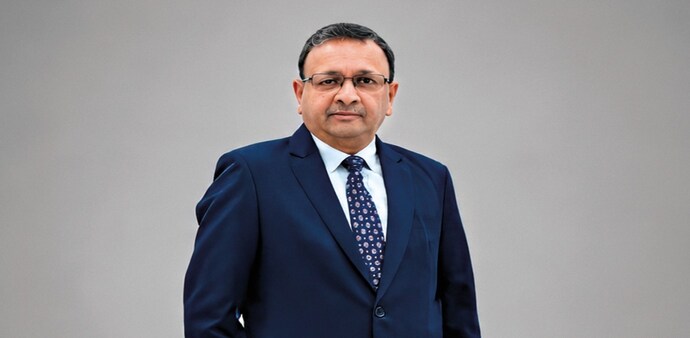
The answer, according to Rajiv Mangal, the Vice President of Safety, Health, and Sustainability, Tata Steel, lies in reimagining what “green steel” means for a fast-growing economy like India. It has been recognised as the Most Sustainable Company in Metals & Mining in the category of Sectoral Excellence in Manufacturing in this year’s BT India’s Most Sustainable Companies. Speaking to Business Today, Mangal says India’s steel demand is only at the beginning of a long growth cycle. “India’s per capita steel consumption is less than half the global average. As a developing nation, demand for steel will continue to grow for at least the next two decades.”
Unlike Western economies, where steel demand has largely stabilised, India faces the dual challenge of sustaining industrial growth while transitioning towards low-carbon manufacturing. “The challenge for steel companies is how to plan growth and green steel without creating stranded assets, because steel is an extremely capital-intensive business and with one wrong move it can get us into problems 10-20 years down line,” says Mangal.
Advertisement
For Tata Steel, the sustainability push is not centred around a single technology bet. Instead, the company is pursuing multiple pathways. “Our approach is a combination of deploying available technologies and investing for the future—from increasing renewable energy use and energy-efficiency projects to exploring biochar as a substitute for coal and increasing scrap usage in steelmaking,” he says.
That broader strategy spans energy-efficient technologies, embedding climate risk into enterprise decision-making, biodiversity conservation and circular economy initiatives. The company has aligned itself with the World Economic Forum’s Trillion Trees initiative through afforestation targets, while also pushing towards complete utilisation of industrial by-products.
Advertisement
Circularity, in fact, has evolved into a business vertical of its own within Tata Steel. Mangal says the company prefers the term “by-product management” over waste management because industrial waste can become a revenue-generating asset. At its current production scale of nearly 25 million tonnes, Tata Steel generates around 15 million tonnes of by-products annually.
“Many years ago, we realised that what is often treated as waste can be converted into valuable products,” he says. The company subsequently created a dedicated Industrial By-Product Management Division focused on extracting commercial value from industrial waste.
At present, 99.9% of Tata Steel’s by-products are either recycled, reused or consumed by other industries, with less than 0.1% going to the landfill, says Mangal. The company is aiming for full utilisation of by-products by 2030.
Water conservation has also emerged as a central pillar of Tata Steel’s sustainability road map, particularly as many of its operations are in water-stressed regions. The company has set a target to become water positive by 2030.
Tata Steel currently operates across nine river basins in India owing to its presence across eastern, northern, western and southern geographies. According to Mangal, the company has already achieved water positivity in five river basins, while work is underway in the remaining four.
Advertisement
Even as Tata Steel ramps up investments in low-carbon technologies, Mangal acknowledges that the economics of green steel remain challenging due to higher costs.
The company is engaging with policymakers on several fronts and advocating government-led green procurement, where infrastructure projects such as railways and bridges prioritise low-carbon steel and create a premium market for sustainable products. Beyond that, Tata Steel sees long-term opportunities in clean energy ecosystems such as hydrogen and nuclear power, areas where policy clarity and public-private collaboration could shape the future of industrial decarbonisation in India.
For Tata Steel, it is increasingly becoming a long-term business strategy, one that seeks to prepare the company for a future where growth, climate accountability and industrial competitiveness coexist.
@PalakAgarwal64
Steel remains the backbone of India’s infrastructure and industrial ambitions, powering everything from highways and railways to homes and automobiles. Yet, the sector also sits at the centre of the global climate debate as one of the world’s largest carbon emitters. As India prepares for a massive infrastructure and manufacturing buildout over the next two decades, Tata Steel is attempting to answer a difficult question—can a steelmaker continue to grow aggressively without sharply increasing its carbon footprint?
Advertisement
The answer, according to Rajiv Mangal, the Vice President of Safety, Health, and Sustainability, Tata Steel, lies in reimagining what “green steel” means for a fast-growing economy like India. It has been recognised as the Most Sustainable Company in Metals & Mining in the category of Sectoral Excellence in Manufacturing in this year’s BT India’s Most Sustainable Companies. Speaking to Business Today, Mangal says India’s steel demand is only at the beginning of a long growth cycle. “India’s per capita steel consumption is less than half the global average. As a developing nation, demand for steel will continue to grow for at least the next two decades.”
Unlike Western economies, where steel demand has largely stabilised, India faces the dual challenge of sustaining industrial growth while transitioning towards low-carbon manufacturing. “The challenge for steel companies is how to plan growth and green steel without creating stranded assets, because steel is an extremely capital-intensive business and with one wrong move it can get us into problems 10-20 years down line,” says Mangal.
Advertisement
For Tata Steel, the sustainability push is not centred around a single technology bet. Instead, the company is pursuing multiple pathways. “Our approach is a combination of deploying available technologies and investing for the future—from increasing renewable energy use and energy-efficiency projects to exploring biochar as a substitute for coal and increasing scrap usage in steelmaking,” he says.
That broader strategy spans energy-efficient technologies, embedding climate risk into enterprise decision-making, biodiversity conservation and circular economy initiatives. The company has aligned itself with the World Economic Forum’s Trillion Trees initiative through afforestation targets, while also pushing towards complete utilisation of industrial by-products.
Advertisement
Circularity, in fact, has evolved into a business vertical of its own within Tata Steel. Mangal says the company prefers the term “by-product management” over waste management because industrial waste can become a revenue-generating asset. At its current production scale of nearly 25 million tonnes, Tata Steel generates around 15 million tonnes of by-products annually.
“Many years ago, we realised that what is often treated as waste can be converted into valuable products,” he says. The company subsequently created a dedicated Industrial By-Product Management Division focused on extracting commercial value from industrial waste.
At present, 99.9% of Tata Steel’s by-products are either recycled, reused or consumed by other industries, with less than 0.1% going to the landfill, says Mangal. The company is aiming for full utilisation of by-products by 2030.
Water conservation has also emerged as a central pillar of Tata Steel’s sustainability road map, particularly as many of its operations are in water-stressed regions. The company has set a target to become water positive by 2030.
Tata Steel currently operates across nine river basins in India owing to its presence across eastern, northern, western and southern geographies. According to Mangal, the company has already achieved water positivity in five river basins, while work is underway in the remaining four.
Advertisement
Even as Tata Steel ramps up investments in low-carbon technologies, Mangal acknowledges that the economics of green steel remain challenging due to higher costs.
The company is engaging with policymakers on several fronts and advocating government-led green procurement, where infrastructure projects such as railways and bridges prioritise low-carbon steel and create a premium market for sustainable products. Beyond that, Tata Steel sees long-term opportunities in clean energy ecosystems such as hydrogen and nuclear power, areas where policy clarity and public-private collaboration could shape the future of industrial decarbonisation in India.
For Tata Steel, it is increasingly becoming a long-term business strategy, one that seeks to prepare the company for a future where growth, climate accountability and industrial competitiveness coexist.
@PalakAgarwal64
Read more!