
How the gadget generation is redefining India’s consumer tech market
From wearables and audio to smart homes and wellness tech, Gen Z now drives almost 50% of India's $45-50 billion consumer tech market.
Palak Agarwal
- Jan 30, 2026,
- Updated Feb 13, 2026 5:26 PM IST
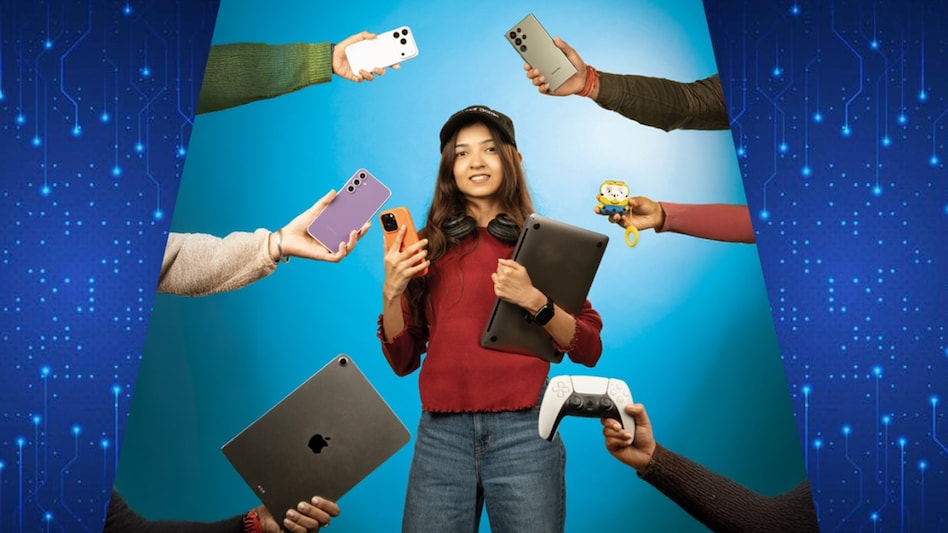
They are called Gen Z, but in India’s fast-evolving consumer economy, a more accurate label may perhaps be the gadget generation. This is a cohort that splurges willingly on travel, concerts and experiences, yet an equally significant share of its discretionary spending is channelled to technology. And no, it isn’t just smartphones.
Hey!
Already a subscriber? Sign In
THIS IS A PREMIUM STORY FROM BUSINESS TODAY.
Subscribe to Business Today Digital and continue enjoying India's premier business offering uninterrupted
only FOR
₹999 / Year
Unlimited Digital Access + Ad Lite Experience
Cancel Anytime
-
 Unlimited access to Business Today website
 -
 Exclusive insights on Corporate India's working, every quarter
 -
 Access to our special editions, features, and priceless archives
 -
 Get front-seat access to events such as BT Best Banks, Best CEOs and Mindrush
They are called Gen Z, but in India’s fast-evolving consumer economy, a more accurate label may perhaps be the gadget generation. This is a cohort that splurges willingly on travel, concerts and experiences, yet an equally significant share of its discretionary spending is channelled to technology. And no, it isn’t just smartphones.
Advertisement
From gaming consoles and audio wearables to healthtech devices, personalised accessories and smart home products, Gen Z’s relationship with gadgets is expansive and deeply personal. Technology, for them, is not just functional, it is immersive, expressive and constantly connected. What matters just as much is whether a product aligns with their values: sustainability, authenticity, brand purpose and, crucially, social validation. For a generation raised on Instagram reels, YouTube reviews and creator-led discovery, a gadget is as much a lifestyle signal as it is a utility.
The numbers show why brands are scrambling for relevance. According to reports, of India’s $45–50 billion consumer tech devices market, almost half or nearly $20–25 billion is driven by Gen Z, or Zoomers. At an estimated 377 million people today, Zoomers already are the largest generation India has seen. Born into an internet-connected economy where digital consumption was inevitable, technology is the backbone of their lives.
Advertisement
Smartphones continue to anchor this ecosystem. According to the BT–PRICE Gen Z Consumption Behaviour Survey, smartphones are at the centre of their digital life, and device choice clearly reflects income, education and aspiration levels. The iPhone dominates smartphone usage in this cohort at 31%, with penetration rising sharply among metro users, post-graduates and those with higher incomes. Usage jumps from 10% in those who earn less than `2 lakh to nearly 80% among those earning over `15 lakh.
At 23%, Samsung remains the strongest mass-market rival across income groups, while Chinese brands like Vivo, Xiaomi and Oppo resonate with lower-income and Tier II consumers. Despite premium momentum, the `25,000–50,000 mid-premium band remains the most popular.
However, spending is also increasingly spilling over into adjacent categories. Wearables, audio devices, wellness gadgets, gaming hardware and smart appliances are finding greater acceptance among young buyers who view technology as an extension of their lifestyle rather than a standalone purchase. The shift marks a move away from single-device dependence to an ecosystem of connected, purpose-built products.
Advertisement
“India’s Gen Z is not just the next wave of consumers. They are fundamentally reshaping how technology is evaluated, adopted, and integrated into daily life,” says Sachin Gupta, General Manager at German wellness technology company Healy World India, known for its compact wearable health devices, which entered the Indian market in 2019.
Gupta points to a clear generational shift. Unlike earlier cohorts, Gen Z evaluates technology through the lens of utility, impact and lifestyle fit. “They are far more conscious of how technology affects sleep, focus and mental wellbeing,” he says. As a result, companies like Healy World are seeing young consumers actively questioning technology’s long-term impact on health and quality of life, and they don’t mind spending.
The stakes are high. As per BCG, Gen Z already influences nearly $860 billion of consumer spending globally. That is projected to swell to $2 trillion over the next decade. For brands, winning this generation early could translate into long-term loyalty. But there is a catch: Gen Z demands relevance, transparency and authenticity and is quick to disengage if brands fail to deliver.
Market and Momentum
Advertisement
Research rests at the heart of Gen Z’s buying behaviour, though not the conventional kind. This is a generation shaped by social media, where discovery is continuous and led by creators. “Today’s social media feed isn’t just an ad channel; it’s the new prime-time television for discovery,” says Adarsh Menon, Partner at venture capital firm Fireside Ventures. “That is now at the core of how the new generation shops.”
Creators, in many ways, have replaced traditional advertising. Their content—raw, relatable and experiential—carries far more credibility for Gen Z than glossy brand campaigns. A product review, a ‘day-in-the-life’ reel or a fitness challenge can trigger demand far more effectively than a full-page print ad.
“Gen Z’s path to purchase is increasingly shaped by social feeds, short-form video and influencer cues, and then validated through omnichannel journeys and rapid fulfilment options—same day or next day—which they now expect as table stakes,” says Anand Ramanathan, Partner and Consumer Industry Leader at Deloitte India. Discovery may happen online, but confirmation often occurs offline through experience centres, in-store demos or augmented reality (AR)-led trials.
For Indian consumer tech brands like Noise, this isn’t new. “India is the country for youngsters. We would be the fastest to absorb any technology that comes in—it just has to make sense in our lives,” says Gaurav Khatri, Founder of Noise.
Advertisement
Youth has always been central to Noise’s strategy. Nearly 33% of its users are aged below 24, with another 33% between 24 and 34. But Khatri says Gen Z buyers are markedly different from millennials. “They are far more specific about solving one problem at a time,” he explains. “For sleep, they want one device. For GPS-led activities, another. They don’t want one device doing everything.”
This is forcing brands to rethink product design and portfolio strategy. As core technologies mature and innovation plateaus, differentiation increasingly comes from lifestyle relevance. “Consumers today understand wearables far better than they did five years ago,” says Khatri. “It’s no longer just a watch or a step counter. It’s an evolved product designed for specific use cases.”
From Deloitte’s vantage point, this shift is clearly visible across categories. Wearables, smart home and security devices, gaming and emerging interfaces continue to see strong traction, even as smartphones remain central. “Growth energy now sits in audio—TWS earbuds and smart speakers—because Gen Z’s leisure and learning are audio-first,” Ramanathan notes. Music, podcasts, creator content and short video dominate daily consumption, making audio devices a natural extension.
Quick commerce availability and omnichannel ‘try-and-buy’ models are further accelerating adoption. Experience centres, AR demos and same-day delivery are boosting accessory attach rates, a behaviour Ramanathan likens to patterns seen in travel and leisure, where experience-led choices and premium upgrades are becoming the norm.
Advertisement
Importantly, Gen Z is shopping more mindfully. Deloitte’s analyses point to a dual trend—premiumisation coupled with value consciousness. Gen Z is willing to pay a premium when a device aligns with a clear purpose, be it wellness, safety or creativity, and ethics such as clean materials, energy efficiency and sustainability.
In home technology, for instance, the growing uptake of low-energy smart devices suggests sustainability is a functional specification that can tip purchase decisions when the price difference is modest. Privacy, too, is emerging as a critical factor. While Gen Z thrives on social discovery, heightened anxiety around health and economic uncertainty has made them cautious. Brands that communicate transparent data practices and permission-based sharing are gaining trust, particularly in categories like cameras, smart locks and wearables.
Even the kitchen is being reimagined. “Gen Z consumers are increasingly willing to pay a premium for smart, tech-enabled appliances,” says Mahek Mody, founder of Upliance.ai, an AI cooking assistant start-up. Young consumers want greater control over what they eat, and features like touchscreens, long expected in cars and scooters, are now moving indoors.
The opportunity ahead is massive. But tapping this market requires a reset in go-to-market strategies. “Go-to-market is being rebuilt around content-led funnels,” says Ramanathan. Creator videos drive awareness, micro-influencers build credibility for niche specifications, and short-form explainers convert interest into action.
For consumer tech companies, this means rethinking everything from product pages to backend operations. Creator content, live demos and upgrade offers are now embedded into digital storefronts, while physical retail is being augmented with smart shelves and assisted selling. Behind the scenes, AI-led demand forecasting and automated warehouses are helping brands respond to sudden spikes triggered by viral content.
D2C-native brands are leveraging quick commerce for accessories and trials, while legacy players are localising creator strategies across Tier II and III markets, where young cohorts are rising fast.
For India’s consumer tech ecosystem, Gen Z is redefining how technology is discovered, evaluated and consumed, one scroll, one reel and one gadget at a time.
@PalakAgarwal64
Read more!