
India’s Global Bank HSBC India stands Out
A conservative balance sheet, disciplined growth, and sharp execution have helped HSBC India stand out among foreign banks and bag two awards.
Anand Adhikari
- Mar 2, 2026,
- Updated Mar 2, 2026 10:11 PM IST
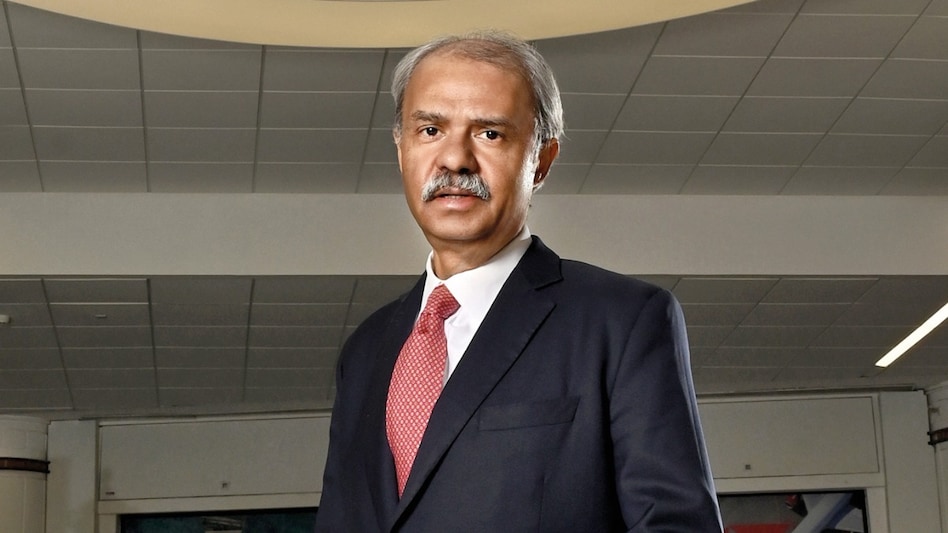
Foreign banks in India have long been associated with cyclical expansion and retreat, selling businesses, or downsizing operations. But HSBC India—with a presence in the country spanning over 170 years—has stayed focused, and is quietly racing ahead. “Our ambition is clear: we want to be the fifth-largest private bank in India, while remaining true to our principles,” says Hitendra Dave, CEO of HSBC India. HSBC India is ranked 8th among private banks based on total assets.
Hey!
Already a subscriber? Sign In
THIS IS A PREMIUM STORY FROM BUSINESS TODAY.
Subscribe to Business Today Digital and continue enjoying India's premier business offering uninterrupted
only FOR
₹999 / Year
Unlimited Digital Access + Ad Lite Experience
Cancel Anytime
-
 Unlimited access to Business Today website
 -
 Exclusive insights on Corporate India's working, every quarter
 -
 Access to our special editions, features, and priceless archives
 -
 Get front-seat access to events such as BT Best Banks, Best CEOs and Mindrush
Foreign banks in India have long been associated with cyclical expansion and retreat, selling businesses, or downsizing operations. But HSBC India—with a presence in the country spanning over 170 years—has stayed focused, and is quietly racing ahead. “Our ambition is clear: we want to be the fifth-largest private bank in India, while remaining true to our principles,” says Hitendra Dave, CEO of HSBC India. HSBC India is ranked 8th among private banks based on total assets.
Advertisement
Dave says HSBC is long-term in its thinking and relationship-oriented in its approach. “There are many clients whose values and ways of thinking align with ours,” he says.
Today, almost half of MNCs bank with HSBC India. It has the highest market share in GCCs. The bank has been supporting a record number of acquisitions by Indian companies abroad. It is a full-service foreign bank, offering salary accounts, mortgages, credit cards, wealth management, and NRI services, apart from several other international products.
The strategy is beginning to show in the numbers. HSBC India has posted one of the strongest growth among foreign banks operating in the country.
Advertisement
According to the BT-KPMG India’s Best Banks & NBFCs Survey, loans and advances grew 26% year-on-year, the second in the peer set, while the three-year CAGR is a robust 19.2%, suggesting this is not a one-off spike.
Dave gives three reasons for the bank’s high growth. “We have always maintained a very conservative balance sheet. And that is for a reason—when our customers say, ‘today we need financing,’ that is when we step up,” he says. Dave says the bank is not in the business of bidding for assets.
The second reason is the bank’s capabilities in structured trade. “What we can do in structured trade, I do not think anyone else comes close to us,” says Dave. Structured trade has many advantages for banks in terms of capital treatment. Even corporates have an option to keep it off the balance sheet.
Advertisement
Third, over the last three years, the bank’s retail loan portfolio—including mortgages, cards and other assets—has grown at close to 20%.
That consistency is probably why HSBC India has emerged a winner in two categories—the Best Foreign Bank as well as the jury winner for Best Innovation in the foreign banking space.
What is important is that this sustained growth has been anchored in a highly secured balance sheet. Per the BT-KPMG study, secured advances account for 66.43% of the loan book—the highest among peers—compared with around 56% for Deutsche Bank, which is ranked 2nd, and 55% for Standard Chartered, which is ranked 7th in the survey.
The bank recently received RBI’s licence for 20 more branches in cities like Bhopal, Jalandhar, Dehradun, Nashik and Vadodara, which will expand its presence from 14 to 34 cities. This will make it the second-largest foreign bank in India by branch network after Standard Chartered.
HSBC is probably the first foreign bank, after almost two to three decades, to pursue expansion at this scale. “We have already opened four branches,” says Dave. Branch expansion blends local presence with global capabilities to tap emerging wealth centres and connect Indian clients to global opportunities.
Advertisement
The selection of cities was based on three primary criteria—level of wealth, size of NRI population, and the city’s role as a manufacturing hub so that the bank can support trade. “The decision reflects a clear shift in the geography of wealth in India over the past decade. Wealth, once concentrated in metropolitan areas, is now far more dispersed. Banks go where customers are,” says Dave, whose bank also offers products for children’s foreign education, international investing, and starting a business overseas. There is also a GIFT City offering for global wealth products, investment banking, and corporate solutions.
CASA ADVANTAGE
While additional branches can drive deposit growth, the bank is already gaining share in CASA deposits. It has clocked the second-highest growth in CASA at 13%. Within CASA, savings accounts have grown in double digits.
“We are very clear on one thing: banks that can grow low-cost liabilities will be the winners,” says Dave. He explains at the retail level, it can be as simple as making the credit card attractive. “If customers use our card more, they have to settle payments with us, which keeps balances in the account. The same applies to wealth. When clients engage with us for investments, money flows through our accounts. We also have unique capabilities such as efficient Liberalised Remittance Scheme processing, including through GIFT City,” he says.
Advertisement
On the corporate side, it is about being embedded in critical flows—salary processing, dividend payouts, EPFO payments. “We are the only international bank that can process EPFO payments end-to-end,” says Dave.
HSBC India has set up a dedicated division called “Innovation Banking’—a platform designed to support start-ups at every stage. The bank has set aside $1 billion in non-dilutive debt, allowing founders to grow without giving up equity. Linked to HSBC’s global Innovation Banking network, it gives Indian start-ups access to capital, expertise, and international markets. “We back them because we believe in the business model, even when the market is not yet ready,” says Dave.
AI ADOPTION
HSBC India has been at the forefront of digital adoption across all major processes for retail, wholesale, and transaction banking business units. In fact, it has emerged as the best bank in the innovation category among foreign banks. The bank’s innovation is focussed on AI-driven customer insights and decisions, modernised digital channels (API-first, Cloud-ready), process re-engineering using automation and workflow digitisation across retail, wholesale, and transaction banking. For example, a mortgage processing pre-approval, which took two days, now gets complete in 45 minutes through digital documentation, automated property checks, etc. “It frees up our relationship managers to focus on higher-value work, and it reassures customers that they are dealing with a bank that is both knowledgeable and responsive,” says Dave.
Advertisement
“We are applying the same approach to FEMA, which generates the highest volume of queries, from both customers and internal teams. This creates significant value for our relationship managers as well as for customers, because the system now provides instant answers,” says Dave.
With a conservative balance sheet, disciplined expansion, and innovation, HSBC India is redefining what long-term foreign banking success in India looks like.
Read more!