
Luxury Has a New Address—Small-town India
Demand for luxury housing is not showing any sign of ending anytime soon. The segment has caught the imagination of the well-heeled even in small-town India.
E. Jayashree Kurup
- Sep 1, 2025,
- Updated Sep 5, 2025 5:42 PM IST
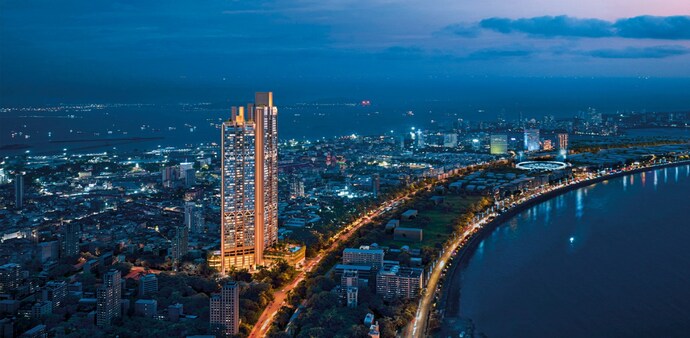
When DLF ventured into the Mumbai property market in July, India’s largest real estate developer kept its sights low. It hoped to sell two of the four 37-storey towers in the first phase of the Westpark project in Andheri West.
Hey!
Already a subscriber? Sign In
THIS IS A PREMIUM STORY FROM BUSINESS TODAY.
Subscribe to Business Today Digital and continue enjoying India's premier business offering uninterrupted
only FOR
₹999 / Year
Unlimited Digital Access + Ad Lite Experience
Cancel Anytime
-
 Unlimited access to Business Today website
 -
 Exclusive insights on Corporate India's working, every quarter
 -
 Access to our special editions, features, and priceless archives
 -
 Get front-seat access to events such as BT Best Banks, Best CEOs and Mindrush
When DLF ventured into the Mumbai property market in July, India’s largest real estate developer kept its sights low. It hoped to sell two of the four 37-storey towers in the first phase of the Westpark project in Andheri West.
Coming up on 5.18 acres carved out of a slum redevelopment site, Westpark drew sufficient demand for DLF and partner Trident Realty to announce that the 416 three- and four-bedroom units across the four towers had been sold out by July-end. The project recorded Rs 2,300 crore in sales from buyers who included entrepreneurs, corporate leaders and entertainment industry figures.
Advertisement
To be sure, DLF has experienced this kind of buying frenzy for premium properties in the past, but in another geography—in Privana North in Gurugram, its home base. It clocked Rs 11,000 crore of sales in a week. The company has reported sales of Rs 21,223 crore in FY25, up 44% from Rs 14,798 crore the previous year, the kind of success that does not happen by chance.
Aakash Ohri, Joint Managing Director and Chief Business Officer, DLF Home Developers Ltd, says, “The inventory for Phase 1 of the (Andheri) project has been sold out in less than a week, a remarkable outcome in a market characterised by gradual absorption. Initially, we launched only two of the four planned towers, but due to exceptional demand, we brought all four towers to the market.”
Advertisement
This confirmed a boom in Mumbai’s premium luxury residential market where sales of such properties, priced Rs 10 crore and above, touched a record Rs 14,750 crore in the first half of 2025. Sales of residential units costing between Rs 20 crore and Rs 40 crore have grown 138% between the first half of CY2022 and the first half of CY2025 and account for a 23% share of the market, according to India Sotheby’s International Realty and CRE Matrix Luxury Housing report.
Will the red-hot pace be maintained?
Does the market have the appetite to sustain sales of 1,335 units across primary and secondary markets in 12 months? Investors and high net worth buyers remain optimistic, but experts warn the pace will likely moderate.
Advertisement
One of the biggest reasons for the boom is the phenomenal infrastructure boost of the past few years. This opened up new tracts of land to development, benefitting premium luxury, mid-market and affordable segments. Traditional luxury hubs such as Worli, Bandra West, Tardeo and Prabhadevi have all posted robust sales.
Worli saw sales of 32 units instead of 60 the previous year, but the total consideration was Rs 2,400 crore, according to the Sotheby-CRE Matrix report. Bandra West and Tardeo sold more units while Prabhadevi topped in unit sales. Growth rates of 192% (Bandra West) and 254% (Tardeo) testified to the robust demand.
Another regional real estate giant, the Prestige Group from Bengaluru, has also has launched a project successfully in Mumbai’s luxury market.Zayd Noaman, Executive Director, Chairman’s Office, Prestige Group, says luxury is defined in terms of location, product specifications and ticket price. In South Mumbai’s Marine Lines, Ocean Towers is a four-bedroom apartment complex designed by sought-after architect Foster Partners. Prices could be upwards of Rs 1 lakh per sq ft. In Worli, Prestige’s Nautilus project has four- to six-bedroom apartments in the ultra-luxury category with panoramic views of Worli Sea Face from some of the largest sundecks. The property, of 3,500 to 7,500 sq ft, costs Rs 1 lakh to Rs 1.2 lakh per sq ft. Ticket values range from Rs 40-50 crore to Rs 80-90 crore per unit.
Advertisement
Luxury “is determined by the fact that there is nothing like that in the micro market,” says Noaman.
Ravi Shankar Singh, Managing Director, Residential Services, Colliers India, says that unlike in the 2012-2015 period, luxury houses are being bought by those who don’t have financial pressures —millennials with parents’ backing, start-up founders with fresh funds, high-earning company executives who have sold previous houses and investors with surplus money. Ohri of DLF says NRIs are 30% of buyers. Shalin Raina, Managing Director, Residential Segment, Cushman & Wakefield, says, “Post-Covid, NRIs stepped up investments in India because they wanted a pad in India and also because it is one of the fastest-developing economies.”
Price itself creates a premium position followed by size, location, views, specifications and amenities. Premium homes are on the cusp between homes and hospitality. Services loaded onto the unit have been drawn from the hospitality sector. Even the residential cluster has the feel of a resort. The super luxury quotient is enhanced by a resort-like experience within the complex, as in Silverglades’ Legacy project in Gurugram where “Aravali views are protected and green cover is up to 85% within the complex,” says promoter Anubhav Jain.
Advertisement
Buyer profiles
Buyer profiles vary across cities. Mumbai is driven by financial and entertainment industries, owners of large businesses and CXOs who can afford to buy ultra-premium homes. The Bengaluru market is driven by information technology CXOs, start-up owners and business owners.
In Bengaluru, large plots and villas and even apartments of over 6,000 sq ft are in demand. The affluent upper middle class, which earns Rs 1-2 crore per year, buys one step below the CXO level. Hyderabad’s luxury buyers have business incomes and like larger homes.
Today, with people buying multiple homes, is the rate of return important?
Noaman says people buy for capital appreciation. Those properties are maintained well, have a good subset of residents and their aspiration enables capital to appreciate.
Real estate marketplace Square Yards said in a statement citing registration records that actor Amitabh Bachchan bought a 5,704 sq. ft. house in Oshiwara, Mumbai, for Rs 31 crore in April 2021 and leased it to actor Kriti Sanon for Rs 10 lakh a month. She paid a deposit of Rs 60 lakh.
In 2025, Bachchan sold the unit for Rs 83 crore, booking a 168% profit. This is the value of investing in premium units at the right time.
Advertisement
Steady demand
Sudhir Pai, CEO, Magicbricks Realty Services, says despite significant price rise in places like the National Capital Region, quarterly demand in the region still rose 5% for three straight quarters, led by a mix of investors and end users. This seems to have flattened somewhat now. The Magicbricks Sentiment Index reveals that at least 40% consumers were still searching for investment in 2025.
Notes Pai, “Our Sentiment Index study indicates that up to 40% of buyers are looking to buy for investment purposes. At a project level, 20-80% of first sales are to investors. This is happening due to attractive pre-launch arbitrages. The frequency of price hikes has also come down and we find price increases moderating. Prices have doubled in several localities in five years but the demand has not petered out. There is still strong demand even at current prices, indicating that there is more headroom for prices to grow further.” The question is: will it hold up at scale. Luxury housing can be broadly classified across categories—ranging from affordable luxury to premium and ultra-luxury—based on several defining factors, says developer Niranjan Hiranandani. These factors include the size of the property, location, quality of construction, curated amenities, views, neighbourhood profile, opulence of the design and the exclusivity of the lifestyle offered.
“Each element contributes to the positioning of a project within the luxury spectrum, shaping both its market appeal and its value proposition,” Hiranandani adds.
Prashant Bindal, Chief Sales Officer at Lodha Developers Ltd, says, “Our luxury projects are not just defined by state-of-the-art design, world-class amenities, and thoughtfully planned layouts, but go far beyond to truly redefine modern luxury.”
Address makers
Hiranandani says this shift marks a growing preference for aspirational, high-quality living in better pin codes. The location or pin code was a critical factor in Mumbai’s purchases, which announced social status.
Select pin codes such as Mahalaxmi, Marine Lines, Lower Parel, Bandra, Worli and Andheri won the favour of aspirational buyers. The suburbs of Thane, Navi Mumbai and Panvel all won some part of the luxury tag, too. Strong redevelopment across the city also ensured a steady supply of affordable homes and freed land for luxury projects.
For those who cannot afford those pin codes, luxury specifications of size and quality in a newer address would also make for premium property. This is where the new address makers come in. For brands like M3M and Signature Global, the new address makers in Gurugram, infrastructure has been the road to a new corridor of growth.
Robin Mangla, President, M3M India, says, “Infrastructure corridors like Southern Peripheral Road and Dwarka Expressway are transformative forces for real estate markets, particularly in mid-income and premium segments. Their impact goes beyond connectivity—they redefine accessibility, ease of living, and investment potential. At M3M India, we’ve consistently seen how such developments elevate the overall ecosystem, unlocking new zones of growth.”
That is the critical point. New hotspots along emerging corridors become high-demand luxury zones. But unlike the ultra-luxury segment that is mostly untouched by price movements, the second rung of the luxury market is more price sensitive.
Mangla of M3M notes a moderation in residential real estate. The pace of growth in prices is the first indicator. Luxury high-end property is still growing at 10-15% while a robust mid-segment is expected to grow at 12-15% in the next two-three years.
No to Luxury Enclaves
Hiranandani does not believe in exclusive luxury enclaves. “In our integrated townships across Powai, Thane, and now Panvel, we consciously design a balanced housing mix—ranging from mid-income to premium and luxury segments—to cater to diverse lifestyle aspirations and create inclusive communities. Early adopters often include investors, professionals, and aspirational buyers drawn by infrastructure growth, integrated living, and future potential in terms of capital appreciation. End-users typically follow as social infrastructure matures—such as schools, retail, entertainment, and healthcare—transforming the township into a vibrant, self-sustained ecosystem.”
While luxury in premium markets makes the headlines, the Urban Land Institute notes in its 2025 Asia Pacific Home Attainability Index persistent challenges to affordable or accessible housing across the region.
Affordable or accessible housing is defined as property priced at five times the median annual household income. But in India, with a more distributed land profile and aspirational buying of houses, a sliver of lifestyle-driven luxury has entered even small towns.
According to Ashwinder Singh, President of the Confederation of Indian Industry’s Real Estate Committee, “The 100 new or revived airports and the phenomenal march of the road network across the Indian hinterland offered hope to displaced buyers from large cities. Aspiration, affordability and accessibility, were all met in smaller cities, where land was still cheaper.”
Small-town India
Matching these was reverse migration, buoyed by infrastructure bridges so that even global centres of excellence were looking at these moderately priced cities. Piyush Lohia of Moradabad, Uttar Pradesh, agrees. As an influential business family in the brass and handicrafts city, the Lohias owned over 200 acres of land, purchased over a period of time. A survey revealed the need for formal housing and Lohia spotted the opportunity.
A global and contemporary lifestyle was the demand. A three- to 3.5-bedroom format seemed just right to meet the demand and the Lohias launched 175 low-rise townhouses in a linear format within a gated community. About 20 were pre-sold even before the marketing campaign was to begin in early August. He expects to sell another 60-70 as soon as the campaign breaks as doctors, chartered accountants, businessmen and city elite queue up to buy modern lifestyles at prices a notch above existing values. Many from joint families bought to disaggregate and become nuclear families, living close by but independent of each other. Some rich families from neighbouring smaller towns buy for children who are students in the city.
Lohia believes he just has to get the basics right. He has taken workers from the NCR to Moradabad to be retrained, and made them visit Sobha Developers’ sites to see examples of good workmanship. His team even travelled to Dubai. His effort was to “create or achieve a level of quality that was on a par with that in South East Asian cities like Bangkok or Singapore.”
Ultimately, it is a story about aspiration and resilience, combined with the ability to pay for the conveniences. Many bought for the lifestyle. But many also bought to declare their social standing. As IT layoffs mount in cities like Bengaluru and Gurugram, the middle-income evergreen sector is the first to show signs of stress.
“Even in the overheated Gurugram market, where luxury property prices have doubled in three years, sales have gone from frantic earlier to stable,” says Raina from Cushman. Luxury sector sales have slowed down and so have the launches. Whether that remains a blip, only time will tell.
Read more!