
Grab the hidden opportunities and cover your risks
With the outlook for the global economy worsening, operating risks have become higher. Be alert, grab the hidden opportunities and cover your risks, advise top names from India Inc.
Puja Mehra
- Sep 3, 2011,
- Updated Sep 16, 2011 3:25 PM IST
August 5, 2011: For the first time in history, ratings agency Standard & Poor's downgrades the United States credit rating . The world is shocked. Global financial markets are in turmoil. In Mumbai, the Bombay Stock Exchange's Sensex hits a 14-month low of 16,990."The prospects of a double-dip recession now seem very real. The quick fixes, the massive stimulus packages, the QE1, the QE2 and now perhaps a QE3 are beginning to seem more like band-aids used to fix a leaking roof in a tropical storm. The fiscal measures that were needed and were appropriate to resolve the problems in 2008, suddenly seem either unsustainable, or just not up to the task," Kumar Mangalam Birla, Chairman, Aditya Birla Group, said at the JRD Tata Memorial Lecture at ASSOCHAM on August 11. (QE1and QE2 refer to the quantitative easing steps taken by the US government to shore up the economy during and after the 2008/09 downturn; QE3 to the fresh one being considered.) Even in India, growth could be halted if there was renewed recession in the West, he said."I cannot think of such a bad time in the last few decades," K.V. Kamath, Chairman of India's second largest lender, ICICI Bank, told BT. Kamath was referring to yields on the US 10-year treasury bonds dropping to below two per cent. The biggest worry for companies in the postdowngrade world is fund raising.Global economic crisis: How will India fare? Money costs more now - the risk perception has worsened. With the outlook for the global economy worsening, operating risks have become higher, says Rahul Bhasin, Managing Partner, Barring Private Equity Partners. Yet, the Rs 2500-crore GVK Group, for one, is unperturbed. "We see this as a time to look for opportunities to grow," G. V. Krishna Reddy, the 72-year-old founder and chairman of Hyderabad headquartered group told Business Today. At the time of going to press, while GVK would not comment, it was learnt to be negotiating a deal for acquiring coal mines in Australia, a strategy to grow its energy business through backward integration.To fund the acquisition, the company is reportedly in the market for raising over a billion-dollar loan. GVK Power & Infrastructure Chief Financial Officer Issac A. George will not comment on the loan, but offers a tip for borrowers: "Even after factoring in the hedging costs including the fluctuations in foreign exchange rates and LIBOR, the dollar remains a cheaper currency for raising debt compared to the rupee." (LIBOR stands for London Interbank Offered Rate.)
"I find many companies do not have clarity yet on what has hit them, but for a vague idea about increased uncertainty," says Bhasin. But, as Reddy says, there are upsides to the downturn for the courageous. For growth seekers such as GVK, Edelweiss Group Chairman Rashesh Shah predicts that a number of merger and acquisition, or M&A, targets will soon be up for grabs. "Many companies, which are tired of high interest rates, will be on the block in five to six months as their margins are stretched," he says. This is true, he says, for companies across sectors, but especially for capital goods and infrastructure.So this could be the time to shop for distress assets in places like Europe. Talent will be available too. Sectors hit by India's skills deficit might find the slowdown a dream come true. Manish Sabharwal, Chairman of people supply chain TeamLease, says a number of companies have begun to bring in highquality and super-specialised talent from overseas - the kind they always eyed but could not afford before. He cites examples of Bosche, Educomp and Angsana Spa that have hired teachers, trainers and engineers from overseas. Less aggressive entrepreneurs can leverage the slowdown to lower costs - by sourcing from European or American companies which are being forced to operate at low capacities owing to inadequate demand. Says Sunam Sarkar, CFO and Executive Director, Apollo Tyres: "It might be cheaper to import machine tools from Germany and building material from factories in the US that are all probably operating at 20 per cent of their capacities."Additional reporting by E. Kumar Sharma
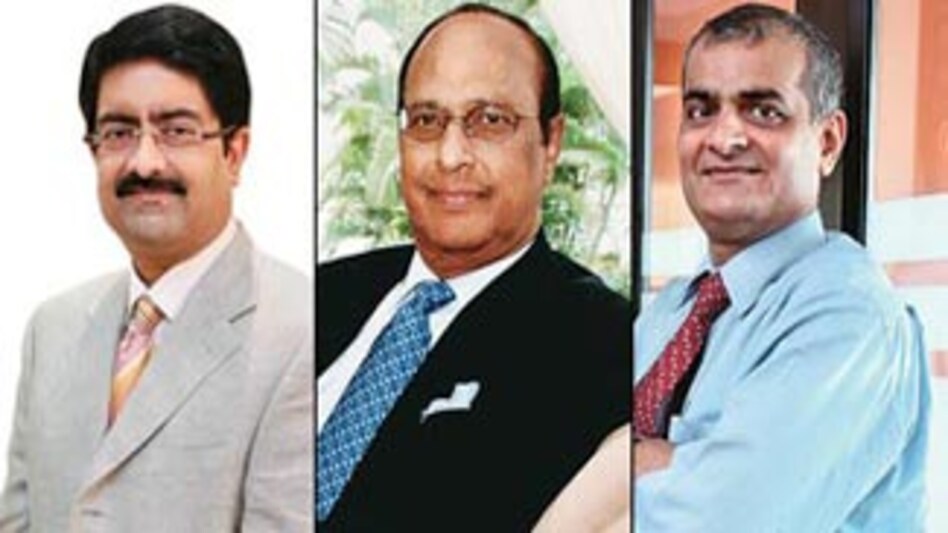
G.V. Krishna Reddy Rahul Bhasin Manish Sabharwal Rashesh Shah K.M. Birla |
Advertisement
August 5, 2011: For the first time in history, ratings agency Standard & Poor's downgrades the United States credit rating . The world is shocked. Global financial markets are in turmoil. In Mumbai, the Bombay Stock Exchange's Sensex hits a 14-month low of 16,990."The prospects of a double-dip recession now seem very real. The quick fixes, the massive stimulus packages, the QE1, the QE2 and now perhaps a QE3 are beginning to seem more like band-aids used to fix a leaking roof in a tropical storm. The fiscal measures that were needed and were appropriate to resolve the problems in 2008, suddenly seem either unsustainable, or just not up to the task," Kumar Mangalam Birla, Chairman, Aditya Birla Group, said at the JRD Tata Memorial Lecture at ASSOCHAM on August 11. (QE1and QE2 refer to the quantitative easing steps taken by the US government to shore up the economy during and after the 2008/09 downturn; QE3 to the fresh one being considered.) Even in India, growth could be halted if there was renewed recession in the West, he said."I cannot think of such a bad time in the last few decades," K.V. Kamath, Chairman of India's second largest lender, ICICI Bank, told BT. Kamath was referring to yields on the US 10-year treasury bonds dropping to below two per cent. The biggest worry for companies in the postdowngrade world is fund raising.Global economic crisis: How will India fare? Money costs more now - the risk perception has worsened. With the outlook for the global economy worsening, operating risks have become higher, says Rahul Bhasin, Managing Partner, Barring Private Equity Partners. Yet, the Rs 2500-crore GVK Group, for one, is unperturbed. "We see this as a time to look for opportunities to grow," G. V. Krishna Reddy, the 72-year-old founder and chairman of Hyderabad headquartered group told Business Today. At the time of going to press, while GVK would not comment, it was learnt to be negotiating a deal for acquiring coal mines in Australia, a strategy to grow its energy business through backward integration.To fund the acquisition, the company is reportedly in the market for raising over a billion-dollar loan. GVK Power & Infrastructure Chief Financial Officer Issac A. George will not comment on the loan, but offers a tip for borrowers: "Even after factoring in the hedging costs including the fluctuations in foreign exchange rates and LIBOR, the dollar remains a cheaper currency for raising debt compared to the rupee." (LIBOR stands for London Interbank Offered Rate.)
"I find many companies do not have clarity yet on what has hit them, but for a vague idea about increased uncertainty," says Bhasin. But, as Reddy says, there are upsides to the downturn for the courageous. For growth seekers such as GVK, Edelweiss Group Chairman Rashesh Shah predicts that a number of merger and acquisition, or M&A, targets will soon be up for grabs. "Many companies, which are tired of high interest rates, will be on the block in five to six months as their margins are stretched," he says. This is true, he says, for companies across sectors, but especially for capital goods and infrastructure.So this could be the time to shop for distress assets in places like Europe. Talent will be available too. Sectors hit by India's skills deficit might find the slowdown a dream come true. Manish Sabharwal, Chairman of people supply chain TeamLease, says a number of companies have begun to bring in highquality and super-specialised talent from overseas - the kind they always eyed but could not afford before. He cites examples of Bosche, Educomp and Angsana Spa that have hired teachers, trainers and engineers from overseas. Less aggressive entrepreneurs can leverage the slowdown to lower costs - by sourcing from European or American companies which are being forced to operate at low capacities owing to inadequate demand. Says Sunam Sarkar, CFO and Executive Director, Apollo Tyres: "It might be cheaper to import machine tools from Germany and building material from factories in the US that are all probably operating at 20 per cent of their capacities."Additional reporting by E. Kumar Sharma
G.V. Krishna Reddy Rahul Bhasin Manish Sabharwal Rashesh Shah K.M. Birla |
Advertisement
Read more!