
Lean and Mean
Electronics marketplace Zopper hopes to emerge as India's first profitable e-commerce platform in 2016.
- Mar 21, 2016,
- Updated Mar 23, 2016 12:32 PM IST
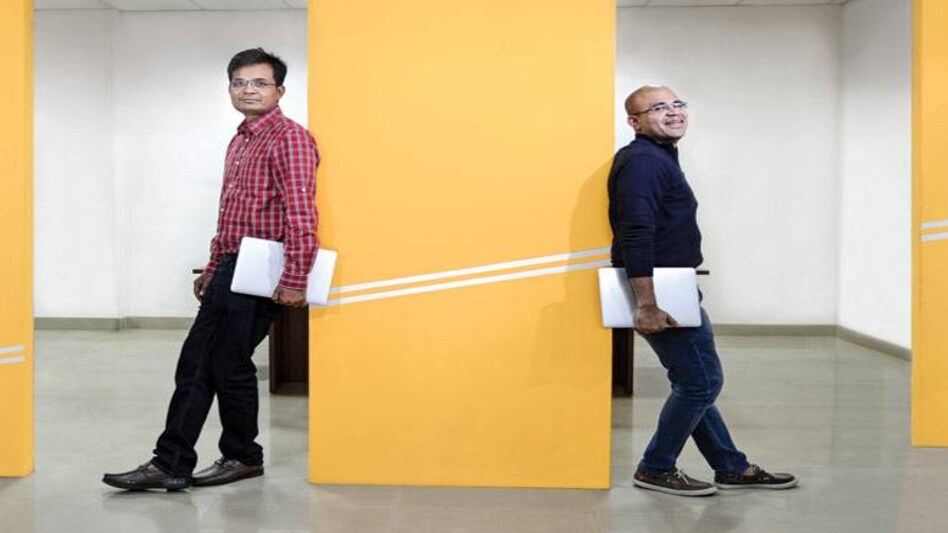
We ask Karthik Reddy, Managing Partner at early stage venture fund company Blume Venture Advisors, what he likes about Zopper - a hyper local electronics marketplace that connects buyers with neighbourhood sellers. "Difficult question," he sighs, before explaining his investment thesis. "A good set of founders is never fixated with their idea. Those who fall in love with their solution typically fail faster." Zopper's founders, Neeraj Jain and Surjendu Kuila, fell in the first bracket. And when Blume bet his money on them in 2012, Zopper was not even born. Much like Snapdeal founders, Jain and Kuila were testing ideas, morphing, reincarnating, and in corporate lingo, pivoting.
The duo launched their first business in 2011. It was called Brandandme and showcased a brand's unique selling proposition to its customer base through quizzing and social conversations. "It was doing decently well but we realised we were too early in the market," says Jain. Their next start-up was Reviews42, a community-based product reviews platform. The idea was to syndicate reviews to other e-commerce companies since they were a cost-effective way of customer acquisition. Next, this morphed into a price comparison platform. "We did reviews and then crawled websites to showcase the price points for various e-commerce platforms. We realised it was a small market. Reviews were a good-to-have, not a must-to-have thing for e-commerce players," Jain says. Reviews42 gave way to Zopper in June 2014.
An electronics marketplace wouldn't have the limitations of a small pie. It is a $100-billion opportunity, 60 per cent of which is in services. But only about 15 per cent of mobile sales and 1-2 per cent of large appliances are currently sold through the online channel. Indeed, there is a huge market that e-commerce companies can hope to capture. Zopper is in 26 cities now and will launch in another 30 this year. Selling everything from mobiles to kitchen to home appliances, it hit $100 million of gross merchandise value (GMV) in December 2015, a holiday month. It is currently working with 22,000 retailers, processing 100,000 orders a month, and charges between 2-4 per cent commission. In 2015/16, its revenue run rate is around $2.5 million. Apart from Blume, the company has attracted overall investments of $22 million from Tiger Global and Nirvana Venture Advisors.
Reddy of Blume says that the company has been able to solve an offline problem, the problem of small merchants. They can of course list on the bigger marketplaces such as Snapdeal, Flipkart and Amazon, but these companies are not engineered to service the small supplier. "They are milked more. The big platforms are also playing a discount game. With Zopper, the offline guy can compete with the online guy and can be discovered within a five-kilometre radius," he says. For a consumer, it could mean faster delivery and more reliability.
"We work as a conduit," says Kuila, a rare Bengali founder in India's bania-dominated e-commerce industry. "For a lot of categories with hyper local attachments, our platform works best as we enable discovery and pricing from a local neighbourhood store. The closest stores are shown first in the app," he adds.
For onboarding retailers, Zopper follows the FMCG model. In every city, important pockets are identified and relationship managers target retailers, inform them about the company, and train them on using its app. The company currently employs 80 relationship managers. Television commercials have helped as well - campaigns in November-December last year led to "inordinate requests".
"With Zopper, the offline guy can compete with the online guy and he can be discovered within a five-kilometre radius"
Interestingly, Zopper has positioned itself in the services market, which the founders tout as one of their differentiators. It offers an extended warranty for products bought; customers can also save the purchase invoice on its app. "Other e-commerce players are focusing on the discovery part and the fulfilment part. But we are focusing on ownership," explains Kuila. "If you look at the lifecycle of an electronics product, it could range from five-six months for a mobile phone to seven years for a durable. There are problems you face during this period. So we offer convenience, selection, instant gratification, and after-sales support."
The strategy appears to be working. Business Today spoke to Uday Anand, who owns five stores called Razzle Dazzle Electronics in East Delhi. He has partnered with Zopper for more than a year now and makes `10 lakh every month, on an average, through the hyperlocal platform. "Recently, Zopper provided an additional one-year warranty for any product that is paid through the credit card," Anand says. "They would just charge 2 per cent of the total amount. No one provides one year extra warranty for just 2 per cent more. It helps us attract more buyers," he explains.
Typically, Zopper charges 8 per cent of the product value for a year's extended warranty. It has partnered with various service providers for after-sales support.
Revenues from warranties cobble up to 35-40 per cent of the company's top line, the rest coming from marketplace commissions. Kuila's profile on LinkedIn reveals an eye-catching, possibly daunting target: "As we have a very lean business model we would be India's first profitable e-commerce platform (in scale) in 2016". What does that mean?
The company is lean because of many things, including how it manages logistics. Kuila explains that in 70-75 per cent of the cases, the delivery is executed by the retailer himself - that's the advantage of being hyperlocal. Local retailers don't have to wait for the money to be remitted if they do it themselves. The company, unlike other online marketplaces, also has alternative revenue streams. Besides warranty income, it expects revenues from sale of technology platforms such as point of sale solutions. In March, it announced the acquisition of EasyPOS, a cloud-based point of sale software firm.
Zopper today claims gross margin profitability. "We have to cover marketing and manpower costs. Most of our fixed costs are talent (60-65 per cent)," Kuila says. The company employs 300 right now. Its big goal next year is to align the cost per order to the commissions it makes from the marketplace.
If that is achieved, Zopper could set an example in the Indian e-commerce industry. At a time of falling valuations, it would also send the right signal to investors.
We ask Karthik Reddy, Managing Partner at early stage venture fund company Blume Venture Advisors, what he likes about Zopper - a hyper local electronics marketplace that connects buyers with neighbourhood sellers. "Difficult question," he sighs, before explaining his investment thesis. "A good set of founders is never fixated with their idea. Those who fall in love with their solution typically fail faster." Zopper's founders, Neeraj Jain and Surjendu Kuila, fell in the first bracket. And when Blume bet his money on them in 2012, Zopper was not even born. Much like Snapdeal founders, Jain and Kuila were testing ideas, morphing, reincarnating, and in corporate lingo, pivoting.
The duo launched their first business in 2011. It was called Brandandme and showcased a brand's unique selling proposition to its customer base through quizzing and social conversations. "It was doing decently well but we realised we were too early in the market," says Jain. Their next start-up was Reviews42, a community-based product reviews platform. The idea was to syndicate reviews to other e-commerce companies since they were a cost-effective way of customer acquisition. Next, this morphed into a price comparison platform. "We did reviews and then crawled websites to showcase the price points for various e-commerce platforms. We realised it was a small market. Reviews were a good-to-have, not a must-to-have thing for e-commerce players," Jain says. Reviews42 gave way to Zopper in June 2014.
An electronics marketplace wouldn't have the limitations of a small pie. It is a $100-billion opportunity, 60 per cent of which is in services. But only about 15 per cent of mobile sales and 1-2 per cent of large appliances are currently sold through the online channel. Indeed, there is a huge market that e-commerce companies can hope to capture. Zopper is in 26 cities now and will launch in another 30 this year. Selling everything from mobiles to kitchen to home appliances, it hit $100 million of gross merchandise value (GMV) in December 2015, a holiday month. It is currently working with 22,000 retailers, processing 100,000 orders a month, and charges between 2-4 per cent commission. In 2015/16, its revenue run rate is around $2.5 million. Apart from Blume, the company has attracted overall investments of $22 million from Tiger Global and Nirvana Venture Advisors.
Reddy of Blume says that the company has been able to solve an offline problem, the problem of small merchants. They can of course list on the bigger marketplaces such as Snapdeal, Flipkart and Amazon, but these companies are not engineered to service the small supplier. "They are milked more. The big platforms are also playing a discount game. With Zopper, the offline guy can compete with the online guy and can be discovered within a five-kilometre radius," he says. For a consumer, it could mean faster delivery and more reliability.
"We work as a conduit," says Kuila, a rare Bengali founder in India's bania-dominated e-commerce industry. "For a lot of categories with hyper local attachments, our platform works best as we enable discovery and pricing from a local neighbourhood store. The closest stores are shown first in the app," he adds.
For onboarding retailers, Zopper follows the FMCG model. In every city, important pockets are identified and relationship managers target retailers, inform them about the company, and train them on using its app. The company currently employs 80 relationship managers. Television commercials have helped as well - campaigns in November-December last year led to "inordinate requests".
"With Zopper, the offline guy can compete with the online guy and he can be discovered within a five-kilometre radius"
Interestingly, Zopper has positioned itself in the services market, which the founders tout as one of their differentiators. It offers an extended warranty for products bought; customers can also save the purchase invoice on its app. "Other e-commerce players are focusing on the discovery part and the fulfilment part. But we are focusing on ownership," explains Kuila. "If you look at the lifecycle of an electronics product, it could range from five-six months for a mobile phone to seven years for a durable. There are problems you face during this period. So we offer convenience, selection, instant gratification, and after-sales support."
The strategy appears to be working. Business Today spoke to Uday Anand, who owns five stores called Razzle Dazzle Electronics in East Delhi. He has partnered with Zopper for more than a year now and makes `10 lakh every month, on an average, through the hyperlocal platform. "Recently, Zopper provided an additional one-year warranty for any product that is paid through the credit card," Anand says. "They would just charge 2 per cent of the total amount. No one provides one year extra warranty for just 2 per cent more. It helps us attract more buyers," he explains.
Typically, Zopper charges 8 per cent of the product value for a year's extended warranty. It has partnered with various service providers for after-sales support.
Revenues from warranties cobble up to 35-40 per cent of the company's top line, the rest coming from marketplace commissions. Kuila's profile on LinkedIn reveals an eye-catching, possibly daunting target: "As we have a very lean business model we would be India's first profitable e-commerce platform (in scale) in 2016". What does that mean?
The company is lean because of many things, including how it manages logistics. Kuila explains that in 70-75 per cent of the cases, the delivery is executed by the retailer himself - that's the advantage of being hyperlocal. Local retailers don't have to wait for the money to be remitted if they do it themselves. The company, unlike other online marketplaces, also has alternative revenue streams. Besides warranty income, it expects revenues from sale of technology platforms such as point of sale solutions. In March, it announced the acquisition of EasyPOS, a cloud-based point of sale software firm.
Zopper today claims gross margin profitability. "We have to cover marketing and manpower costs. Most of our fixed costs are talent (60-65 per cent)," Kuila says. The company employs 300 right now. Its big goal next year is to align the cost per order to the commissions it makes from the marketplace.
If that is achieved, Zopper could set an example in the Indian e-commerce industry. At a time of falling valuations, it would also send the right signal to investors.