
Macro fundamentals remain strong amidst global uncertainty: EAC-PM Chairman S. Mahendra Dev
Macro fundamentals remain strong amidst global uncertainty: EAC-PM Chairman S. Mahendra Dev
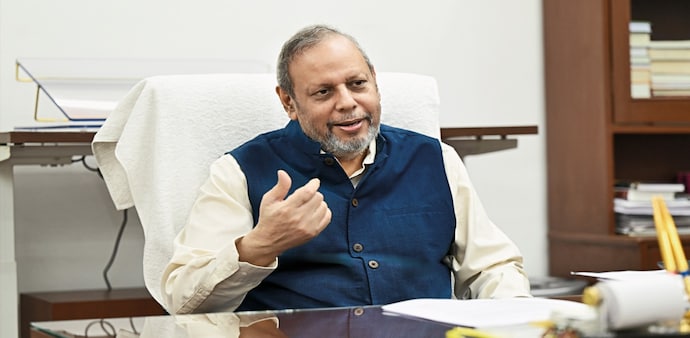
S. Mahendra Dev, Chairman, EAC-PM, on economic challenges arising from the West Asia war, the need for improvements in manufacturing, and cutting import dependence.
Surabhi
- Jun 23, 2026,
- Updated Jun 23, 2026 9:31 AM IST
The Economic Advisory Council to the Prime Minister (EAC-PM) provides inputs to the government on economic and related issues. Veteran economist S. Mahendra Dev, Chairman, EAC-PM, has had a bird’s-eye view of economic developments over the years. He has a vast experience in public policy, with areas of interest including development economics, agricultural economics and macroeconomics.
Advertisement
During his one year as the head of the EAC-PM, Mahendra Dev has advised the government on various issues around sustaining economic growth, which has been impacted by 50% tariffs by the US and now the West Asia crisis.
Before this, he was Director and Vice Chancellor at the Indira Gandhi Institute of Development Research, Chairman, Commission for Agricultural Costs and Prices, Ministry of Agriculture and Acting Chairman, National Statistical Commission.
In an interview with Business Today, he shares his thoughts on the current geopolitical turmoil and its impact on the Indian economy. He underlines the economy is resilient to face the West Asia crisis but notes that the conflict highlights the need for a risk management-based approach. This entails mapping and monitoring key economic vulnerabilities—particularly in areas such as energy, food, fertilisers, metals and critical minerals, and proactively addressing both supply disruptions and price volatility. Edited excerpts:
Advertisement
Q: What are the key ramifications of the West Asia conflict on the Indian economy?
A: The West Asia conflict has been a supply shock, with prices of crude oil, petrochemicals, fertilisers and LNG (liquefied natural gas) rising substantially. It has also added to global uncertainty and risk-off sentiment among investors, seen in rising bond yields globally.
There will be pressures on inflation, current account deficit, capital account and government finances. However, the Indian economy is resilient and alert to face the West Asian crisis as macro fundamentals remain strong amidst global uncertainty. The average GDP growth rate of the last three years is around 7.3%, and stood at 7.7% in FY26. For FY27, the Reserve Bank of India (RBI) estimate is at 6.6%. CPI (consumer price index) inflation in April was moderate at 3.48%, while in May it was at 3.93%, although WPI (wholesale price index) has shown an uptick. RBI projections indicate CPI inflation of 5.1% in FY27, with core inflation a 4.7%. The price of crude has eased from the levels seen in April 2026 to $83 in mid June 2026. Fiscal deficit is 4.4% in FY26 and will face some pressure in FY27. The combined debt to GDP ratio (Centre and states) is around 84%. This is among the lowest compared to the high debt of many other countries.
Advertisement
Exports of both merchandise and services have done well, as the recent quick estimates data showed, which is helping the current account. While supply conditions remain tight, easing of hostilities would lead to a relatively quick rebound, as prices ease towards the second half of the year. India has taken several measures in the last three months to cushion the impact of the external shock.
Q: What are your views on the current account deficit and the pressure on it from the West Asia war?
A: Yes, while the war is a challenge, it should be emphasised that India’s economy and exports have weathered challenges like geopolitical uncertainty and tariff issues last year. Non-petroleum and non-gems and jewellery exports grew 4.4% in FY26, while services exports grew a robust 7.9%. In April 2026, merchandise exports grew 13.78%, even excluding petroleum exports, they grew by 9%.
The trade deficit narrowed compared to April last year. The current account deficit (CAD) may increase from 0.8% in FY26 to around 2% in FY27. However, this figure may be lower depending on how oil prices behave and if peace holds in West Asia. Even though the CAD may expand as compared to last year, it is still contained. India can manage the CAD with higher diversified exports and reduced imports. The capital account is an issue because of lower net FII (foreign institutional investment) and FDI (foreign direct investment). However, the government is taking steps to improve foreign investment flows. RBI has recently taken various steps to attract inflows such as easing heding costs for banks with regard to FCNR (B) deposits, incentivising ECBs by PSUs and making government bonds more attractive for foreign investors.
Advertisement
The number of trade agreements is now at 17 FTAs (Free Trade Agreements) and six Preferential Trade Agreements (PTAs). Recent deals cover 38 countries. FTAs can raise exports and bridge the gap in the CAD. Similarly, they can help the capital account by promoting foreign investments.
Q: Will the gold and silver curbs, as well as fuel price hike, help address the CAD issue?
A: The government had earlier cut excise duty with a view towards shielding households against the pressures of rising oil prices. At the same time, some pass-through is happening as oil marketing companies raise prices.
Similarly, spending on gold has been discouraged. However, the concern for citizens and livelihoods has been front and centre for the government. Some adjustment in prices will help adjust demand, which will lead to economising of resources.
Q: Over the years, India’s import dependency, even for non-oil, non-gold imports, has risen. In the West Asia war, India became vulnerable to supply and price shocks. Is this a cause for concern? What can be done?
Advertisement
A: The ongoing conflict highlights the need for a risk-management-based approach. This entails mapping and monitoring key economic vulnerabilities—particularly in areas such as energy, food, fertilisers, metals and critical minerals—and proactively addressing both supply disruptions and price volatility. This calls for a substantial strengthening of physical buffers, including an expansion of strategic petroleum reserves and creation of stockpiles for essential commodities, going beyond the conventional reliance on foreign exchange reserves and foodgrain stocks.
At the same time, reducing excessive dependence on imports is critical. This can be achieved through greater diversification of supply sources and trade routes, alongside more strategic and effective utilisation of FTAs. The government also wants to improve domestic production in strategic sectors like critical minerals, rare earths, semiconductors and chips.
Q: Manufacturing in India has not taken off despite several efforts by the government. What further reforms can be taken to boost domestic manufacturing?
A: It would be incorrect to say that manufacturing has not taken off. In absolute terms, the manufacturing sector gross value added showed double-digit growth in FY24 and FY26 and more than 9% in FY25. Manufacturing growth in the recent estimates show 10.7% growth in FY26. At the same time, India has a dynamic service sector, which is also growing fast. The data needs to be examined from a holistic perspective, keeping view of the absolute contribution and not just sectoral shares.
Advertisement
In parallel, the policy push for greater ease-of-doing business is clear. This is reflected in initiatives aimed at deregulation, both by the Centre and the states and in legislation like the Jan Vishwas Bill. Substantial progress in the manufacturing sector is reflected in exports of a diversified set of items ranging from electronics and toys to defence. Between FY15 and FY26, India’s defence exports recorded a robust compound annual growth rate of 31.2%. This strong momentum continued in FY26, with defence exports touching a record high of Rs 38,400 crore, reflecting year-on-year growth of 62.7%.
The manufacturing-led transformation has been an important pathway to prosperity globally. The external context for building manufacturing, however, has changed dramatically with geopolitical tensions, protectionism and tariff wars stalling multilateral trade negotiations. This trend reflects broader geoeconomic fragmentation, restricted technology flows, barriers to labour mobility and uncertainty on global public goods. Global supply chains are being restructured, often being re-shored. Advanced countries are incentivising localisation of production through aggressive pursuit of industrial policy.
The resurgence of industrial policy in both developing and developed nations marks a significant shift in economic strategy. India has the potential to improve manufacturing value added and employment despite global protection policies.
Q: How far has the PLI (production-linked incentives) scheme been successful in boosting domestic manufacturing?
A: Several PLI sectors have performed well, such as electronics, automobiles and pharmaceuticals. At the same time, some sectors such as medical devices are starting to scale. The government’s push towards creating a conducive policy ecosystem, deregulation and ease of doing business will give a further push to various manufacturing sectors.
The trade agreements India is entering into will also expand market access and be a significant multiplier.
Q: Do we need to change our policies so that more components are manufactured locally, instead of assembling?
A: The manufacturing sector has an enormous potential for learning and positive spillovers.
While some manufacturing in India may currently involve assembly, it can serve as an important entry point into global value chains and creates significant opportunities for learning-by-doing, technology transfer, skill development and supplier ecosystem creation.
Over time, these positive spillovers can increase domestic capabilities and lead to higher local value addition, including greater component manufacturing and deeper industrial ecosystems.
Q: Are you concerned about food inflation as monsoons may be below average this year?
A: Current forecasts indicate a likely development of El Niño conditions after July. Regional variations in rainfall patterns will also play an important role. Although a below-normal monsoon poses certain risks, its implications for the rural economy are structurally different today compared to earlier decades.
Significant progress in irrigation coverage, improved water management, better seeds, and greater crop diversification have reduced vulnerability. Thus, a weaker monsoon no longer automatically results in sharp food inflation or a severe decline in agricultural output. In addition, strengthened storage and supply chain systems have enhanced resilience.
The overall impact on agriculture is likely to remain muted compared to earlier decades due to comfortable water reservoir levels and improved irrigation. However, the situation remains evolving and warrants close monitoring, particularly to assess any adverse effects on crop yields and input costs.
To offset the impact of a weak monsoon, the government is already better prepared through a combination of structural and policy measures. Adequate buffer stocks of food grains are being maintained, which can be strategically released to stabilise prices and ensure availability.
Q: The fall in the rupee has been a cause for concern.
A: The recent weakening of the rupee can largely be attributed to heightened global uncertainty, which has triggered a risk-off sentiment and volatility across global financial markets. The pressures on the rupee may be emanating more from the risk-off sentiment affecting capital flows and market expectations. The value of the rupee is determined by the market in terms of supply and demand.
However, there are mitigating factors on the external front. Here, we have seen recent steps by the RBI to ensure orderly market conditions for the rupee. Since markets are reflexive in nature, these steps will ensure that expectations don’t become self-fulfilling and remain anchored in fundamentals. As a result, the rupee has risen in the last few days.
The trade balance has done well in April despite global headwinds, supported by robust export performance across a diversified set of markets, which helps cushion external sector pressures. While there is near-term volatility amid global headwinds, underlying external fundamentals remain relatively resilient. The government is also taking measures to improve foreign exchange and foreign direct investment. FTAs will also help improve investment from other countries.
@surabhi_prasad
The Economic Advisory Council to the Prime Minister (EAC-PM) provides inputs to the government on economic and related issues. Veteran economist S. Mahendra Dev, Chairman, EAC-PM, has had a bird’s-eye view of economic developments over the years. He has a vast experience in public policy, with areas of interest including development economics, agricultural economics and macroeconomics.
Advertisement
During his one year as the head of the EAC-PM, Mahendra Dev has advised the government on various issues around sustaining economic growth, which has been impacted by 50% tariffs by the US and now the West Asia crisis.
Before this, he was Director and Vice Chancellor at the Indira Gandhi Institute of Development Research, Chairman, Commission for Agricultural Costs and Prices, Ministry of Agriculture and Acting Chairman, National Statistical Commission.
In an interview with Business Today, he shares his thoughts on the current geopolitical turmoil and its impact on the Indian economy. He underlines the economy is resilient to face the West Asia crisis but notes that the conflict highlights the need for a risk management-based approach. This entails mapping and monitoring key economic vulnerabilities—particularly in areas such as energy, food, fertilisers, metals and critical minerals, and proactively addressing both supply disruptions and price volatility. Edited excerpts:
Advertisement
Q: What are the key ramifications of the West Asia conflict on the Indian economy?
A: The West Asia conflict has been a supply shock, with prices of crude oil, petrochemicals, fertilisers and LNG (liquefied natural gas) rising substantially. It has also added to global uncertainty and risk-off sentiment among investors, seen in rising bond yields globally.
There will be pressures on inflation, current account deficit, capital account and government finances. However, the Indian economy is resilient and alert to face the West Asian crisis as macro fundamentals remain strong amidst global uncertainty. The average GDP growth rate of the last three years is around 7.3%, and stood at 7.7% in FY26. For FY27, the Reserve Bank of India (RBI) estimate is at 6.6%. CPI (consumer price index) inflation in April was moderate at 3.48%, while in May it was at 3.93%, although WPI (wholesale price index) has shown an uptick. RBI projections indicate CPI inflation of 5.1% in FY27, with core inflation a 4.7%. The price of crude has eased from the levels seen in April 2026 to $83 in mid June 2026. Fiscal deficit is 4.4% in FY26 and will face some pressure in FY27. The combined debt to GDP ratio (Centre and states) is around 84%. This is among the lowest compared to the high debt of many other countries.
Advertisement
Exports of both merchandise and services have done well, as the recent quick estimates data showed, which is helping the current account. While supply conditions remain tight, easing of hostilities would lead to a relatively quick rebound, as prices ease towards the second half of the year. India has taken several measures in the last three months to cushion the impact of the external shock.
Q: What are your views on the current account deficit and the pressure on it from the West Asia war?
A: Yes, while the war is a challenge, it should be emphasised that India’s economy and exports have weathered challenges like geopolitical uncertainty and tariff issues last year. Non-petroleum and non-gems and jewellery exports grew 4.4% in FY26, while services exports grew a robust 7.9%. In April 2026, merchandise exports grew 13.78%, even excluding petroleum exports, they grew by 9%.
The trade deficit narrowed compared to April last year. The current account deficit (CAD) may increase from 0.8% in FY26 to around 2% in FY27. However, this figure may be lower depending on how oil prices behave and if peace holds in West Asia. Even though the CAD may expand as compared to last year, it is still contained. India can manage the CAD with higher diversified exports and reduced imports. The capital account is an issue because of lower net FII (foreign institutional investment) and FDI (foreign direct investment). However, the government is taking steps to improve foreign investment flows. RBI has recently taken various steps to attract inflows such as easing heding costs for banks with regard to FCNR (B) deposits, incentivising ECBs by PSUs and making government bonds more attractive for foreign investors.
Advertisement
The number of trade agreements is now at 17 FTAs (Free Trade Agreements) and six Preferential Trade Agreements (PTAs). Recent deals cover 38 countries. FTAs can raise exports and bridge the gap in the CAD. Similarly, they can help the capital account by promoting foreign investments.
Q: Will the gold and silver curbs, as well as fuel price hike, help address the CAD issue?
A: The government had earlier cut excise duty with a view towards shielding households against the pressures of rising oil prices. At the same time, some pass-through is happening as oil marketing companies raise prices.
Similarly, spending on gold has been discouraged. However, the concern for citizens and livelihoods has been front and centre for the government. Some adjustment in prices will help adjust demand, which will lead to economising of resources.
Q: Over the years, India’s import dependency, even for non-oil, non-gold imports, has risen. In the West Asia war, India became vulnerable to supply and price shocks. Is this a cause for concern? What can be done?
Advertisement
A: The ongoing conflict highlights the need for a risk-management-based approach. This entails mapping and monitoring key economic vulnerabilities—particularly in areas such as energy, food, fertilisers, metals and critical minerals—and proactively addressing both supply disruptions and price volatility. This calls for a substantial strengthening of physical buffers, including an expansion of strategic petroleum reserves and creation of stockpiles for essential commodities, going beyond the conventional reliance on foreign exchange reserves and foodgrain stocks.
At the same time, reducing excessive dependence on imports is critical. This can be achieved through greater diversification of supply sources and trade routes, alongside more strategic and effective utilisation of FTAs. The government also wants to improve domestic production in strategic sectors like critical minerals, rare earths, semiconductors and chips.
Q: Manufacturing in India has not taken off despite several efforts by the government. What further reforms can be taken to boost domestic manufacturing?
A: It would be incorrect to say that manufacturing has not taken off. In absolute terms, the manufacturing sector gross value added showed double-digit growth in FY24 and FY26 and more than 9% in FY25. Manufacturing growth in the recent estimates show 10.7% growth in FY26. At the same time, India has a dynamic service sector, which is also growing fast. The data needs to be examined from a holistic perspective, keeping view of the absolute contribution and not just sectoral shares.
Advertisement
In parallel, the policy push for greater ease-of-doing business is clear. This is reflected in initiatives aimed at deregulation, both by the Centre and the states and in legislation like the Jan Vishwas Bill. Substantial progress in the manufacturing sector is reflected in exports of a diversified set of items ranging from electronics and toys to defence. Between FY15 and FY26, India’s defence exports recorded a robust compound annual growth rate of 31.2%. This strong momentum continued in FY26, with defence exports touching a record high of Rs 38,400 crore, reflecting year-on-year growth of 62.7%.
The manufacturing-led transformation has been an important pathway to prosperity globally. The external context for building manufacturing, however, has changed dramatically with geopolitical tensions, protectionism and tariff wars stalling multilateral trade negotiations. This trend reflects broader geoeconomic fragmentation, restricted technology flows, barriers to labour mobility and uncertainty on global public goods. Global supply chains are being restructured, often being re-shored. Advanced countries are incentivising localisation of production through aggressive pursuit of industrial policy.
The resurgence of industrial policy in both developing and developed nations marks a significant shift in economic strategy. India has the potential to improve manufacturing value added and employment despite global protection policies.
Q: How far has the PLI (production-linked incentives) scheme been successful in boosting domestic manufacturing?
A: Several PLI sectors have performed well, such as electronics, automobiles and pharmaceuticals. At the same time, some sectors such as medical devices are starting to scale. The government’s push towards creating a conducive policy ecosystem, deregulation and ease of doing business will give a further push to various manufacturing sectors.
The trade agreements India is entering into will also expand market access and be a significant multiplier.
Q: Do we need to change our policies so that more components are manufactured locally, instead of assembling?
A: The manufacturing sector has an enormous potential for learning and positive spillovers.
While some manufacturing in India may currently involve assembly, it can serve as an important entry point into global value chains and creates significant opportunities for learning-by-doing, technology transfer, skill development and supplier ecosystem creation.
Over time, these positive spillovers can increase domestic capabilities and lead to higher local value addition, including greater component manufacturing and deeper industrial ecosystems.
Q: Are you concerned about food inflation as monsoons may be below average this year?
A: Current forecasts indicate a likely development of El Niño conditions after July. Regional variations in rainfall patterns will also play an important role. Although a below-normal monsoon poses certain risks, its implications for the rural economy are structurally different today compared to earlier decades.
Significant progress in irrigation coverage, improved water management, better seeds, and greater crop diversification have reduced vulnerability. Thus, a weaker monsoon no longer automatically results in sharp food inflation or a severe decline in agricultural output. In addition, strengthened storage and supply chain systems have enhanced resilience.
The overall impact on agriculture is likely to remain muted compared to earlier decades due to comfortable water reservoir levels and improved irrigation. However, the situation remains evolving and warrants close monitoring, particularly to assess any adverse effects on crop yields and input costs.
To offset the impact of a weak monsoon, the government is already better prepared through a combination of structural and policy measures. Adequate buffer stocks of food grains are being maintained, which can be strategically released to stabilise prices and ensure availability.
Q: The fall in the rupee has been a cause for concern.
A: The recent weakening of the rupee can largely be attributed to heightened global uncertainty, which has triggered a risk-off sentiment and volatility across global financial markets. The pressures on the rupee may be emanating more from the risk-off sentiment affecting capital flows and market expectations. The value of the rupee is determined by the market in terms of supply and demand.
However, there are mitigating factors on the external front. Here, we have seen recent steps by the RBI to ensure orderly market conditions for the rupee. Since markets are reflexive in nature, these steps will ensure that expectations don’t become self-fulfilling and remain anchored in fundamentals. As a result, the rupee has risen in the last few days.
The trade balance has done well in April despite global headwinds, supported by robust export performance across a diversified set of markets, which helps cushion external sector pressures. While there is near-term volatility amid global headwinds, underlying external fundamentals remain relatively resilient. The government is also taking measures to improve foreign exchange and foreign direct investment. FTAs will also help improve investment from other countries.
@surabhi_prasad
Read more!