
“My advice for women: Stay the course”, says Roshni Nadar Malhotra, Chairperson, HCLTech
“My advice for women: Stay the course”, says Roshni Nadar Malhotra, Chairperson, HCLTech
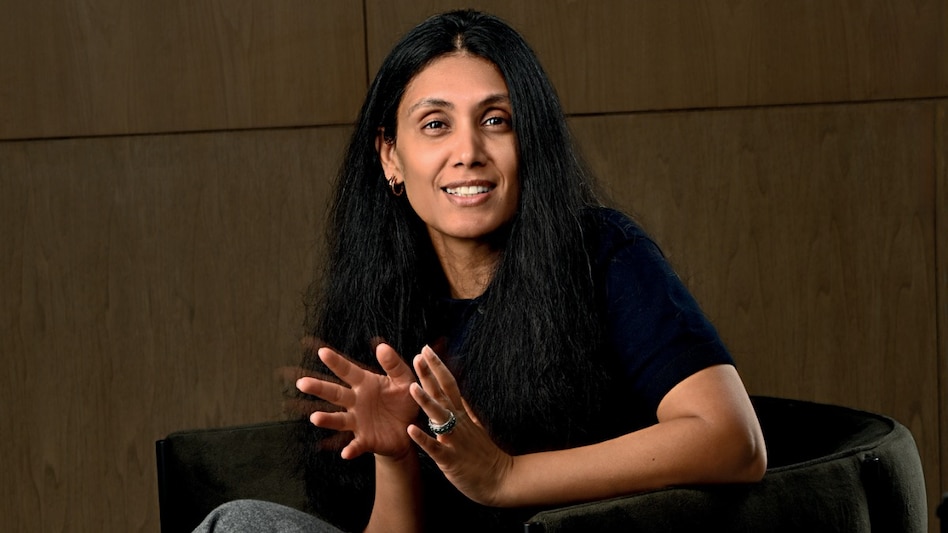
Roshni Nadar Malhotra, Chairperson, HCLTech, on leadership, ensuring gender diversity and lessons from her journey to the top.
Karan Dhar
- Dec 18, 2025,
- Updated Dec 24, 2025 2:35 PM IST
Roshni Nadar Malhotra was working as a producer with Sky News in London after completing her undergrad in film and television when her father—Shiv Nadar, the founder of HCL Technologies, India’s third-largest IT firm—told her to do “something normal.”
“We laughed about it. I asked what is normal?” she tells Business Today.
Advertisement
Shiv Nadar, a self-made billionaire who had never been to a B-School himself, advised her to join one. That changed the course of Malhotra’s career. After MBA from Kellogg School of Management, she joined the HCL Group in 2008. In 2013, she got inducted on the board of HCLTech, becoming the Chairperson in 2020. She is ranked second on BT’s Most Powerful Women in Business list. Earlier this year, she was declared the richest woman in India by the M3M Hurun India Rich List.
Joining HCLTech was a great decision for her, she says. “When you are pivoting in your career—we have all had these experiences in our lives—sometimes it can help to get a bit of training and education in the middle,” she says. An outsider to the IT industry, Malhotra says the biggest challenge she faced was not as a woman but as a young person. As Chair, Malhotra has made sure that 50% of HCLTech’s board comprises women. Edited excerpts from an interview:
Advertisement
Q: Did you always envision yourself in a leadership role or did it evolve over time?
A: If you’ve looked at [my father’s] journey, he founded HCL Group in 1976, and initially it used to build computers. It was only in the late 1990s that we pivoted to services and software. By 2006, he made a conscious decision to not be the CEO. Since then, we have had successful leadership transitions, mostly from internal candidates.
From very early on, HCL was set up to be professional in nature at which point my father was playing the role of chief strategy officer and chairman of the board, but he wasn’t the CEO. I think, in some ways certainly, he envisioned that I would join the board, which I did in 2013. Then I got appointed as chair in 2020. So, I had been on the board for seven years and had seen lots of transitions in the company. [My father] retired in 2020. He is also a very unique founder as most founders retire but don’t leave. He retired and left the board, too. The HCL DNA is such: there are many leaders, but we are the sum of the parts.
Advertisement
Q: What has been your biggest learning from growing HCLTech?
A: I don’t come from an engineering background, whereas HCLTech is the third-largest technology company in the country. So, working with people of diverse backgrounds and bringing your strength to the table.
Q: What is HCLTech doing to keep up with AI? You earlier said that AI will not replace workers. Do you still hold that view now?
A: If at all, AI will enhance the right skills needed. In Q2 of FY26, we were the first in our industry to report $100 million in AI revenue. That underscores our strength and depth of our strategy and being relevant to our customers. We have got a range of solutions for AI: AI Force, AI Foundry, AI Engineering and AI Factories, and AI Labs. A lot of work being done there is by upskilling our people and making them future-ready. Plus, we are creating proprietary IPs, which unlock this intelligence layer that is built by hyperscalers as most customers are working with them. That also forges a much more strategic partnership across the ecosystem.
We foster diversity and inclusion right from the top. We have phenomenal senior, tenured women as well who I was able to attract. I am hoping that this DNA trickles down the organisation.
-Roshni Nadar Malhotra,Chairperson, HCLTech
Q: What is your vision for HCLTech for the next decade? Which new geographies are you looking at to expand the business?
Advertisement
A: In the tech business, a decade is a lifetime. Over the next couple of years, in terms of geographies, the largest for us and the industry are the US and Europe. We continue to double down on those. In Europe, we continue to invest in the UK and Germany. In terms of newer geographies, Japan, India and the Middle East are a big focus. At present, HCLTech’s revenues from India are less than 3% of global revenues. We hope to build that business as well. New geographies take longer to build.
Q: What are the biggest challenges and opportunities for the Indian IT industry today?
A: I think some challenges that are prevalent in the world are in some ways advantages for our industry. Even though there are geopolitical headwinds and tariffs, the growth of global capability centres (GCCs) is not slowing in India. A lot of customers look at India as a talent base for the world. What tariffs will do to a lot of industries is drive up costs. Then, cost efficiencies and investment in technology will become very important. That means demand for firms such as ours will grow. As an industry, given our scale and size, we need to be given more credit for how agile we are and how we are able to navigate even though we are very big.
Advertisement
Q: There has been a lot of chatter that hirings have slowed in the IT industry. Do you think it’s going to get better soon?
A: I can’t comment on the industry. We have been fairly transparent in restructuring. We have hired more higher-skilled people. So, in fact, hiring has picked up a little bit. Hiring is a function of the demand environment. That is driven by what is happening globally, as most of our industry is export-oriented. I think it is going to improve from hereon.
Q: Could you talk about some unique challenges you faced as a woman chairing a global tech corporation?
A: For me, the challenge was not as a woman. I was 39 when I became the chair. A lot of my challenges related to that: when older people look at you, they say you’re so young. So, I got ‘Oh My God you’re so young’ more than ‘Oh My God you are a woman’. If anything, the tech industry is one place where you find people of all ages, at all levels of leadership. I hope it is my strength and it is good to be different and the only woman in the room.
Advertisement
Q: How do you foster diversity and inclusion in your own teams?
Hiring is a function of the demand environment. That is driven by what is happening globally, as most of our industry is export-oriented. I think it is going to improve from hereon.
-Roshni Nadar Malhotra,Chairperson, HCLTech
A: Women form 50% of the board. We foster diversity and inclusion right from the top. When I joined HCLTech, it had only one woman on the board. That has been a conscious effort. We also have phenomenal senior tenured women who I was able to attract, and they come from the industry. It was a conscious decision. I am hoping that this DNA trickles down the organisation. It’s not easy. But it must start from the top.
Q: Is it trickling down? Is this also a priority during campus hirings?
A: At the fresher level, the induction of women is almost equal to men. That’s not when the fall happens. That happens at pivotal points in their careers, sometimes when they get married. If your husband is posted somewhere, you end up moving. When you decide to start a family, how do you rise through senior leadership roles? That’s when the numbers start to drop off. At the board itself, I have a stewardship committee that doesn’t just focus on governance and ESG but also on inclusion. The thing about diversity is, it can be a tick on the board, but inclusion is when everyone is growing. Almost all the women who go on maternity leave come back. You have to make it comfortable for them and when they come back you have to make sure they don’t lose out on their career path.
Q: What’s the best piece of advice you have received from your father?
A: He always tells me and everybody to “stay the course.”
Q: What is your advice to women who are aspiring for leadership positions?
A: I am just going to borrow from the HCL credo, “Stay the course.” Sometimes as a woman you have to work double as much but if you’re committed, you will make it. And there are many women before me who have made it. Keep upskilling yourself. You have to grab every opportunity. It’s important to stay authentic because leaders are authentic.
@karandhar11
Roshni Nadar Malhotra was working as a producer with Sky News in London after completing her undergrad in film and television when her father—Shiv Nadar, the founder of HCL Technologies, India’s third-largest IT firm—told her to do “something normal.”
“We laughed about it. I asked what is normal?” she tells Business Today.
Advertisement
Shiv Nadar, a self-made billionaire who had never been to a B-School himself, advised her to join one. That changed the course of Malhotra’s career. After MBA from Kellogg School of Management, she joined the HCL Group in 2008. In 2013, she got inducted on the board of HCLTech, becoming the Chairperson in 2020. She is ranked second on BT’s Most Powerful Women in Business list. Earlier this year, she was declared the richest woman in India by the M3M Hurun India Rich List.
Joining HCLTech was a great decision for her, she says. “When you are pivoting in your career—we have all had these experiences in our lives—sometimes it can help to get a bit of training and education in the middle,” she says. An outsider to the IT industry, Malhotra says the biggest challenge she faced was not as a woman but as a young person. As Chair, Malhotra has made sure that 50% of HCLTech’s board comprises women. Edited excerpts from an interview:
Advertisement
Q: Did you always envision yourself in a leadership role or did it evolve over time?
A: If you’ve looked at [my father’s] journey, he founded HCL Group in 1976, and initially it used to build computers. It was only in the late 1990s that we pivoted to services and software. By 2006, he made a conscious decision to not be the CEO. Since then, we have had successful leadership transitions, mostly from internal candidates.
From very early on, HCL was set up to be professional in nature at which point my father was playing the role of chief strategy officer and chairman of the board, but he wasn’t the CEO. I think, in some ways certainly, he envisioned that I would join the board, which I did in 2013. Then I got appointed as chair in 2020. So, I had been on the board for seven years and had seen lots of transitions in the company. [My father] retired in 2020. He is also a very unique founder as most founders retire but don’t leave. He retired and left the board, too. The HCL DNA is such: there are many leaders, but we are the sum of the parts.
Advertisement
Q: What has been your biggest learning from growing HCLTech?
A: I don’t come from an engineering background, whereas HCLTech is the third-largest technology company in the country. So, working with people of diverse backgrounds and bringing your strength to the table.
Q: What is HCLTech doing to keep up with AI? You earlier said that AI will not replace workers. Do you still hold that view now?
A: If at all, AI will enhance the right skills needed. In Q2 of FY26, we were the first in our industry to report $100 million in AI revenue. That underscores our strength and depth of our strategy and being relevant to our customers. We have got a range of solutions for AI: AI Force, AI Foundry, AI Engineering and AI Factories, and AI Labs. A lot of work being done there is by upskilling our people and making them future-ready. Plus, we are creating proprietary IPs, which unlock this intelligence layer that is built by hyperscalers as most customers are working with them. That also forges a much more strategic partnership across the ecosystem.
We foster diversity and inclusion right from the top. We have phenomenal senior, tenured women as well who I was able to attract. I am hoping that this DNA trickles down the organisation.
-Roshni Nadar Malhotra,Chairperson, HCLTech
Q: What is your vision for HCLTech for the next decade? Which new geographies are you looking at to expand the business?
Advertisement
A: In the tech business, a decade is a lifetime. Over the next couple of years, in terms of geographies, the largest for us and the industry are the US and Europe. We continue to double down on those. In Europe, we continue to invest in the UK and Germany. In terms of newer geographies, Japan, India and the Middle East are a big focus. At present, HCLTech’s revenues from India are less than 3% of global revenues. We hope to build that business as well. New geographies take longer to build.
Q: What are the biggest challenges and opportunities for the Indian IT industry today?
A: I think some challenges that are prevalent in the world are in some ways advantages for our industry. Even though there are geopolitical headwinds and tariffs, the growth of global capability centres (GCCs) is not slowing in India. A lot of customers look at India as a talent base for the world. What tariffs will do to a lot of industries is drive up costs. Then, cost efficiencies and investment in technology will become very important. That means demand for firms such as ours will grow. As an industry, given our scale and size, we need to be given more credit for how agile we are and how we are able to navigate even though we are very big.
Advertisement
Q: There has been a lot of chatter that hirings have slowed in the IT industry. Do you think it’s going to get better soon?
A: I can’t comment on the industry. We have been fairly transparent in restructuring. We have hired more higher-skilled people. So, in fact, hiring has picked up a little bit. Hiring is a function of the demand environment. That is driven by what is happening globally, as most of our industry is export-oriented. I think it is going to improve from hereon.
Q: Could you talk about some unique challenges you faced as a woman chairing a global tech corporation?
A: For me, the challenge was not as a woman. I was 39 when I became the chair. A lot of my challenges related to that: when older people look at you, they say you’re so young. So, I got ‘Oh My God you’re so young’ more than ‘Oh My God you are a woman’. If anything, the tech industry is one place where you find people of all ages, at all levels of leadership. I hope it is my strength and it is good to be different and the only woman in the room.
Advertisement
Q: How do you foster diversity and inclusion in your own teams?
Hiring is a function of the demand environment. That is driven by what is happening globally, as most of our industry is export-oriented. I think it is going to improve from hereon.
-Roshni Nadar Malhotra,Chairperson, HCLTech
A: Women form 50% of the board. We foster diversity and inclusion right from the top. When I joined HCLTech, it had only one woman on the board. That has been a conscious effort. We also have phenomenal senior tenured women who I was able to attract, and they come from the industry. It was a conscious decision. I am hoping that this DNA trickles down the organisation. It’s not easy. But it must start from the top.
Q: Is it trickling down? Is this also a priority during campus hirings?
A: At the fresher level, the induction of women is almost equal to men. That’s not when the fall happens. That happens at pivotal points in their careers, sometimes when they get married. If your husband is posted somewhere, you end up moving. When you decide to start a family, how do you rise through senior leadership roles? That’s when the numbers start to drop off. At the board itself, I have a stewardship committee that doesn’t just focus on governance and ESG but also on inclusion. The thing about diversity is, it can be a tick on the board, but inclusion is when everyone is growing. Almost all the women who go on maternity leave come back. You have to make it comfortable for them and when they come back you have to make sure they don’t lose out on their career path.
Q: What’s the best piece of advice you have received from your father?
A: He always tells me and everybody to “stay the course.”
Q: What is your advice to women who are aspiring for leadership positions?
A: I am just going to borrow from the HCL credo, “Stay the course.” Sometimes as a woman you have to work double as much but if you’re committed, you will make it. And there are many women before me who have made it. Keep upskilling yourself. You have to grab every opportunity. It’s important to stay authentic because leaders are authentic.
@karandhar11
Read more!