
There's no reason we can't do these things in India: Sarvam AI Co-Founders
Sarvam AI co-founders Pratyush Kumar and Vivek Raghavan talk about challenging early doubts and building a roadmap to monetise the foundation model.
- Mar 17, 2026,
- Updated Mar 17, 2026 3:06 PM IST
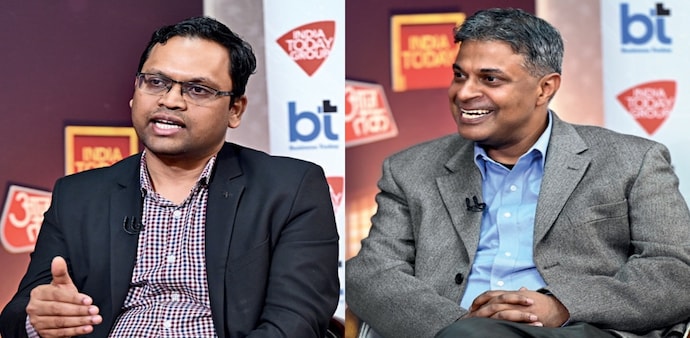
Pratyush Kumar and Vivek Raghavan, co-founders, Sarvam AI, talk to BT Group Editor Siddharth Zarabi about how they defied the naysayers and plans to monetise the foundation model. Edited excerpts:-
How does it feel to beat the odds?
Kumar: It’s the team that has built something with a lot of passion. There’s a lot that India is doing in using AI in enterprises, for people, and so on. Because if we are in the post-AI world—we’re never going to go back to pre-LLMs (large language models)—as such an important country, we cannot not have our own laboratory with such an important technology. India should build its own thing.
Is this moment comparable to what global technology giants have achieved, given that they have invested billions of dollars to reach where they are today?
Raghavan: What’s important to understand is the perception that breakthroughs like this can happen only in Silicon Valley or China. That’s the mindset we need to change. There’s no reason we can’t do these things in India.
We are still at the beginning of this journey. The intent behind starting Sarvam was simple: can we build a truly large technology company out of India? This technology is so fundamental that it shapes everything that follows.
I don’t want to diminish the fact that companies which have invested hundreds of billions of dollars in solving these problems are clearly ahead of where we are today. But the key point is this: we believe we can belong in that league.
I don’t think we would have been able to build this model without support from the India AI Mission. While it may not technically be a grant, the support we received—access to compute at concessional rates and an equity-based structure instead of having to pay the full amount in cash—was critical.
The costs we have incurred are significantly lower. We’re talking about funding in the range of $25–30 million. It’s fair to say we have been efficient. At the same time, with greater resources, we can achieve much more.
When someone as prominent as Sam Altman, the CEO of OpenAI, suggested that India perhaps shouldn’t even attempt this, it sparked a broader debate, especially given the stereotype that Indians are known more for jugaad than for building foundational technology.
Kumar: I think there are two sides to the issue of frugality. Jugaad is thought of as a hack—not doing the right thing, finding a workaround. The other thing is being resource-efficient. We have managed to create significantly useful models with significantly lower resources. Notice that we did two things. One, we did the hard work ourselves. Second, in the last two years, the technology has become so much better that the cost of building these models has reduced. We are in a deflationary world of AI. So, in that sense, the memes around "only a couple of companies will build LLMs for the whole world," they are not there anymore. In fact, at the AI Summit, French President Emmanuel Macron and Prime Minister Narendra Modi said we have to build AI together.
The US and China are seen as the two superpowers in the global AI race. With what you have achieved—and with others now building and launching in this space—how far is India from emerging as the third pillar in the global AI order?
Kumar: We have a long way to go, primarily because the goal for us, divorced from other people and what they are doing, is that the technology should be accessible to all. That is where India has succeeded, whether it’s Aadhaar or UPI. AI must follow that template. In fact, we’re focused quite a bit on that. But creating use cases and getting them in the hands of people across the length and breadth of the country is a problem worth solving. Of course, people like us will continue building the next model, keep competing globally. But as a nation, our goal should be to get it in the hands of as many people as possible.
What are your long-term ambitions? What do you ultimately aspire to achieve with this model?
Kumar: These models continue to improve rapidly. That’s the great thing about this technology. The levers of improvement are still very strong.
So, we will continue to improve the models. Over the next several months, our primary focus will be on reach: how do we ensure this technology is accessible to more people? How do we build the right infrastructure in the country to maximise availability and access?
In fact, for access, we’re also looking at things like devices. We’re building smart glasses (Sarvam Kaze). We’re genuinely excited by what people will do when they touch this technology. Its capabilities are unprecedented. With devices like smart glasses, our aim is to make intelligence accessible anytime, anywhere.
There has been considerable commentary about the perceived gap between this model and GPT-5. Is it relevant to the broader debate?
Raghavan: When we started Aadhaar, all the standards for identity were proprietary, and foreign companies owned them. And we built something that was indigenous and on open standards, and it led to the creation of the India Stack. We gained a long arc from that. We should not evaluate this by looking at where a model stands today or who has the largest model or the fastest chip? That is a short-term perspective. Technology will keep evolving; something new will emerge tomorrow.
We need to focus on the long arc. Sovereignty matters over the long term, and that is precisely why this effort is necessary. Without it, we risk becoming a digital colony. I can’t say it more starkly than that.
Where do you believe AI will see the greatest success in India in terms of applications?
Kumar: I think enterprises are yet to deeply adopt this technology. There are some successes. This year will become an inflection point with more reliable ways of looking at deployments. For example, in voice AI, where bots call you and do some interesting things, we are now able to do millions of minutes of voice calling per day on our platform. I see that growing in double-digit percentages a month. On the consumer side, there are, of course, chat apps.
I’m very excited about device form factors as it has an appeal where you want to buy it, experience it, or touch it. And then there are developers who can build interesting things with it.
@szarabi
Pratyush Kumar and Vivek Raghavan, co-founders, Sarvam AI, talk to BT Group Editor Siddharth Zarabi about how they defied the naysayers and plans to monetise the foundation model. Edited excerpts:-
How does it feel to beat the odds?
Kumar: It’s the team that has built something with a lot of passion. There’s a lot that India is doing in using AI in enterprises, for people, and so on. Because if we are in the post-AI world—we’re never going to go back to pre-LLMs (large language models)—as such an important country, we cannot not have our own laboratory with such an important technology. India should build its own thing.
Is this moment comparable to what global technology giants have achieved, given that they have invested billions of dollars to reach where they are today?
Raghavan: What’s important to understand is the perception that breakthroughs like this can happen only in Silicon Valley or China. That’s the mindset we need to change. There’s no reason we can’t do these things in India.
We are still at the beginning of this journey. The intent behind starting Sarvam was simple: can we build a truly large technology company out of India? This technology is so fundamental that it shapes everything that follows.
I don’t want to diminish the fact that companies which have invested hundreds of billions of dollars in solving these problems are clearly ahead of where we are today. But the key point is this: we believe we can belong in that league.
I don’t think we would have been able to build this model without support from the India AI Mission. While it may not technically be a grant, the support we received—access to compute at concessional rates and an equity-based structure instead of having to pay the full amount in cash—was critical.
The costs we have incurred are significantly lower. We’re talking about funding in the range of $25–30 million. It’s fair to say we have been efficient. At the same time, with greater resources, we can achieve much more.
When someone as prominent as Sam Altman, the CEO of OpenAI, suggested that India perhaps shouldn’t even attempt this, it sparked a broader debate, especially given the stereotype that Indians are known more for jugaad than for building foundational technology.
Kumar: I think there are two sides to the issue of frugality. Jugaad is thought of as a hack—not doing the right thing, finding a workaround. The other thing is being resource-efficient. We have managed to create significantly useful models with significantly lower resources. Notice that we did two things. One, we did the hard work ourselves. Second, in the last two years, the technology has become so much better that the cost of building these models has reduced. We are in a deflationary world of AI. So, in that sense, the memes around "only a couple of companies will build LLMs for the whole world," they are not there anymore. In fact, at the AI Summit, French President Emmanuel Macron and Prime Minister Narendra Modi said we have to build AI together.
The US and China are seen as the two superpowers in the global AI race. With what you have achieved—and with others now building and launching in this space—how far is India from emerging as the third pillar in the global AI order?
Kumar: We have a long way to go, primarily because the goal for us, divorced from other people and what they are doing, is that the technology should be accessible to all. That is where India has succeeded, whether it’s Aadhaar or UPI. AI must follow that template. In fact, we’re focused quite a bit on that. But creating use cases and getting them in the hands of people across the length and breadth of the country is a problem worth solving. Of course, people like us will continue building the next model, keep competing globally. But as a nation, our goal should be to get it in the hands of as many people as possible.
What are your long-term ambitions? What do you ultimately aspire to achieve with this model?
Kumar: These models continue to improve rapidly. That’s the great thing about this technology. The levers of improvement are still very strong.
So, we will continue to improve the models. Over the next several months, our primary focus will be on reach: how do we ensure this technology is accessible to more people? How do we build the right infrastructure in the country to maximise availability and access?
In fact, for access, we’re also looking at things like devices. We’re building smart glasses (Sarvam Kaze). We’re genuinely excited by what people will do when they touch this technology. Its capabilities are unprecedented. With devices like smart glasses, our aim is to make intelligence accessible anytime, anywhere.
There has been considerable commentary about the perceived gap between this model and GPT-5. Is it relevant to the broader debate?
Raghavan: When we started Aadhaar, all the standards for identity were proprietary, and foreign companies owned them. And we built something that was indigenous and on open standards, and it led to the creation of the India Stack. We gained a long arc from that. We should not evaluate this by looking at where a model stands today or who has the largest model or the fastest chip? That is a short-term perspective. Technology will keep evolving; something new will emerge tomorrow.
We need to focus on the long arc. Sovereignty matters over the long term, and that is precisely why this effort is necessary. Without it, we risk becoming a digital colony. I can’t say it more starkly than that.
Where do you believe AI will see the greatest success in India in terms of applications?
Kumar: I think enterprises are yet to deeply adopt this technology. There are some successes. This year will become an inflection point with more reliable ways of looking at deployments. For example, in voice AI, where bots call you and do some interesting things, we are now able to do millions of minutes of voice calling per day on our platform. I see that growing in double-digit percentages a month. On the consumer side, there are, of course, chat apps.
I’m very excited about device form factors as it has an appeal where you want to buy it, experience it, or touch it. And then there are developers who can build interesting things with it.
@szarabi