
Trying multiple ways to succeed: Swiggy Food Marketplace CEO Rohit Kapoor
Swiggy’s budget app ‘Toing’ signals a strategic pivot towards affordability to attract India’s price-sensitive middle class.
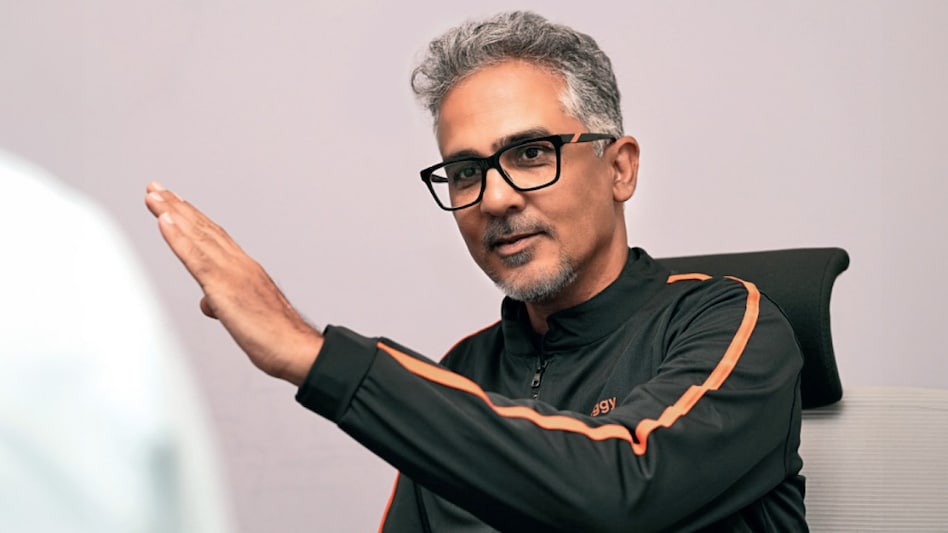
- Dec 31, 2025,
- Updated Dec 31, 2025 1:07 PM IST
After years of quick expansion, online food delivery apps are seeing moderation in sales growth. Swiggy’s budget app ‘Toing’ signals a strategic pivot towards affordability to attract India’s price-sensitive middle class. Swiggy Food Marketplace CEO Rohit Kapoor speaks to BT on their current positioning and what lies ahead.
You have emphasised affordability as the single largest 'unlock' in food delivery with the launch of Toing and 99 Store. What gaps in the value conscious consumer base spurred these launches?
The rationale behind a separate app, ‘Toing,’ is to run a clean experiment on the marketplace model for what is a different business model. With affordability of meals likely to be the single largest unlock for the food delivery category, it is incumbent upon market creators like us to try multiple approaches and see what can succeed, even if that means disrupting the status quo.
How are you designing the product-and-pricing architecture of these offerings?
We have been innovating to ensure an offering for expectations of all consumers through segmented propositions that feel customised.
To cater to the rising consumer awareness about eating healthy, we created specific, health-focussed categories on Swiggy such as ‘High protein’ and ‘No added sugar.’ We launched ‘Deskeats’ in 7,000+ tech-parks across 30 cities to cater to everyday office food missions with ease and affordability. We also expanded the ‘Food on Train’ programme to 115+ stations with new features.
On the affordability front, 99 Store has been solving for cheaper meals. It has scaled up to 500+ cities and is contributing high single-digit orders already. On the other hand, Gourmet continues to grow by adding more premium restaurants.
With rising competition, how does Swiggy plan to position its value-meal ecosystem?
We were born among stiff competition, and we believe competition will continue to exist in different shapes and forms. Swiggy continues to innovate with launches like Bolt for those who value speed, 99 Store for consumers who value affordability, ‘One Black’, an invite-only loyalty programme that provides a multitude of benefits.
Given that value meals challenge unit economics, how are you managing logistics, delivery partner incentives and cost base?
In value-led propositions like 99 Store, we are building an operating architecture and working closely with restaurant partners and delivery teams to make everyday meals more affordable without cutting corners. We are also working to reduce the overall cost-to-serve through hyper-curated supply (select SKUs, faster-prep items), tighter geofencing (working with partners who are closer to demand pockets) and other operational efficiencies.
After years of quick expansion, online food delivery apps are seeing moderation in sales growth. Swiggy’s budget app ‘Toing’ signals a strategic pivot towards affordability to attract India’s price-sensitive middle class. Swiggy Food Marketplace CEO Rohit Kapoor speaks to BT on their current positioning and what lies ahead.
You have emphasised affordability as the single largest 'unlock' in food delivery with the launch of Toing and 99 Store. What gaps in the value conscious consumer base spurred these launches?
The rationale behind a separate app, ‘Toing,’ is to run a clean experiment on the marketplace model for what is a different business model. With affordability of meals likely to be the single largest unlock for the food delivery category, it is incumbent upon market creators like us to try multiple approaches and see what can succeed, even if that means disrupting the status quo.
How are you designing the product-and-pricing architecture of these offerings?
We have been innovating to ensure an offering for expectations of all consumers through segmented propositions that feel customised.
To cater to the rising consumer awareness about eating healthy, we created specific, health-focussed categories on Swiggy such as ‘High protein’ and ‘No added sugar.’ We launched ‘Deskeats’ in 7,000+ tech-parks across 30 cities to cater to everyday office food missions with ease and affordability. We also expanded the ‘Food on Train’ programme to 115+ stations with new features.
On the affordability front, 99 Store has been solving for cheaper meals. It has scaled up to 500+ cities and is contributing high single-digit orders already. On the other hand, Gourmet continues to grow by adding more premium restaurants.
With rising competition, how does Swiggy plan to position its value-meal ecosystem?
We were born among stiff competition, and we believe competition will continue to exist in different shapes and forms. Swiggy continues to innovate with launches like Bolt for those who value speed, 99 Store for consumers who value affordability, ‘One Black’, an invite-only loyalty programme that provides a multitude of benefits.
Given that value meals challenge unit economics, how are you managing logistics, delivery partner incentives and cost base?
In value-led propositions like 99 Store, we are building an operating architecture and working closely with restaurant partners and delivery teams to make everyday meals more affordable without cutting corners. We are also working to reduce the overall cost-to-serve through hyper-curated supply (select SKUs, faster-prep items), tighter geofencing (working with partners who are closer to demand pockets) and other operational efficiencies.