
The 2025 Slate
The Indian film industry is hoping that 2025 will mark the Return of big-budget blockbusters
- Jan 14, 2025,
- Updated Jan 14, 2025 4:56 PM IST
There is a sense of quiet optimism in the Indian film industries about 2025. And it’s not hard to see why. If 2024 was marked by the relative absence of big-budget movies, especially the three Khans (Shah Rukh, Salman, and Aamir), at the box office, 2025 is set to change that.
Looking back, Sanjay Mehta, Delhi-based distributor and proprietor of Bobby Enterprises, says 2024 was a “content-driven year,” citing the success of Bhool Bhulaiyaa 3, which made a little over Rs 400 crore globally with over Rs 260 crore from India. “Plus, we had the big-budget Indian 2 bombing. All that made 2024 very interesting and different.” There were notable successes, of course, like Pushpa: The Rule, Kalki 2898 AD, Stree 2, Singham Again, and Bramayugam.
Devang Sampat, MD of Cinépolis India, a prominent player in the exhibition business with 450 screens, says around 1,200 films are released each year nationally. Of these, at least 50 need to be blockbusters for the business to make sense. "For 2025, there are potentially 100 that could become really big. The question is which 50 from that list will make it."
As an exhibitor, Sampat sees an opportunity across languages, including English. “From a Hollywood perspective, 2025 will be the biggest year since the pandemic, with the big ones like Mission: Impossible–The Final Reckoning and Avatar: Fire and Ash. The film on Michael Jackson (Michael) is likely to generate a lot of interest in India.”
One film industry, though, continued to find favour among Indian moviegoers: Telugu. "They come with high-quality production and do very well in markets like Uttar Pradesh and Bihar.
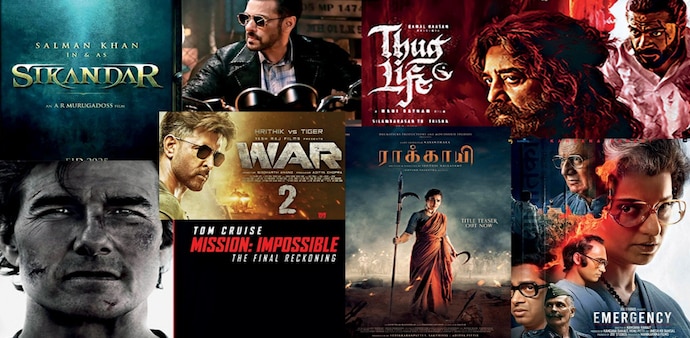
The Hindi film industry will fire in 2025,” says Mehta. Among the big releases slated for the year are War 2, Sikandar, Emergency, Sky Force, and Housefull 5.
SCREEN GRAB
- Bollywood saw no releases by its top stars, including the Three Khans, in 2024. That is set to change
- Prominent Hollywood releases in 2025 include Mission: Impossible–The Final Reckoning, Avatar: Fire and Ash, and Michael
- The Bollywood stable will have War 2, Sikandar, Emergency, Sky Force, and Housefull 5
- From the Tamil film industry, the most awaited film is Mani Ratnam’s thug life starring Kamal Hassan
- The trend of South films, especially Telugu, going Pan-India is expected to continue
But there are concerns related to big-budget movies that need urgent attention. The prominent of those is the high star costs, which is most stark in Hindi, Tamil, and Telugu. If the male lead gets at least Rs 100 crore (for the A-listers, that number is easily twice as much), it places the project at a higher risk in terms of recovering costs. “Star fee has to be corrected when it is apparent that OTT platforms and television will be around. It is a good time to get a move on that,” says Sanjay Wadhwa, Founder of AP International Group, a Chennai-based distributor.
This is especially true for the Tamil film industry, Wadhwa says. “Cost rationalisation” is of vital importance, he says, calling for a fresh look at the business model. “We are very optimistic about Thug Life (a Mani Ratnam film with Kamal Hassan in the lead) in 2025.”
Though films in India release in multiple languages, the landscape is still dominated by Hindi, Telugu, and Tamil. “Hollywood is definitely getting bigger but is still a limited market. It offers no sensibility when it comes to a large chunk of the Indian audience,” reasons Mehta.
Will 2025 change that? Vivek Krishnani, President and CEO of MovieVerse Studios (an IN10 Media Group company) and promoted by Anand Mahindra and Aditya Pittie, picks out the "texture of content" as a big change. “It will now appeal more to the masses that come to the theatres,” he says.
In fact, theatrical performance is now doubly important, as OTT platforms, too, look at those numbers closely before deciding on acquiring movies, Krishnani says. “That means writers and content creators must make films to get in the audience. There will be experimentation with low-budget films that are high on content to appeal to both multiplex and single-screen audiences.”
What has stood out over the past few years is the fact that pan-Indian films are still defined as movies from the South making it big in the rest of the country. “A primary reason is that stories from the South are rooted in culture and heroes that audiences can identify with. We have not seen one Hindi film connect with audiences in the South to become pan-India," says Krishnani.
Without a doubt, the emphasis on good content is expected to continue, as it has proven that it can generate higher interest levels among audiences. Cinépolis’ Sampat sees the desire for better content as evidence of the emergence of the mature Indian filmgoer, who is language-neutral. That trend is here to stay, he says. "We have seen how Malayalam cinema has easily made the crossover to audiences outside Kerala or dubbed Hollywood content making commercial sense. We need to build on such trends to get the best out of the film industry,” he sums up.
@krishnagopalan
There is a sense of quiet optimism in the Indian film industries about 2025. And it’s not hard to see why. If 2024 was marked by the relative absence of big-budget movies, especially the three Khans (Shah Rukh, Salman, and Aamir), at the box office, 2025 is set to change that.
Looking back, Sanjay Mehta, Delhi-based distributor and proprietor of Bobby Enterprises, says 2024 was a “content-driven year,” citing the success of Bhool Bhulaiyaa 3, which made a little over Rs 400 crore globally with over Rs 260 crore from India. “Plus, we had the big-budget Indian 2 bombing. All that made 2024 very interesting and different.” There were notable successes, of course, like Pushpa: The Rule, Kalki 2898 AD, Stree 2, Singham Again, and Bramayugam.
Devang Sampat, MD of Cinépolis India, a prominent player in the exhibition business with 450 screens, says around 1,200 films are released each year nationally. Of these, at least 50 need to be blockbusters for the business to make sense. "For 2025, there are potentially 100 that could become really big. The question is which 50 from that list will make it."
As an exhibitor, Sampat sees an opportunity across languages, including English. “From a Hollywood perspective, 2025 will be the biggest year since the pandemic, with the big ones like Mission: Impossible–The Final Reckoning and Avatar: Fire and Ash. The film on Michael Jackson (Michael) is likely to generate a lot of interest in India.”
One film industry, though, continued to find favour among Indian moviegoers: Telugu. "They come with high-quality production and do very well in markets like Uttar Pradesh and Bihar.
The Hindi film industry will fire in 2025,” says Mehta. Among the big releases slated for the year are War 2, Sikandar, Emergency, Sky Force, and Housefull 5.
SCREEN GRAB
- Bollywood saw no releases by its top stars, including the Three Khans, in 2024. That is set to change
- Prominent Hollywood releases in 2025 include Mission: Impossible–The Final Reckoning, Avatar: Fire and Ash, and Michael
- The Bollywood stable will have War 2, Sikandar, Emergency, Sky Force, and Housefull 5
- From the Tamil film industry, the most awaited film is Mani Ratnam’s thug life starring Kamal Hassan
- The trend of South films, especially Telugu, going Pan-India is expected to continue
But there are concerns related to big-budget movies that need urgent attention. The prominent of those is the high star costs, which is most stark in Hindi, Tamil, and Telugu. If the male lead gets at least Rs 100 crore (for the A-listers, that number is easily twice as much), it places the project at a higher risk in terms of recovering costs. “Star fee has to be corrected when it is apparent that OTT platforms and television will be around. It is a good time to get a move on that,” says Sanjay Wadhwa, Founder of AP International Group, a Chennai-based distributor.
This is especially true for the Tamil film industry, Wadhwa says. “Cost rationalisation” is of vital importance, he says, calling for a fresh look at the business model. “We are very optimistic about Thug Life (a Mani Ratnam film with Kamal Hassan in the lead) in 2025.”
Though films in India release in multiple languages, the landscape is still dominated by Hindi, Telugu, and Tamil. “Hollywood is definitely getting bigger but is still a limited market. It offers no sensibility when it comes to a large chunk of the Indian audience,” reasons Mehta.
Will 2025 change that? Vivek Krishnani, President and CEO of MovieVerse Studios (an IN10 Media Group company) and promoted by Anand Mahindra and Aditya Pittie, picks out the "texture of content" as a big change. “It will now appeal more to the masses that come to the theatres,” he says.
In fact, theatrical performance is now doubly important, as OTT platforms, too, look at those numbers closely before deciding on acquiring movies, Krishnani says. “That means writers and content creators must make films to get in the audience. There will be experimentation with low-budget films that are high on content to appeal to both multiplex and single-screen audiences.”
What has stood out over the past few years is the fact that pan-Indian films are still defined as movies from the South making it big in the rest of the country. “A primary reason is that stories from the South are rooted in culture and heroes that audiences can identify with. We have not seen one Hindi film connect with audiences in the South to become pan-India," says Krishnani.
Without a doubt, the emphasis on good content is expected to continue, as it has proven that it can generate higher interest levels among audiences. Cinépolis’ Sampat sees the desire for better content as evidence of the emergence of the mature Indian filmgoer, who is language-neutral. That trend is here to stay, he says. "We have seen how Malayalam cinema has easily made the crossover to audiences outside Kerala or dubbed Hollywood content making commercial sense. We need to build on such trends to get the best out of the film industry,” he sums up.
@krishnagopalan