
boAt IPO: Red flags everywhere? Employee attrition soars to 34%; Aman Gupta, Sameer Mehta stepped down before DRHP filing
He further pointed out that boAt’s large employee stock option (ESOP) pool has failed to retain staff.
- Nov 9, 2025,
- Updated Nov 9, 2025 10:42 AM IST
Audio and wearables brand boAt’s much-anticipated public listing may have hit turbulent waters even before takeoff. A LinkedIn post by market commentator and author Jayant Mundhra has flagged serious people-related issues at the homegrown audio brand, citing its updated Draft Red Herring Prospectus (UDRHP).
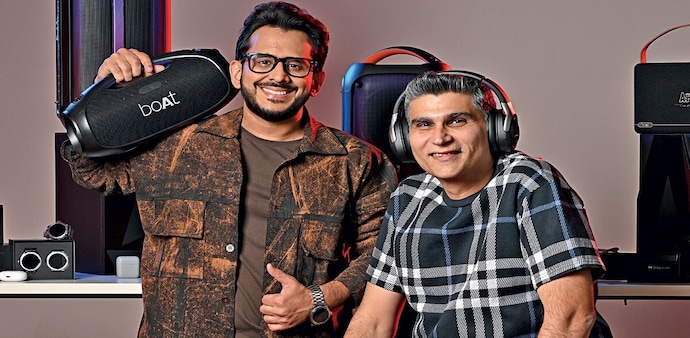
According to the DRHP, both of boAt’s co-founders — Sameer Ashok Mehta and Aman Gupta — stepped down from their executive roles just 29 days before the company filed for its IPO. Mehta resigned as Chief Executive Officer, while Gupta quit as Chief Marketing Officer.
Mundhra noted that the two have transitioned to board-level roles — Mehta as Executive Director and Gupta as Non-Executive Director — with no salary or sitting fees, a drastic change from FY25 when each reportedly drew ₹2.5 crore in salary.
“The founders are distancing themselves from operational responsibility right before going public,” Mundhra wrote, calling it a “calculated pre-IPO pivot” rather than a planned succession.
But the leadership shake-up isn’t the only concern. The DRHP reveals a staggering 34.18% full-time employee attrition rate, up from 27.09% in FY23 and 28.14% in FY24 — indicating a steep rise in departures.
“This is not normal turnover. This is a mass exodus,” Mundhra said, warning that the company’s “internal culture is completely broken.”
He further pointed out that boAt’s large employee stock option (ESOP) pool has failed to retain staff, suggesting that either employees are “miserable despite paper wealth” or they “have no faith in the future value of the company’s stock.”
Summing up, Mundhra called the situation a “parade of glaring red flags” for potential investors — citing founders stepping back, collapsing talent base, and ineffective ESOPs as signs of a deeper cultural and confidence crisis within the company.
Moreover, the company reported a net profit of more than ₹60 crore for FY25 compared to a net loss of ₹80 crore in the same period last year, primarily due to product innovation and cost control. Consolidated revenue dropped from ₹3,122 crore in FY24 to ₹3,098 crore in FY25.
Last month, the audio and wearables maker slashed its IPO size from ₹2,000 crore to ₹1,500 crore. As per its UDRHP, the company seeks to raise ₹1,500 crore via its IPO, including ₹500 crore of fresh shares and an offer for sale (OFS) worth ₹1,000 crore by existing investors.
Audio and wearables brand boAt’s much-anticipated public listing may have hit turbulent waters even before takeoff. A LinkedIn post by market commentator and author Jayant Mundhra has flagged serious people-related issues at the homegrown audio brand, citing its updated Draft Red Herring Prospectus (UDRHP).
According to the DRHP, both of boAt’s co-founders — Sameer Ashok Mehta and Aman Gupta — stepped down from their executive roles just 29 days before the company filed for its IPO. Mehta resigned as Chief Executive Officer, while Gupta quit as Chief Marketing Officer.
Mundhra noted that the two have transitioned to board-level roles — Mehta as Executive Director and Gupta as Non-Executive Director — with no salary or sitting fees, a drastic change from FY25 when each reportedly drew ₹2.5 crore in salary.
“The founders are distancing themselves from operational responsibility right before going public,” Mundhra wrote, calling it a “calculated pre-IPO pivot” rather than a planned succession.
But the leadership shake-up isn’t the only concern. The DRHP reveals a staggering 34.18% full-time employee attrition rate, up from 27.09% in FY23 and 28.14% in FY24 — indicating a steep rise in departures.
“This is not normal turnover. This is a mass exodus,” Mundhra said, warning that the company’s “internal culture is completely broken.”
He further pointed out that boAt’s large employee stock option (ESOP) pool has failed to retain staff, suggesting that either employees are “miserable despite paper wealth” or they “have no faith in the future value of the company’s stock.”
Summing up, Mundhra called the situation a “parade of glaring red flags” for potential investors — citing founders stepping back, collapsing talent base, and ineffective ESOPs as signs of a deeper cultural and confidence crisis within the company.
Moreover, the company reported a net profit of more than ₹60 crore for FY25 compared to a net loss of ₹80 crore in the same period last year, primarily due to product innovation and cost control. Consolidated revenue dropped from ₹3,122 crore in FY24 to ₹3,098 crore in FY25.
Last month, the audio and wearables maker slashed its IPO size from ₹2,000 crore to ₹1,500 crore. As per its UDRHP, the company seeks to raise ₹1,500 crore via its IPO, including ₹500 crore of fresh shares and an offer for sale (OFS) worth ₹1,000 crore by existing investors.