
India’s IPO boom stirs caution: Market veterans say most listings won’t create long-term value
Despite near-term valuation froth and a crowded IPO pipeline, they see strong structural undercurrents — rising earnings, expanding mid- and small-cap depth, and sector-wide disruptions — as more important indicators.
- Nov 21, 2025,
- Updated Nov 21, 2025 7:08 PM IST
India’s long-term growth story remains strong, but investors will need to dial down the IPO exuberance and lean into stock selection, say veteran market voices. At the PMS Bazaar Summit 2025, Hiren Ved (Alchemy Capital), Pankaj Tibrewal (Ikigai Asset Manager Holdings), and Vikas Khemani (Carnelian Asset Management) struck a clear note of caution: discipline will matter more than momentum in the cycle ahead.
“This is not 2018-19 where quality was thrown away. Today you need to be selective. But if you identify leaders for the next two or three years, this phase will reward you,” Ved said.
Despite near-term valuation froth and a crowded IPO pipeline, they see strong structural undercurrents — rising earnings, expanding mid- and small-cap depth, and sector-wide disruptions — as more important indicators.
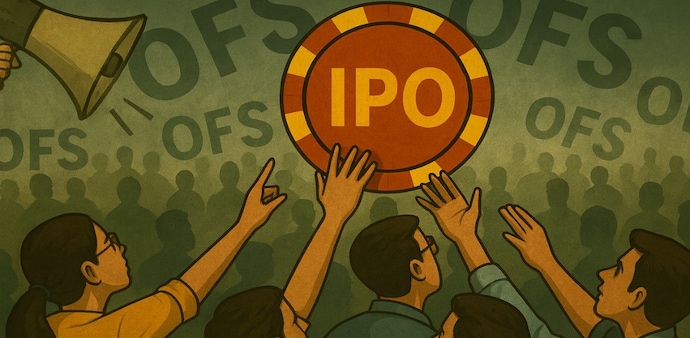
But IPOs? The trio isn’t bullish. “If you look at IPOs over the last 20 years, almost 80 percent didn’t create value five years later,” Khemani noted. Ved warned, “There is too much coming to market right now. Secondary markets are not absorbing it. Be extremely selective.” Tibrewal added, “Unless you’ve followed a company for five years, you shouldn’t put serious money in its IPO.”
Ved believes the market is just beginning to reflect earlier policy measures — liquidity support, tax cuts, and spending boosts — which are now translating into earnings. “Every monetary or fiscal move shows up in earnings with a two-quarter delay, and that is exactly what we are seeing now,” he said. Mid- and small-cap companies posted their strongest growth in nearly two years last quarter, even if some of it was margin-led. “A lot of this growth is EBITDA-driven. You cannot ignore that,” he cautioned.
Tibrewal highlighted the scale of change in market breadth. “Seven years ago, only about 159 listed companies were above ₹5,000 crore in market cap. Today that number is 618,” he said. His portfolios are now tilted toward this maturing cohort of mid-caps. “If a company doesn’t need external capital, has stable cash flows and improving governance, it can double earnings in three to four years.”
Khemani focused on the disruptive churn underway across sectors. “We moved from unorganised to organised to scale. Now quick commerce is disrupting big-box retail, and often neither the disruptor nor the disrupted is investable,” he said.
Disruption, he added, doesn’t always present investable opportunities. “Sometimes the disruptor isn’t profitable yet but is still taking share. In such cases, you can’t buy the new-age company and you can’t buy the old one.”
India’s long-term growth story remains strong, but investors will need to dial down the IPO exuberance and lean into stock selection, say veteran market voices. At the PMS Bazaar Summit 2025, Hiren Ved (Alchemy Capital), Pankaj Tibrewal (Ikigai Asset Manager Holdings), and Vikas Khemani (Carnelian Asset Management) struck a clear note of caution: discipline will matter more than momentum in the cycle ahead.
“This is not 2018-19 where quality was thrown away. Today you need to be selective. But if you identify leaders for the next two or three years, this phase will reward you,” Ved said.
Despite near-term valuation froth and a crowded IPO pipeline, they see strong structural undercurrents — rising earnings, expanding mid- and small-cap depth, and sector-wide disruptions — as more important indicators.
But IPOs? The trio isn’t bullish. “If you look at IPOs over the last 20 years, almost 80 percent didn’t create value five years later,” Khemani noted. Ved warned, “There is too much coming to market right now. Secondary markets are not absorbing it. Be extremely selective.” Tibrewal added, “Unless you’ve followed a company for five years, you shouldn’t put serious money in its IPO.”
Ved believes the market is just beginning to reflect earlier policy measures — liquidity support, tax cuts, and spending boosts — which are now translating into earnings. “Every monetary or fiscal move shows up in earnings with a two-quarter delay, and that is exactly what we are seeing now,” he said. Mid- and small-cap companies posted their strongest growth in nearly two years last quarter, even if some of it was margin-led. “A lot of this growth is EBITDA-driven. You cannot ignore that,” he cautioned.
Tibrewal highlighted the scale of change in market breadth. “Seven years ago, only about 159 listed companies were above ₹5,000 crore in market cap. Today that number is 618,” he said. His portfolios are now tilted toward this maturing cohort of mid-caps. “If a company doesn’t need external capital, has stable cash flows and improving governance, it can double earnings in three to four years.”
Khemani focused on the disruptive churn underway across sectors. “We moved from unorganised to organised to scale. Now quick commerce is disrupting big-box retail, and often neither the disruptor nor the disrupted is investable,” he said.
Disruption, he added, doesn’t always present investable opportunities. “Sometimes the disruptor isn’t profitable yet but is still taking share. In such cases, you can’t buy the new-age company and you can’t buy the old one.”