
NSE IPO: Institutional interest strong; business highly profitable, says Ashishkumar Chauhan
NSE IPO: Ashish Chauhan says the exchange does not need fresh capital as it returns most free cash flow through dividends. Know the OFS structure and valuation.
- Sep 16, 2026,
- Updated Sep 16, 2026 12:36 PM IST
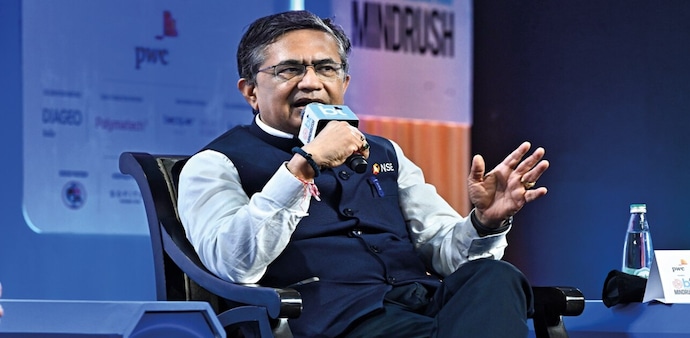
The National Stock Exchange of India (NSE) does not need to raise fresh capital through its proposed initial public offering (IPO) because it is highly profitable and returns most of its free cash flow to shareholders as dividends, NSE Managing Director and CEO Ashishkumar Chauhan said while addressing the media in New Delhi.
The IPO of NSE is an offer for sale (OFS) of up to 12.64 crore equity shares with a face value of Rs 1 each. The shares will be sold by existing corporate shareholders including State Bank of India, Canada Pension Plan Investment Board, Aranda Investments (Mauritius), MS Strategic (Mauritius), The New India Assurance Company, SBI Capital Markets, Bank of Baroda, Stock Holding Corporation of India, General Insurance Corporation of India and United India Insurance Company.
Offer for sale structure Chauhan said the structure of the issue was important for investors because the shares being offered to the public will come from existing shareholders and not from newly issued shares. That means the exchange itself will not receive the IPO proceeds.
"Reasonably, NSE is highly profitable. It ends up giving a huge amount of profits and gives most of that free cash flow as dividends. And that's why it doesn't require money," Chauhan said. Unlike companies that come to the market to fund expansion, repay debt or build capacity, NSE has no stated requirement for fresh capital and can distribute a substantial portion of its free cash flow to shareholders.
According to the World Federation of Exchanges, he said, compared with the leading listed stock exchange groups globally, NSE was the largest multi-asset class exchange in terms of the number of trades in cash equities and contracts traded in equity derivatives in fiscal 2026 and in the three-month period ended June 30, 2026.
Its global market share stood at 11.38 per cent in number of trades in cash equities and 51.18 per cent in contracts traded in equity derivatives in fiscal 2026, and 10.68 per cent and 50.22 per cent, respectively, in the three months ended June 30, 2026.
Anchor book likely to see strong demand Demand for the National Stock Exchange’s (NSE) anchor book has been 'unexpectedly large' ahead of its much-awaited IPO, despite the anchor allocation being reduced to around Rs 6,250 crore from the earlier Rs 9,000 crore, Chauhan adding that. the reduction in the anchor book size has not dampened investor interest, with both foreign and domestic institutions showing strong demand.
"There is a large number of investors seeking a large number of shares," Chauhan said, adding that the exchange had limited shares available for allocation despite the strong interest. The final anchor book allocation shall be announced by the evening on Wednesday, September 16.
Valuation and shareholder response The IPO comes amid reluctance among some existing shareholders to sell their NSE shares at the proposed valuation. Chauhan said shareholders were not necessarily looking to exit simply because they had bought the shares decades ago.
"But, as you think, we are non-commercial people. We are more of a regulator, and so they (shareholders) will only sell, and they have a requirement of money, but otherwise it's wait for real sort of competitive pricing," he said. "Today, I think the pricing is below that expectation."
NSE has fixed the price band at Rs 1,700 to Rs 1,785 per equity share. The issue, therefore, is being positioned as a sale by existing investors in a profitable exchange that says it does not need fresh funds, even as some shareholders weigh whether the current valuation reflects their expectations.
The National Stock Exchange of India (NSE) does not need to raise fresh capital through its proposed initial public offering (IPO) because it is highly profitable and returns most of its free cash flow to shareholders as dividends, NSE Managing Director and CEO Ashishkumar Chauhan said while addressing the media in New Delhi.
The IPO of NSE is an offer for sale (OFS) of up to 12.64 crore equity shares with a face value of Rs 1 each. The shares will be sold by existing corporate shareholders including State Bank of India, Canada Pension Plan Investment Board, Aranda Investments (Mauritius), MS Strategic (Mauritius), The New India Assurance Company, SBI Capital Markets, Bank of Baroda, Stock Holding Corporation of India, General Insurance Corporation of India and United India Insurance Company.
Offer for sale structure Chauhan said the structure of the issue was important for investors because the shares being offered to the public will come from existing shareholders and not from newly issued shares. That means the exchange itself will not receive the IPO proceeds.
"Reasonably, NSE is highly profitable. It ends up giving a huge amount of profits and gives most of that free cash flow as dividends. And that's why it doesn't require money," Chauhan said. Unlike companies that come to the market to fund expansion, repay debt or build capacity, NSE has no stated requirement for fresh capital and can distribute a substantial portion of its free cash flow to shareholders.
According to the World Federation of Exchanges, he said, compared with the leading listed stock exchange groups globally, NSE was the largest multi-asset class exchange in terms of the number of trades in cash equities and contracts traded in equity derivatives in fiscal 2026 and in the three-month period ended June 30, 2026.
Its global market share stood at 11.38 per cent in number of trades in cash equities and 51.18 per cent in contracts traded in equity derivatives in fiscal 2026, and 10.68 per cent and 50.22 per cent, respectively, in the three months ended June 30, 2026.
Anchor book likely to see strong demand Demand for the National Stock Exchange’s (NSE) anchor book has been 'unexpectedly large' ahead of its much-awaited IPO, despite the anchor allocation being reduced to around Rs 6,250 crore from the earlier Rs 9,000 crore, Chauhan adding that. the reduction in the anchor book size has not dampened investor interest, with both foreign and domestic institutions showing strong demand.
"There is a large number of investors seeking a large number of shares," Chauhan said, adding that the exchange had limited shares available for allocation despite the strong interest. The final anchor book allocation shall be announced by the evening on Wednesday, September 16.
Valuation and shareholder response The IPO comes amid reluctance among some existing shareholders to sell their NSE shares at the proposed valuation. Chauhan said shareholders were not necessarily looking to exit simply because they had bought the shares decades ago.
"But, as you think, we are non-commercial people. We are more of a regulator, and so they (shareholders) will only sell, and they have a requirement of money, but otherwise it's wait for real sort of competitive pricing," he said. "Today, I think the pricing is below that expectation."
NSE has fixed the price band at Rs 1,700 to Rs 1,785 per equity share. The issue, therefore, is being positioned as a sale by existing investors in a profitable exchange that says it does not need fresh funds, even as some shareholders weigh whether the current valuation reflects their expectations.