
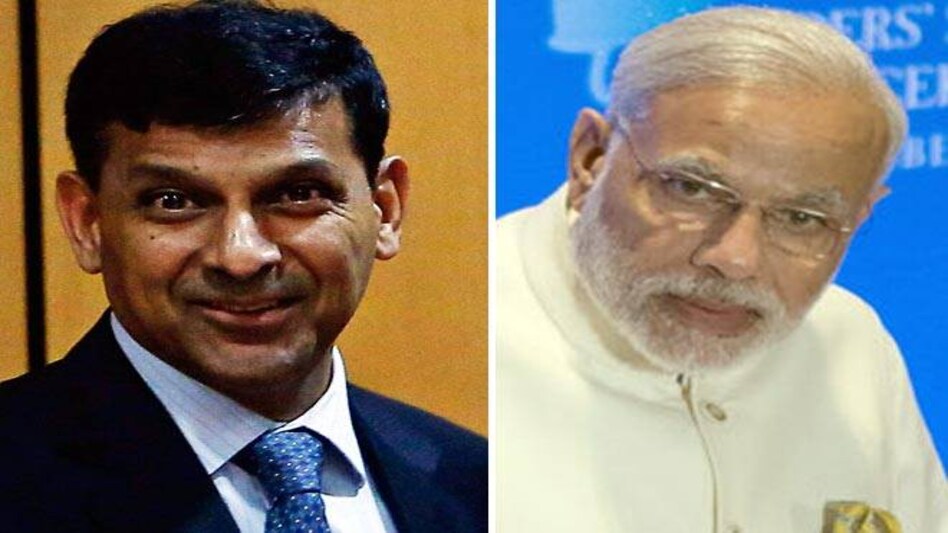
The great rescue story: How PM Narendra Modi govt, Raghuram Rajan saved market, rupee from Rexit to Brexit
Despite many negative triggers, the domestic market emerged as top performer, falling mere 1.5 per cent since last Monday against an up to 11 per cent fall in Asian peers during the same period.
- Jun 28, 2016,
- Updated Jun 28, 2016 10:11 AM IST
The past couple of sessions were indeed tumultuous for the market, given Britons, against all odds, voted for an exit from the European Union, opening up doors for the rating downgrades of Britain and all businesses catering to the blustering financial hub London. The RBI governor Raghuram Rajan's decision to not consider a second-term too came in as shock for the market, with the equities and the currency market briefly going into tailspin. But despite many negative triggers, the domestic market emerged as top performer, falling mere 1.5 per cent since last Monday against an up to 11 per cent fall in Asian peers during the same period.
While one may point towards the inherent strength in the domestic economy, and the not-so-heavy linkages of India with the UK economy, as the key behind the outperformance, many experts believe that the RBI's timely intervention and buying by state run Life Insurance Corporation of India (LIC) narrowed the damages. Data suggested that foreign investors were net sellers to the tune of Rs 617 crore last week. They sold an additional Rs 146 crore worth of equities on Monday, provisional data on BSE suggested.
However, it was buying by domestic institutional investors (DIIs) which saved the day for the market.
As per data available with depository NSDL, the domestic institutional investors (DIIs) were net buyers to the tune of Rs 931 crore last week. They were net seller to the tune of Rs 145 crore on Monday, provisional data suggested.
ALSO READ: Post Brexit, moody monsoon may play spoilsport for Dalal Street
The BSE Sensex managed to settle just 600-odd points lower on Friday, after plunging a whopping 1090 points during the intraday trade. The rupee also recovered to close 71 paise higher for the day, after depreciating as much as 97 paise to 68.22 against the US dollar the same day. "The fall (in the domestic stocks) was arrested by heavy buying particularly by domestic institutional investors, including LIC. However, in the absence of any data, it would be difficult to comment on exactly how much of the buying was attributable to the latter," said Nitasha Shankar, Senior Vice President, Research, YES Securities. Ankur Varman of SBICAP Seecurities said that the buzz on the dealing desks all through last week was that LIC was definitely buying into equities. Varman was also privy to the fact that even before the markets opened on Friday, the RBI was ready to act, and it did come in to rescue the currency market. The RBI started making heavy interventions when the rupee crossed 68.20 level on Friday, forcing the local currency to retreat from its day's low of 68.22 to 68.15 a dollar level by 9:25 am, dealers said. On Monday, post the Rexit announcement, the overseas investors pulled out over Rs 2,837 crore from market. It was the biggest single-day outflow for the ongoing fiscal year so far. The net outflow by FPIs in equities stood at Rs 528 crore, while in the debt market they were net sellers to the tune of a whopping Rs 2,310 crore. On the other hand, all DIIs put together made a net inflow of Rs 724.06 crore in equities, which was more than the net outflow due to sell-off by FPIs - thus helping the stock markets move higher. A day before the verdict on UK referendum, the Finance Minister Arun Jaitley had assured that India was well prepared to deal with the consequences of Brexit. The RBI Chief Rajan had also communicated that RBI was prepared for any eventuality on Brexit. "RBI is continuously maintaining a close vigil on market developments, both domestically and internationally, and will take all necessary steps, including liquidity support (both dollar and rupee), to ensure orderly conditions in financial markets," Rajan said.Comments from the Reserve Bank of India (RBI) and the government indicate that policy makers stand ready to act if needed, said Strandard Chartered in a note. The comments rejuvenated the sentiment a bit and allayed investor concerns, experts said.
The past couple of sessions were indeed tumultuous for the market, given Britons, against all odds, voted for an exit from the European Union, opening up doors for the rating downgrades of Britain and all businesses catering to the blustering financial hub London. The RBI governor Raghuram Rajan's decision to not consider a second-term too came in as shock for the market, with the equities and the currency market briefly going into tailspin. But despite many negative triggers, the domestic market emerged as top performer, falling mere 1.5 per cent since last Monday against an up to 11 per cent fall in Asian peers during the same period.
While one may point towards the inherent strength in the domestic economy, and the not-so-heavy linkages of India with the UK economy, as the key behind the outperformance, many experts believe that the RBI's timely intervention and buying by state run Life Insurance Corporation of India (LIC) narrowed the damages. Data suggested that foreign investors were net sellers to the tune of Rs 617 crore last week. They sold an additional Rs 146 crore worth of equities on Monday, provisional data on BSE suggested.
However, it was buying by domestic institutional investors (DIIs) which saved the day for the market.
As per data available with depository NSDL, the domestic institutional investors (DIIs) were net buyers to the tune of Rs 931 crore last week. They were net seller to the tune of Rs 145 crore on Monday, provisional data suggested.
ALSO READ: Post Brexit, moody monsoon may play spoilsport for Dalal Street
The BSE Sensex managed to settle just 600-odd points lower on Friday, after plunging a whopping 1090 points during the intraday trade. The rupee also recovered to close 71 paise higher for the day, after depreciating as much as 97 paise to 68.22 against the US dollar the same day. "The fall (in the domestic stocks) was arrested by heavy buying particularly by domestic institutional investors, including LIC. However, in the absence of any data, it would be difficult to comment on exactly how much of the buying was attributable to the latter," said Nitasha Shankar, Senior Vice President, Research, YES Securities. Ankur Varman of SBICAP Seecurities said that the buzz on the dealing desks all through last week was that LIC was definitely buying into equities. Varman was also privy to the fact that even before the markets opened on Friday, the RBI was ready to act, and it did come in to rescue the currency market. The RBI started making heavy interventions when the rupee crossed 68.20 level on Friday, forcing the local currency to retreat from its day's low of 68.22 to 68.15 a dollar level by 9:25 am, dealers said. On Monday, post the Rexit announcement, the overseas investors pulled out over Rs 2,837 crore from market. It was the biggest single-day outflow for the ongoing fiscal year so far. The net outflow by FPIs in equities stood at Rs 528 crore, while in the debt market they were net sellers to the tune of a whopping Rs 2,310 crore. On the other hand, all DIIs put together made a net inflow of Rs 724.06 crore in equities, which was more than the net outflow due to sell-off by FPIs - thus helping the stock markets move higher. A day before the verdict on UK referendum, the Finance Minister Arun Jaitley had assured that India was well prepared to deal with the consequences of Brexit. The RBI Chief Rajan had also communicated that RBI was prepared for any eventuality on Brexit. "RBI is continuously maintaining a close vigil on market developments, both domestically and internationally, and will take all necessary steps, including liquidity support (both dollar and rupee), to ensure orderly conditions in financial markets," Rajan said.Comments from the Reserve Bank of India (RBI) and the government indicate that policy makers stand ready to act if needed, said Strandard Chartered in a note. The comments rejuvenated the sentiment a bit and allayed investor concerns, experts said.