
India-EU trade deal: Why Sensex, Nifty rebounded from day's low; winners & losers
A total of Rs 6.41 lakh crore ($75 billion) exports are poised for take-off, out of which $33 billion exports are likely in labour-intensive sectors like textiles, leather, marine products, gems and jewellery .
- Jan 27, 2026,
- Updated Jan 27, 2026 3:18 PM IST
India signing trade deal with the European Union (EU) has brought some relief for domestic investors, as equity benchmarks Sensex and Nifty rebounded from day's low to enter positive terrain. India–EU Free trade agreement is seen opening new opportunities for MSMEs and create jobs for women, artisans, youth and professionals, a Ministry of Commerce & Industry release read.
A total of Rs 6.41 lakh crore ($75 billion) exports are poised for take-off, out of which $33 billion exports are likely in labour-intensive sectors like textiles, leather, marine products, gems and jewellery set to gain immensely from preferential access under the FTA, the release added.
Shrimp exporter Apex Frozen Foods Ltd advanced 11 per cent to Rs 292.50. Avanti Feeds Ltd rose 1.81 per cent to Rs 769.10. Textile stock KPR Mill jumped 6.51 per cent to Rs 904. Welspun Living advanced 4.12 per cent to 125.76. Leather and leather products maker Mirza International Ltd rose 4.18 per cent to Rs 33.86.
"Over 99% of Indian exports gain preferential entry into the EU, unlocking massive growth potential," Ministry of Commerce & Industry said.
India’s FTA with EU, which accounts for 25 per cent of global GDP and 33 per cent of global trade, is a major breakthrough, particularly in the context of the prolonging India-US trade deal, said stock analysts.
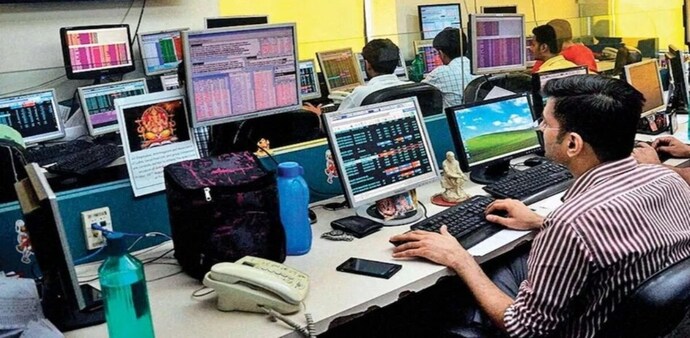
At 2.57 pm, the BSE Sensex was up 210.12 points or 0.26 per cent at 81,747.82. Nifty stood at 25,129.45, up 80.80 points or 0.32 per cent.
"However, this India-EU deal should not be viewed as a substitute for an India-US deal. It is important to understand that India has a trade surplus of $45 billion with US but only $ 25 billion with EU. Therefore, even while celebrating this India-EU deal, we should tirelessly pursue the US-India deal, which India badly needs. Also this India-EU deal will become operational only in early 2027," said V K Vijayakumar, Chief Investment Strategist, Geojit Investments.
As of FY25, EU accounted for 17.3 per cent of India’s total exports and 8.4 per cent imports. The FY26TD exports showed a slight fall in EU’s share to 16.8 per cent. India’s export basket with the EU too has moved up the value chain with time, with high-value exports (electronics, machinery, chemicals) gaining share over traditional labor-intensive goods (textiles, jewellery, footwear).
The import basket has been largely unchanged over a decade, led by advanced industrial inputs and high-tech products (machinery, electronics, Aerospace, etc).
"Even as India forms only 0.8 per cent EU’s export market, the deal is essential for the EU as well, amid its rapidly widening trade deficit with India— $15 billion deficit in FY25 vs $3 billion surplus in FY19—and need to diversify its trade pie away from the China+1 playbook. EU’s cut on Russian energy post-Ukraine war has shifted demand to India for refined diesel and aviation fuel, with shipments rising 68 per cent in FY25 vs FY22," Emkay Global said in a note.
Emkay Global said Europe’s diversification of supply chains has helped Indian textile, electronics, and chemical exports to EU cumulatively nearly double since 2018.
"Our quick assessments suggest that in case of a full-fledged and strong FTA deal, India’s goods export surplus from the EU could increase by $50 billion by FY31, with EU’s share jumping to 22-23 per cent from 17.3 per cent now. With the EU accounting for 16 per cent of India’s cumulative FDI and 1/3rd of India’s IT exports, the deal could offer meaningful upside to such flow," it said just ahead of trade deal.
India signing trade deal with the European Union (EU) has brought some relief for domestic investors, as equity benchmarks Sensex and Nifty rebounded from day's low to enter positive terrain. India–EU Free trade agreement is seen opening new opportunities for MSMEs and create jobs for women, artisans, youth and professionals, a Ministry of Commerce & Industry release read.
A total of Rs 6.41 lakh crore ($75 billion) exports are poised for take-off, out of which $33 billion exports are likely in labour-intensive sectors like textiles, leather, marine products, gems and jewellery set to gain immensely from preferential access under the FTA, the release added.
Shrimp exporter Apex Frozen Foods Ltd advanced 11 per cent to Rs 292.50. Avanti Feeds Ltd rose 1.81 per cent to Rs 769.10. Textile stock KPR Mill jumped 6.51 per cent to Rs 904. Welspun Living advanced 4.12 per cent to 125.76. Leather and leather products maker Mirza International Ltd rose 4.18 per cent to Rs 33.86.
"Over 99% of Indian exports gain preferential entry into the EU, unlocking massive growth potential," Ministry of Commerce & Industry said.
India’s FTA with EU, which accounts for 25 per cent of global GDP and 33 per cent of global trade, is a major breakthrough, particularly in the context of the prolonging India-US trade deal, said stock analysts.
At 2.57 pm, the BSE Sensex was up 210.12 points or 0.26 per cent at 81,747.82. Nifty stood at 25,129.45, up 80.80 points or 0.32 per cent.
"However, this India-EU deal should not be viewed as a substitute for an India-US deal. It is important to understand that India has a trade surplus of $45 billion with US but only $ 25 billion with EU. Therefore, even while celebrating this India-EU deal, we should tirelessly pursue the US-India deal, which India badly needs. Also this India-EU deal will become operational only in early 2027," said V K Vijayakumar, Chief Investment Strategist, Geojit Investments.
As of FY25, EU accounted for 17.3 per cent of India’s total exports and 8.4 per cent imports. The FY26TD exports showed a slight fall in EU’s share to 16.8 per cent. India’s export basket with the EU too has moved up the value chain with time, with high-value exports (electronics, machinery, chemicals) gaining share over traditional labor-intensive goods (textiles, jewellery, footwear).
The import basket has been largely unchanged over a decade, led by advanced industrial inputs and high-tech products (machinery, electronics, Aerospace, etc).
"Even as India forms only 0.8 per cent EU’s export market, the deal is essential for the EU as well, amid its rapidly widening trade deficit with India— $15 billion deficit in FY25 vs $3 billion surplus in FY19—and need to diversify its trade pie away from the China+1 playbook. EU’s cut on Russian energy post-Ukraine war has shifted demand to India for refined diesel and aviation fuel, with shipments rising 68 per cent in FY25 vs FY22," Emkay Global said in a note.
Emkay Global said Europe’s diversification of supply chains has helped Indian textile, electronics, and chemical exports to EU cumulatively nearly double since 2018.
"Our quick assessments suggest that in case of a full-fledged and strong FTA deal, India’s goods export surplus from the EU could increase by $50 billion by FY31, with EU’s share jumping to 22-23 per cent from 17.3 per cent now. With the EU accounting for 16 per cent of India’s cumulative FDI and 1/3rd of India’s IT exports, the deal could offer meaningful upside to such flow," it said just ahead of trade deal.