
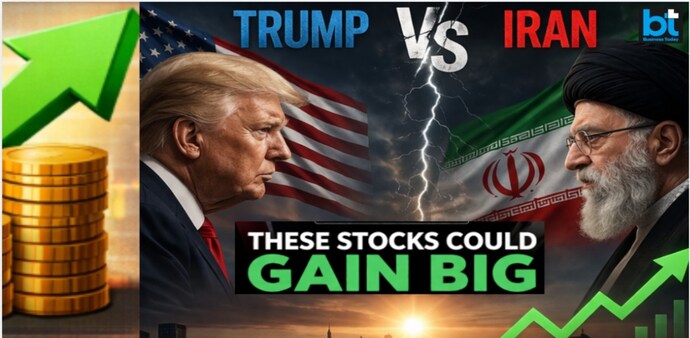
These stocks may gain big if US-Iran war ends soon
Aviation and tourism rebound with crude below $100 a barrel may aid stocks such as InterGlobe Aviation (IndiGo) and Indian Hotels. Stabilised energy prices would be positive for IGL.
- Apr 17, 2026,
- Updated Apr 17, 2026 2:12 PM IST
US President Donald Trump reportedly said the next meeting between United States and Iran is taking place this weekend, adding that an extension of a two-week ceasefire was possible, but may not be needed, as Tehran wanted a deal. If there is any positive outcome, a host of stocks will be in focus in the coming week.
India imports nearly 85 per cent of its oil and a decline in crude prices would help reduce inflation, improve corporate margins, and strengthen overall macro stability, said Saurabh Jain, Head of Fundamental Research at SMC Global Securities.
Thomas V Abraham, Research Analyst at Mirae Asset Sharekhan said financials may gain from lower inflation risks and improved lending amid domestic resilience. Aviation and tourism rebound with crude below $100 a barrel may aid stocks such as InterGlobe Aviation (IndiGo) and Indian Hotels Co Ltd, and tourism sector as a whole on account of pent-up demand. A stabilised energy prices would be positive for city gas distributors such as Indraprastha Gas Ltd (IGL).
Jain said the key beneficiaries would include Hindustan Petroleum Corporation Ltd (HPCL). He said aviation sector companies, including IndiGo, would benefit from lower fuel expenses, improving profitability.
"Capital goods and EPC players such as Larsen & Toubro Ltd would also gain from reduced input and transportation costs. Additionally, lower oil prices would help reduce inflation and support the rupee, thus strengthening the banking and consumption-driven sectors through increased demand and liquidity," Jain said.
Jain said post-war decline in crude prices would be significantly positive for the Indian market, particularly for consumption-oriented and cost-sensitive sectors.
"We're going to see what happens. But I think we're very close to making a deal with Iran," Reuters reported Trump as saying.
Utsav Verma, Head of Research at Choice Institutional Equities, said he is of the view that equity investments should be calibrated in staggered manner, as the opportunity lies in selectivity.
"Domestic consumption plays which are relatively insulated, private sector financials with clean balance sheets, defence with probability of exports order flows and healthcare and pharma — offer earnings resilience that the broader market cannot. IT services, where deal pipelines are relatively insulated, also present a re-entry case," he said.
Verma said sectors with significant unhedged commodity exposure or Gulf revenue concentration warrant patience until supply chain normalization is confirmed in reported numbers.
Meanwhile, Verma believes defence manufacturing under Atmanirbhar Bharat with export targets of Rs 50,000 crore by FY29 would benefit firms like Hindustan Aeronautics Ltd (HAL) and Bharat Electronics Ltd (BEL). Infrastructure sees elevated spending on railways, steel, chemicals, power, and construction.
Elara Securities except for IGL, most stocks currently imply crude oil levels of $85–89 barrel. This, it said, suggested much of war normalisation premium is already priced in. Hence, it believes any de-escalation driven rallies look largely played out. This broking firm expects outperformance from MGL and Petronet LNG, underperformance from Gujarat Gas & GSPL, and market-aligned returns from GAIL and IGL.
Emkay Global in a strategy note this month said the end of the Iran war may clear the path for a consumption revival in India, led by multiple stimuli over 2025—income tax cuts, GST cuts, and significant monetary easing. It may also improves fiscal flexibility, it said while expecting continued public capex, with a focus on railways and defence.
US President Donald Trump reportedly said the next meeting between United States and Iran is taking place this weekend, adding that an extension of a two-week ceasefire was possible, but may not be needed, as Tehran wanted a deal. If there is any positive outcome, a host of stocks will be in focus in the coming week.
India imports nearly 85 per cent of its oil and a decline in crude prices would help reduce inflation, improve corporate margins, and strengthen overall macro stability, said Saurabh Jain, Head of Fundamental Research at SMC Global Securities.
Thomas V Abraham, Research Analyst at Mirae Asset Sharekhan said financials may gain from lower inflation risks and improved lending amid domestic resilience. Aviation and tourism rebound with crude below $100 a barrel may aid stocks such as InterGlobe Aviation (IndiGo) and Indian Hotels Co Ltd, and tourism sector as a whole on account of pent-up demand. A stabilised energy prices would be positive for city gas distributors such as Indraprastha Gas Ltd (IGL).
Jain said the key beneficiaries would include Hindustan Petroleum Corporation Ltd (HPCL). He said aviation sector companies, including IndiGo, would benefit from lower fuel expenses, improving profitability.
"Capital goods and EPC players such as Larsen & Toubro Ltd would also gain from reduced input and transportation costs. Additionally, lower oil prices would help reduce inflation and support the rupee, thus strengthening the banking and consumption-driven sectors through increased demand and liquidity," Jain said.
Jain said post-war decline in crude prices would be significantly positive for the Indian market, particularly for consumption-oriented and cost-sensitive sectors.
"We're going to see what happens. But I think we're very close to making a deal with Iran," Reuters reported Trump as saying.
Utsav Verma, Head of Research at Choice Institutional Equities, said he is of the view that equity investments should be calibrated in staggered manner, as the opportunity lies in selectivity.
"Domestic consumption plays which are relatively insulated, private sector financials with clean balance sheets, defence with probability of exports order flows and healthcare and pharma — offer earnings resilience that the broader market cannot. IT services, where deal pipelines are relatively insulated, also present a re-entry case," he said.
Verma said sectors with significant unhedged commodity exposure or Gulf revenue concentration warrant patience until supply chain normalization is confirmed in reported numbers.
Meanwhile, Verma believes defence manufacturing under Atmanirbhar Bharat with export targets of Rs 50,000 crore by FY29 would benefit firms like Hindustan Aeronautics Ltd (HAL) and Bharat Electronics Ltd (BEL). Infrastructure sees elevated spending on railways, steel, chemicals, power, and construction.
Elara Securities except for IGL, most stocks currently imply crude oil levels of $85–89 barrel. This, it said, suggested much of war normalisation premium is already priced in. Hence, it believes any de-escalation driven rallies look largely played out. This broking firm expects outperformance from MGL and Petronet LNG, underperformance from Gujarat Gas & GSPL, and market-aligned returns from GAIL and IGL.
Emkay Global in a strategy note this month said the end of the Iran war may clear the path for a consumption revival in India, led by multiple stimuli over 2025—income tax cuts, GST cuts, and significant monetary easing. It may also improves fiscal flexibility, it said while expecting continued public capex, with a focus on railways and defence.