
Why stock markets around the world may fall - Bank of England deputy governor explains
Sensex, Nifty: Back home, domestic equity benchmarks, the BSE Sensex and NSE Nifty, have rallied nearly 7% in April 2026 alone.
- Apr 25, 2026,
- Updated Apr 25, 2026 11:32 AM IST
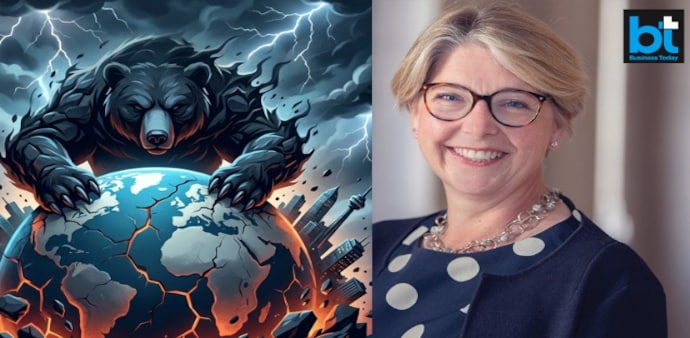
Stock market: Global stock markets are on a winning run. But the Bank of England’s Sarah Breeden believes this optimism might be over soon. According to a BBC report by Simon Jack, Breeden, the central bank's deputy governor for financial stability, has warned that current share prices are ignoring the risks threatening the global economy and expects a global market correction.
Stock markets around the world
Wall Street is scaling unprecedented peaks. In overnight trade, the S&P 500 touched a record high of 7,168.59 before closing at 7,165.08. The Nasdaq Composite hit a high of 24,854.04, settling at 24,836.60. Over the past year alone, the S&P 500 has surged nearly 30%, while the Nasdaq is up around 42%.
Japan’s Nikkei 225 has crossed the 60,000 mark for the first time. South Korea’s Kospi hit a record high of 6,557.76 on April 23. Back home, domestic equity benchmarks, the BSE Sensex and NSE Nifty, have rallied nearly 7% in April 2026 alone.
In the UK, the FTSE 100 sits at 10,379.08, gaining over 23% in a year after touching a record 10,934.94 in February 2026.
What Sarah Breeden told BBC
Speaking to the BBC, Sarah Breeden highlighted the sheer disconnect between current valuations and risks.
"There's a lot of risk out there and yet asset prices are at all-time highs. We expect there will be an adjustment at some point," Breeden told the BBC.
"The thing that really keeps me awake at night is the likelihood of a number of risks crystallising at the same time, a major macroeconomic shock, confidence in private credit goes, AI and other risky valuations readjust… what happens in that environment and are we prepared for it?" she said.
Breeden is also concerned about the explosive growth of the ‘shadow banking’ system. "Private credit has gone from nothing to two-and-a-half trillion dollars in the last 15 to 20 years. It hasn't been tested at this scale with the degree of complexity and interconnections it has with the rest of the financial system so far," Breeden warned.
She told the BBC that we are worried about a private credit crunch, rather than a banking-driven credit crunch.
Breeden further said that her job is not to time the market's fall, but to ensure the financial system can withstand the blow.
"What we are watching for: is how might those prices fall? Will there be a sharp adjustment downwards? And if there is such an adjustment, how will that affect the economy? I'm not saying it will happen today, tomorrow, in 12 months' time. It's ensuring that if it happens the system is resilient," she told the BBC.
Tech giants are pouring hundreds of billions of dollars into AI infrastructure. While Nvidia founder Jensen Huang dismisses market concerns, the BBC report noted that Microsoft founder Bill Gates has called the cash influx ‘a frenzy’.
“Some have compared it to the dotcom bubble of the late 1990s when investors threw money at unproven start-ups that quickly went bust or had billions wiped off their value,” the BBC report said.
Stock market: Global stock markets are on a winning run. But the Bank of England’s Sarah Breeden believes this optimism might be over soon. According to a BBC report by Simon Jack, Breeden, the central bank's deputy governor for financial stability, has warned that current share prices are ignoring the risks threatening the global economy and expects a global market correction.
Stock markets around the world
Wall Street is scaling unprecedented peaks. In overnight trade, the S&P 500 touched a record high of 7,168.59 before closing at 7,165.08. The Nasdaq Composite hit a high of 24,854.04, settling at 24,836.60. Over the past year alone, the S&P 500 has surged nearly 30%, while the Nasdaq is up around 42%.
Japan’s Nikkei 225 has crossed the 60,000 mark for the first time. South Korea’s Kospi hit a record high of 6,557.76 on April 23. Back home, domestic equity benchmarks, the BSE Sensex and NSE Nifty, have rallied nearly 7% in April 2026 alone.
In the UK, the FTSE 100 sits at 10,379.08, gaining over 23% in a year after touching a record 10,934.94 in February 2026.
What Sarah Breeden told BBC
Speaking to the BBC, Sarah Breeden highlighted the sheer disconnect between current valuations and risks.
"There's a lot of risk out there and yet asset prices are at all-time highs. We expect there will be an adjustment at some point," Breeden told the BBC.
"The thing that really keeps me awake at night is the likelihood of a number of risks crystallising at the same time, a major macroeconomic shock, confidence in private credit goes, AI and other risky valuations readjust… what happens in that environment and are we prepared for it?" she said.
Breeden is also concerned about the explosive growth of the ‘shadow banking’ system. "Private credit has gone from nothing to two-and-a-half trillion dollars in the last 15 to 20 years. It hasn't been tested at this scale with the degree of complexity and interconnections it has with the rest of the financial system so far," Breeden warned.
She told the BBC that we are worried about a private credit crunch, rather than a banking-driven credit crunch.
Breeden further said that her job is not to time the market's fall, but to ensure the financial system can withstand the blow.
"What we are watching for: is how might those prices fall? Will there be a sharp adjustment downwards? And if there is such an adjustment, how will that affect the economy? I'm not saying it will happen today, tomorrow, in 12 months' time. It's ensuring that if it happens the system is resilient," she told the BBC.
Tech giants are pouring hundreds of billions of dollars into AI infrastructure. While Nvidia founder Jensen Huang dismisses market concerns, the BBC report noted that Microsoft founder Bill Gates has called the cash influx ‘a frenzy’.
“Some have compared it to the dotcom bubble of the late 1990s when investors threw money at unproven start-ups that quickly went bust or had billions wiped off their value,” the BBC report said.