
Why Trump picks weekends for military actions; Iran timing ominous for India?
US-Iran war: If any escalation occurs on a weekend, there is some time to assess the consequences and risks associated with the event. Knee-jerk reactions in market hours can be more ferocious, said an analyst.
- Mar 3, 2026,
- Updated Mar 3, 2026 1:25 PM IST
With the US President Donald Trump picking military actions in Iran (February 28) and Venezuela (January 3) this year on weekends, and the 2025 Iran attacks also taking place ahead of a weekend (June 13, 2025, Friday), many have wondered about the possible rationale for selecting campaigns towards the end of the week. Notably, the three military actions mentioned involved two major oil producers. Analysts said the timing may partly have been aimed at calming oil markets, as weekend strikes occur when financial and crude markets are closed, giving investors time to assess the situation before trading resumes.
“If any escalation occurs on a weekend, there is some time to assess the consequences and risks associated with the event. When an unforeseen Black Swan event takes place during market hours, it risks triggering a panic-like situation. Such a knee-jerk reaction can be more ferocious than on weekends,” said Kranthi Bathini, Equity Strategist at WealthMills Securities.
Bathini, though, noted that there would certainly be internal assessments as well because such attacks involve precise calculations and a lot of exercise.
The United States and Israel began military strikes in Iran on February 28, a Saturday. A Reuters report on the same day cited sources suggesting OPEC+ could consider a larger-than-planned output increase of 4,11,000 barrels per day, after the UAE and Saudi Arabia raised exports in anticipation of oil market disruptions.
For GCC economies, the implications are two-fold. Elevated oil prices support fiscal balances, liquidity, and project spending across hydrocarbon-driven economies such as Saudi Arabia, UAE, and Qatar. However, prolonged instability introduces risks around capital flows, execution delays in infrastructure and energy projects, supply-chain bottlenecks, higher freight and insurance costs, and potential deferral of private capex, PL Capital said.
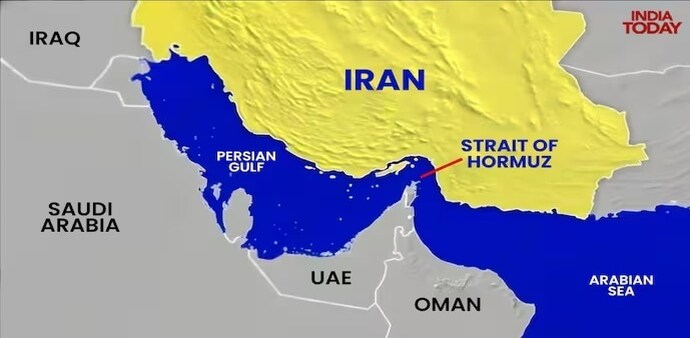
As things stand, Strait of Hormuz through which 20 per cent of the world's global oil supply transits, is closed now. Qatar Energy has halted production at Ras Laffan, the world's largest liquefied natural gas export facility. Saudi Aramco too has shut down Ras Tanura refinery after Iranian drone strike and Brent futures for May delivery are up 2.7 per cent to $79.84 a barrel in Tuesday's trade.
The prevailing situation explains the worst of India's fears, as 50 per cent or more of India’s energy imports transit through the Strait of Hormuz. Axis MF noted that even temporary disruptions would have an impact on India’s energy security, inflation trajectory and external balances.
"Gulf oil is crucial. China, followed by India and Japan are the biggest oil buyers in Asia. Initially, there would be knee-jerk reaction. But the exact damage is yet to be seen. Oil prices have surged in the past few days. But there is plenty of oil available. Venezuela oil is also available, even as shipping and logistic cost would be higher for Asian economies. India also has strong relations wit GCC countries. One needs to see how things pan out over the next few days," Bathini said.
At this stage, the greater concern is not a prolonged supply shock, but short-term disruptions and uncertainty, which in themselves can sustain elevated prices, Siddhartha Khemka - Head of Research, Wealth Management at Motilal Oswal Financial Services.
With the US President Donald Trump picking military actions in Iran (February 28) and Venezuela (January 3) this year on weekends, and the 2025 Iran attacks also taking place ahead of a weekend (June 13, 2025, Friday), many have wondered about the possible rationale for selecting campaigns towards the end of the week. Notably, the three military actions mentioned involved two major oil producers. Analysts said the timing may partly have been aimed at calming oil markets, as weekend strikes occur when financial and crude markets are closed, giving investors time to assess the situation before trading resumes.
“If any escalation occurs on a weekend, there is some time to assess the consequences and risks associated with the event. When an unforeseen Black Swan event takes place during market hours, it risks triggering a panic-like situation. Such a knee-jerk reaction can be more ferocious than on weekends,” said Kranthi Bathini, Equity Strategist at WealthMills Securities.
Bathini, though, noted that there would certainly be internal assessments as well because such attacks involve precise calculations and a lot of exercise.
The United States and Israel began military strikes in Iran on February 28, a Saturday. A Reuters report on the same day cited sources suggesting OPEC+ could consider a larger-than-planned output increase of 4,11,000 barrels per day, after the UAE and Saudi Arabia raised exports in anticipation of oil market disruptions.
For GCC economies, the implications are two-fold. Elevated oil prices support fiscal balances, liquidity, and project spending across hydrocarbon-driven economies such as Saudi Arabia, UAE, and Qatar. However, prolonged instability introduces risks around capital flows, execution delays in infrastructure and energy projects, supply-chain bottlenecks, higher freight and insurance costs, and potential deferral of private capex, PL Capital said.
As things stand, Strait of Hormuz through which 20 per cent of the world's global oil supply transits, is closed now. Qatar Energy has halted production at Ras Laffan, the world's largest liquefied natural gas export facility. Saudi Aramco too has shut down Ras Tanura refinery after Iranian drone strike and Brent futures for May delivery are up 2.7 per cent to $79.84 a barrel in Tuesday's trade.
The prevailing situation explains the worst of India's fears, as 50 per cent or more of India’s energy imports transit through the Strait of Hormuz. Axis MF noted that even temporary disruptions would have an impact on India’s energy security, inflation trajectory and external balances.
"Gulf oil is crucial. China, followed by India and Japan are the biggest oil buyers in Asia. Initially, there would be knee-jerk reaction. But the exact damage is yet to be seen. Oil prices have surged in the past few days. But there is plenty of oil available. Venezuela oil is also available, even as shipping and logistic cost would be higher for Asian economies. India also has strong relations wit GCC countries. One needs to see how things pan out over the next few days," Bathini said.
At this stage, the greater concern is not a prolonged supply shock, but short-term disruptions and uncertainty, which in themselves can sustain elevated prices, Siddhartha Khemka - Head of Research, Wealth Management at Motilal Oswal Financial Services.