
Warren Buffett steps down as Berkshire CEO after turning a $7 stock into a $755,000 giant
Warren Buffett began buying shares of the struggling New England textile firm Berkshire Hathaway in 1962 at about $7.60 apiece. Today, the company’s Class A shares trade above $755,000, translating into cumulative gains of more than 4.7 million percent—one of the most remarkable wealth-creation journeys in market history.
- Dec 31, 2025,
- Updated Dec 31, 2025 9:29 PM IST
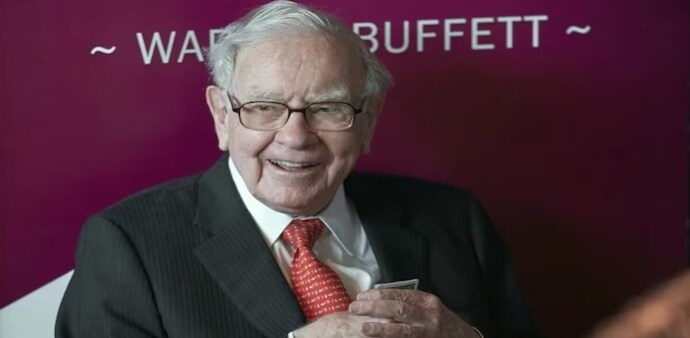
Warren Buffett, the legendary investor known worldwide as the “Oracle of Omaha,” steps down as Chief Executive Officer of Berkshire Hathaway on December 31, bringing the curtain down on one of the most remarkable leadership tenures in corporate history. After nearly six decades at the helm, Buffett leaves behind a record that has reshaped modern investing and turned a struggling textile company into one of the most valuable conglomerates in the world.
Buffett’s association with Berkshire Hathaway began in 1962, when he started buying shares of the then-ailing New England textile firm at about $7.60 apiece. What initially appeared to be a classic value play gradually evolved into something far bigger. By 1965, Buffett had taken full control of the company, setting it on a radically different path—away from textiles and toward insurance, investments and wholly owned operating businesses. Based on long-term performance data cited in Berkshire’s annual reports, the implied share price at the time of acquisition would have been roughly $15 to $18.
Fast forward to today, and Berkshire Hathaway’s Class A shares trade at more than $755,000 each. From those modest beginnings, the stock has delivered cumulative gains of over 4.7 million percent, making it one of the most extraordinary wealth-creation stories in market history. Even by Buffett’s own understated standards, the numbers are staggering.
The transformation of Berkshire mirrors Buffett’s disciplined approach to investing: buying quality businesses, holding them for the long term, and letting compounding do the heavy lifting. Over the years, Berkshire built significant stakes in companies such as American Express, Coca-Cola and Apple—bets that reflected Buffett’s belief in strong brands, durable cash flows and capable management. As Berkshire grew, it also became a diversified industrial powerhouse, with interests spanning insurance, railroads, energy, manufacturing and retail.
Berkshire’s performance has consistently outshone the broader market. According to the company’s 2024 annual report, Berkshire delivered a compounded annual gain of 19.9% between 1965 and 2024, nearly double the 10.4% annual return of the S&P 500 over the same period. While Berkshire’s gains in the current year have lagged the S&P 500’s rally, the long-term record underscores Buffett’s enduring edge as a capital allocator.
Buffett’s success has also translated into immense personal wealth. According to the Associated Press, his Berkshire holdings are still valued at around $150 billion, even after he has donated more than $60 billion over the past two decades, largely through his commitment to the Giving Pledge.
As Buffett steps aside, attention now turns to Greg Abel, his chosen successor. Abel was formally identified as the future CEO in 2021, with the late Charlie Munger assuring shareholders that he would preserve Berkshire’s distinctive culture and decentralized operating model. Investors will be watching closely to see how Abel balances continuity with the challenges of steering a company of Berkshire’s vast scale.
Buffett’s departure marks more than a leadership change—it signals the end of an era in American investing. His emphasis on patience, rationality and ethical stewardship has influenced generations of investors worldwide. While Berkshire Hathaway enters a new chapter, Buffett’s legacy as a master of long-term value creation is firmly cemented.
Warren Buffett, the legendary investor known worldwide as the “Oracle of Omaha,” steps down as Chief Executive Officer of Berkshire Hathaway on December 31, bringing the curtain down on one of the most remarkable leadership tenures in corporate history. After nearly six decades at the helm, Buffett leaves behind a record that has reshaped modern investing and turned a struggling textile company into one of the most valuable conglomerates in the world.
Buffett’s association with Berkshire Hathaway began in 1962, when he started buying shares of the then-ailing New England textile firm at about $7.60 apiece. What initially appeared to be a classic value play gradually evolved into something far bigger. By 1965, Buffett had taken full control of the company, setting it on a radically different path—away from textiles and toward insurance, investments and wholly owned operating businesses. Based on long-term performance data cited in Berkshire’s annual reports, the implied share price at the time of acquisition would have been roughly $15 to $18.
Fast forward to today, and Berkshire Hathaway’s Class A shares trade at more than $755,000 each. From those modest beginnings, the stock has delivered cumulative gains of over 4.7 million percent, making it one of the most extraordinary wealth-creation stories in market history. Even by Buffett’s own understated standards, the numbers are staggering.
The transformation of Berkshire mirrors Buffett’s disciplined approach to investing: buying quality businesses, holding them for the long term, and letting compounding do the heavy lifting. Over the years, Berkshire built significant stakes in companies such as American Express, Coca-Cola and Apple—bets that reflected Buffett’s belief in strong brands, durable cash flows and capable management. As Berkshire grew, it also became a diversified industrial powerhouse, with interests spanning insurance, railroads, energy, manufacturing and retail.
Berkshire’s performance has consistently outshone the broader market. According to the company’s 2024 annual report, Berkshire delivered a compounded annual gain of 19.9% between 1965 and 2024, nearly double the 10.4% annual return of the S&P 500 over the same period. While Berkshire’s gains in the current year have lagged the S&P 500’s rally, the long-term record underscores Buffett’s enduring edge as a capital allocator.
Buffett’s success has also translated into immense personal wealth. According to the Associated Press, his Berkshire holdings are still valued at around $150 billion, even after he has donated more than $60 billion over the past two decades, largely through his commitment to the Giving Pledge.
As Buffett steps aside, attention now turns to Greg Abel, his chosen successor. Abel was formally identified as the future CEO in 2021, with the late Charlie Munger assuring shareholders that he would preserve Berkshire’s distinctive culture and decentralized operating model. Investors will be watching closely to see how Abel balances continuity with the challenges of steering a company of Berkshire’s vast scale.
Buffett’s departure marks more than a leadership change—it signals the end of an era in American investing. His emphasis on patience, rationality and ethical stewardship has influenced generations of investors worldwide. While Berkshire Hathaway enters a new chapter, Buffett’s legacy as a master of long-term value creation is firmly cemented.