
India Inc urges calm, remains bullish on a stronger comeback amid West Asia war
West Asia crisis sparks clean energy pivot as India Inc balances short-term pain with long-term transformation
- Mar 28, 2026,
- Updated Mar 28, 2026 7:15 PM IST
As the ongoing war in West Asia intensifies, corporate leaders across India Inc are urging calm, emphasising resilience while acknowledging that prolonged disruption could test the country’s economic momentum.
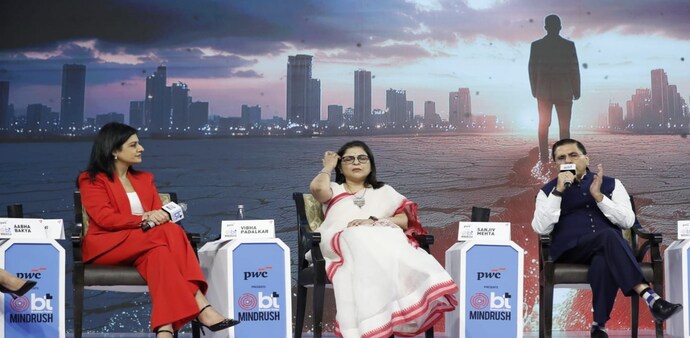
Speaking at the Business Today MindRush and India’s Best CEOs Awards, Vibha Padalkar, MD & CEO of HDFC Life Insurance, described the current crisis as “unlike anything we have seen before,” but noted that India remains relatively better placed due to its strong domestic consumption base. “The government has already taken very swift interventions on excise duty cuts,” she said, adding that while short-term pain is possible if the crisis persists, it is not something “we can’t bounce back from.”
Padalkar also framed the disruption as a catalyst for innovation. “Never waste a good crisis,” she said, pointing to lessons from the pandemic. “We will find alternative solutions—especially in supply chains and energy—with government support.”
Sanjiv Mehta, Executive Chairman at L Catterton, echoed the sentiment but warned against overreaction. “The most important thing is not to panic. Panic doesn’t help,” he said. Mehta noted that just weeks before the crisis, India was experiencing a “Goldilocks moment,” with inflation below 3% and steady growth. While acknowledging that “the era of Great Moderation is over,” he stressed that India’s macroeconomic fundamentals, including strong forex reserves and growth rates, remain intact. “If volatility increases, the RBI has the arsenal to control it,” Mehta added.
However, he stressed that corporates must adapt quickly. “Throw away your five-year plans,” Mehta said, urging companies to remain flexible in capital and resource allocation while protecting their “core proposition.” He identified “energy autonomy” as a major opportunity and called for accelerated investments in non-fossil fuels, nuclear energy, and electric mobility. “How do we double down on nuclear energy? How do we move towards modular nuclear reactors? How do we accelerate EV adoption and reduce reliance on fossil fuels? This is a significant opportunity,” he said, adding that the crisis may not have a lasting negative impact if leveraged effectively.
Amish Mehta, MD & CEO of Crisil, pointed to India’s track record in navigating successive global shocks—from the pandemic to geopolitical tensions—as a source of confidence. “The buffers that we have are in a good place,” he said, citing a stable fiscal position, a manageable current account deficit, and healthier corporate balance sheets.
Global investors continue to view India as relatively stable, he added. “India, compared to other parts of the world, is in a good place. That gives us the confidence to demonstrate resilience,” he said, while cautioning that prolonged uncertainty could tighten global financing conditions.
Shanti Ekambaram, former Deputy MD at Kotak Mahindra Bank, underlined the strength of both macroeconomic and corporate fundamentals heading into the crisis. “We entered this conflict with stable macros and strong corporate and banking balance sheets,” she said.
However, Ekambaram warned that rising oil prices could have a cascading impact on costs. “This will increase costs—it will cascade,” she said, adding that while growth may moderate from around 7% to 6–6.5%, India remains resilient.
She also pointed to structural opportunities emerging from the disruption. “The extent of reliance on oil from West Asia has come to the fore,” she said, expressing optimism about accelerated energy transition and diversification. Drawing parallels with the pandemic, she added, “Every adversity presents an opportunity—we leapfrogged digitally during COVID.”
Sanjeev Krishnan, Chairperson of PwC India, said Indian businesses are becoming more accustomed to frequent disruptions. “What used to happen once in 10 years is now happening once in 10 months,” he observed, referring to shocks ranging from COVID-19 to financial volatility and geopolitical tensions.
Despite ongoing supply chain and cost pressures—particularly in petroleum-linked sectors—Krishnan emphasised the importance of continued investment. “This is the moment when India Inc must step up—continue to invest and innovate,” he said.
At the same time, he flagged persistent structural challenges. “Labour productivity has been declining, and we still lack scale,” Krishnan noted, warning that rising input costs could hurt competitiveness unless execution improves. “The plans are there, but execution remains the challenge,” he said.
Across the board, leaders agreed that while the near-term outlook may involve slower growth and margin pressures, India’s economic fundamentals and institutional strength position it well compared to global peers.
The consensus remains clear: resilience, adaptability, and disciplined execution will determine how effectively India navigates yet another global disruption.
As the ongoing war in West Asia intensifies, corporate leaders across India Inc are urging calm, emphasising resilience while acknowledging that prolonged disruption could test the country’s economic momentum.
Speaking at the Business Today MindRush and India’s Best CEOs Awards, Vibha Padalkar, MD & CEO of HDFC Life Insurance, described the current crisis as “unlike anything we have seen before,” but noted that India remains relatively better placed due to its strong domestic consumption base. “The government has already taken very swift interventions on excise duty cuts,” she said, adding that while short-term pain is possible if the crisis persists, it is not something “we can’t bounce back from.”
Padalkar also framed the disruption as a catalyst for innovation. “Never waste a good crisis,” she said, pointing to lessons from the pandemic. “We will find alternative solutions—especially in supply chains and energy—with government support.”
Sanjiv Mehta, Executive Chairman at L Catterton, echoed the sentiment but warned against overreaction. “The most important thing is not to panic. Panic doesn’t help,” he said. Mehta noted that just weeks before the crisis, India was experiencing a “Goldilocks moment,” with inflation below 3% and steady growth. While acknowledging that “the era of Great Moderation is over,” he stressed that India’s macroeconomic fundamentals, including strong forex reserves and growth rates, remain intact. “If volatility increases, the RBI has the arsenal to control it,” Mehta added.
However, he stressed that corporates must adapt quickly. “Throw away your five-year plans,” Mehta said, urging companies to remain flexible in capital and resource allocation while protecting their “core proposition.” He identified “energy autonomy” as a major opportunity and called for accelerated investments in non-fossil fuels, nuclear energy, and electric mobility. “How do we double down on nuclear energy? How do we move towards modular nuclear reactors? How do we accelerate EV adoption and reduce reliance on fossil fuels? This is a significant opportunity,” he said, adding that the crisis may not have a lasting negative impact if leveraged effectively.
Amish Mehta, MD & CEO of Crisil, pointed to India’s track record in navigating successive global shocks—from the pandemic to geopolitical tensions—as a source of confidence. “The buffers that we have are in a good place,” he said, citing a stable fiscal position, a manageable current account deficit, and healthier corporate balance sheets.
Global investors continue to view India as relatively stable, he added. “India, compared to other parts of the world, is in a good place. That gives us the confidence to demonstrate resilience,” he said, while cautioning that prolonged uncertainty could tighten global financing conditions.
Shanti Ekambaram, former Deputy MD at Kotak Mahindra Bank, underlined the strength of both macroeconomic and corporate fundamentals heading into the crisis. “We entered this conflict with stable macros and strong corporate and banking balance sheets,” she said.
However, Ekambaram warned that rising oil prices could have a cascading impact on costs. “This will increase costs—it will cascade,” she said, adding that while growth may moderate from around 7% to 6–6.5%, India remains resilient.
She also pointed to structural opportunities emerging from the disruption. “The extent of reliance on oil from West Asia has come to the fore,” she said, expressing optimism about accelerated energy transition and diversification. Drawing parallels with the pandemic, she added, “Every adversity presents an opportunity—we leapfrogged digitally during COVID.”
Sanjeev Krishnan, Chairperson of PwC India, said Indian businesses are becoming more accustomed to frequent disruptions. “What used to happen once in 10 years is now happening once in 10 months,” he observed, referring to shocks ranging from COVID-19 to financial volatility and geopolitical tensions.
Despite ongoing supply chain and cost pressures—particularly in petroleum-linked sectors—Krishnan emphasised the importance of continued investment. “This is the moment when India Inc must step up—continue to invest and innovate,” he said.
At the same time, he flagged persistent structural challenges. “Labour productivity has been declining, and we still lack scale,” Krishnan noted, warning that rising input costs could hurt competitiveness unless execution improves. “The plans are there, but execution remains the challenge,” he said.
Across the board, leaders agreed that while the near-term outlook may involve slower growth and margin pressures, India’s economic fundamentals and institutional strength position it well compared to global peers.
The consensus remains clear: resilience, adaptability, and disciplined execution will determine how effectively India navigates yet another global disruption.