
Indian migrant couple own 18 homes in Australia, but still rent. Here’s why
The couple’s approach flips the traditional narrative: don’t tie up all your money chasing home ownership in expensive suburbs. Instead, rent where you want to live and invest in multiple affordable properties elsewhere.
- Jul 21, 2025,
- Updated Jul 21, 2025 2:23 PM IST
An Indian-born couple who own 18 properties across Australia are challenging the age-old Australian dream of home ownership — and they say renting can actually make you richer.
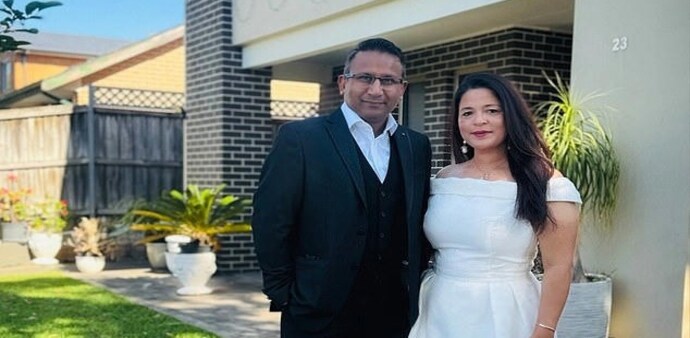
Rasti Vaibhav, 48, and Rupali Rastogi, 43, migrated to Australia from Singapore in 2006 with backgrounds in IT and banking. Starting with just a 10% mortgage deposit, they bought their first investment property in 2011 — a $440,000 home in Newcastle. Fast forward to today, they own a $11.3 million property portfolio spread across Sydney’s west, Melbourne’s north, Brisbane’s outskirts, and Perth’s south.
Yet despite their success, the couple have chosen to rent — currently living in Narraweena near Dee Why on Sydney’s northern beaches — rather than buying the $3.5 million home they could afford nearby.
Their reason? Financial strategy.
"People get emotional about home ownership, but it’s often a costly mistake,” Vaibhav told Daily Mail Australia. “We chose the path that's not so conventional. Live where you want for lifestyle, and invest where you get returns.”
Vaibhav explains that paying $100,000 in rent annually is far cheaper than paying $230,000 in mortgage repayments for a beachfront home. Instead, they’ve focused on acquiring affordable properties in growth areas with strong rental yields.
The couple’s approach flips the traditional narrative: don’t tie up all your money chasing home ownership in expensive suburbs. Instead, rent where you want to live and invest in multiple affordable properties elsewhere.
Their strategy, known as “rent-vesting,” is gaining traction as house prices in Sydney near $1.5 million, pushing ownership further out of reach for many.
Rupali Rastogi says renting has also given their family flexibility — allowing them to live near the beach and send their daughter to a good school without the burden of a massive mortgage. “Our daughter wanted the beaches lifestyle — that mattered more to us than owning,” she said.
Since moving to Australia, the couple have lived in eight rental homes while steadily building their property portfolio. They founded their buyers' agency, Get RARE Properties (Get Rich And Retire Early), in 2020 to help others adopt the same mindset.
They advise young Australians to look beyond Sydney and Melbourne — highlighting suburbs in Brisbane and Perth where homes are still available around $600,000. These properties, they argue, can generate both rental income and capital growth over time.
“Rent-vesting isn’t about choosing between a home or an investment; it’s about having both,” Vaibhav said.
The couple’s long-term goal is still to own their dream home — but on their terms, and with their financial future already secured. “It’s not that we’ll never own our own home. We’ve just delayed it, and made sure we’re financially ahead first.”
An Indian-born couple who own 18 properties across Australia are challenging the age-old Australian dream of home ownership — and they say renting can actually make you richer.
Rasti Vaibhav, 48, and Rupali Rastogi, 43, migrated to Australia from Singapore in 2006 with backgrounds in IT and banking. Starting with just a 10% mortgage deposit, they bought their first investment property in 2011 — a $440,000 home in Newcastle. Fast forward to today, they own a $11.3 million property portfolio spread across Sydney’s west, Melbourne’s north, Brisbane’s outskirts, and Perth’s south.
Yet despite their success, the couple have chosen to rent — currently living in Narraweena near Dee Why on Sydney’s northern beaches — rather than buying the $3.5 million home they could afford nearby.
Their reason? Financial strategy.
"People get emotional about home ownership, but it’s often a costly mistake,” Vaibhav told Daily Mail Australia. “We chose the path that's not so conventional. Live where you want for lifestyle, and invest where you get returns.”
Vaibhav explains that paying $100,000 in rent annually is far cheaper than paying $230,000 in mortgage repayments for a beachfront home. Instead, they’ve focused on acquiring affordable properties in growth areas with strong rental yields.
The couple’s approach flips the traditional narrative: don’t tie up all your money chasing home ownership in expensive suburbs. Instead, rent where you want to live and invest in multiple affordable properties elsewhere.
Their strategy, known as “rent-vesting,” is gaining traction as house prices in Sydney near $1.5 million, pushing ownership further out of reach for many.
Rupali Rastogi says renting has also given their family flexibility — allowing them to live near the beach and send their daughter to a good school without the burden of a massive mortgage. “Our daughter wanted the beaches lifestyle — that mattered more to us than owning,” she said.
Since moving to Australia, the couple have lived in eight rental homes while steadily building their property portfolio. They founded their buyers' agency, Get RARE Properties (Get Rich And Retire Early), in 2020 to help others adopt the same mindset.
They advise young Australians to look beyond Sydney and Melbourne — highlighting suburbs in Brisbane and Perth where homes are still available around $600,000. These properties, they argue, can generate both rental income and capital growth over time.
“Rent-vesting isn’t about choosing between a home or an investment; it’s about having both,” Vaibhav said.
The couple’s long-term goal is still to own their dream home — but on their terms, and with their financial future already secured. “It’s not that we’ll never own our own home. We’ve just delayed it, and made sure we’re financially ahead first.”