
Explained: The EB-1 ‘Einstein Visa’ and why applications are on the rise amid H-1B crunch
To qualify under EB-1A, applicants must demonstrate sustained national or international acclaim in fields such as science, arts, education, business, or athletics. USCIS allows two pathways to prove eligibility.
- Jan 18, 2026,
- Updated Jan 18, 2026 5:59 PM IST
With traditional US work visas becoming increasingly difficult and expensive to obtain, a lesser-known immigration route — the so-called “Einstein visa” — is drawing growing attention from highly skilled professionals across the world.
Officially known as the EB-1A visa, the programme is designed for individuals with “extraordinary ability” and, crucially, does not require employer sponsorship or a job offer in the United States. As reported by CBS News, the surge in interest comes at a time when H-1B visa sponsorships are reportedly commanding fees as high as $100,000, placing them out of reach for many employers and applicants alike.
Sensing opportunity, immigration brokers and consultancies have stepped up marketing efforts, pitching the EB-1A as an elite but attainable alternative for those who can demonstrate exceptional professional achievement.
What is the ‘Einstein visa’?
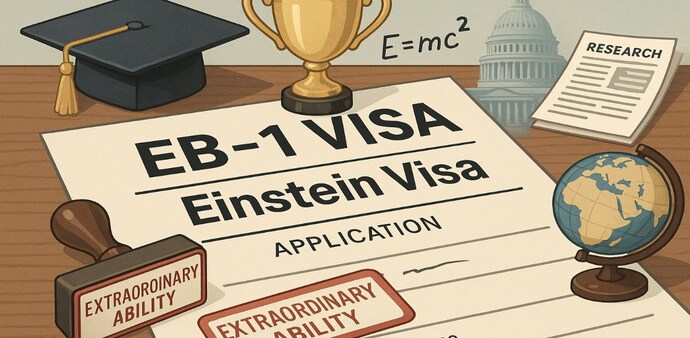
The term “Einstein visa” is informal and not used by the US government. It refers to the Employment-Based Immigration: First Preference (EB-1) category under US immigration law, administered by US Citizenship and Immigration Services (USCIS).
The EB-1 category covers three distinct groups:
- Individuals of extraordinary ability (EB-1A)
- Outstanding professors or researchers
- Certain multinational managers or executives
Among these, the EB-1A category has earned the “Einstein visa” nickname because it targets individuals who are already at the top of their fields.
EB-1A: Extraordinary ability explained
To qualify under EB-1A, applicants must demonstrate sustained national or international acclaim in fields such as science, arts, education, business, or athletics. USCIS allows two pathways to prove eligibility.
Applicants may either present evidence of a major, internationally recognised one-time achievement — such as a Pulitzer Prize, an Oscar, or an Olympic medal — or meet at least three out of ten specified criteria.
These criteria include nationally or internationally recognised awards for excellence, membership in associations that require outstanding achievement, published material about the applicant in major media, and evidence of judging the work of others. Additional qualifying evidence can include original contributions of major significance, authorship of scholarly articles, leading or critical roles in distinguished organisations, high remuneration compared to peers, or significant commercial success in the performing arts.
Unlike most employment-based visas, EB-1A applicants are not required to have a US job offer or labour certification, making it particularly attractive in today’s tight visa landscape.
Other EB-1 categories
The EB-1 category also accommodates outstanding professors and researchers, as well as multinational managers and executives, though under more restrictive conditions.
Outstanding professors and researchers must demonstrate international recognition in their academic field, have at least three years of teaching or research experience, and secure a tenure-track or comparable research position in the US. They must meet at least two of six specific criteria and must have an offer of employment from a qualifying US institution or employer.
Multinational managers or executives must have worked outside the US for at least one year in the preceding three years and be transferring to a US entity with a qualifying relationship to their foreign employer. The US employer must have been operating for at least one year and intend to employ the applicant in a managerial or executive capacity.
While these categories also bypass labour certification requirements, they do require employer sponsorship.
How the application process works
The application process varies by EB-1 classification. Individuals applying under the extraordinary ability category can self-petition by filing Form I-140, Petition for Alien Worker.
For outstanding professors, researchers, and multinational executives, the US employer must file the I-140 petition and demonstrate its ability to pay the offered wage from the stated priority date.
If approved, EB-1 visa holders can apply for permanent residence, and their spouses and unmarried children under 21 are eligible to seek entry into the US as dependents.
With traditional US work visas becoming increasingly difficult and expensive to obtain, a lesser-known immigration route — the so-called “Einstein visa” — is drawing growing attention from highly skilled professionals across the world.
Officially known as the EB-1A visa, the programme is designed for individuals with “extraordinary ability” and, crucially, does not require employer sponsorship or a job offer in the United States. As reported by CBS News, the surge in interest comes at a time when H-1B visa sponsorships are reportedly commanding fees as high as $100,000, placing them out of reach for many employers and applicants alike.
Sensing opportunity, immigration brokers and consultancies have stepped up marketing efforts, pitching the EB-1A as an elite but attainable alternative for those who can demonstrate exceptional professional achievement.
What is the ‘Einstein visa’?
The term “Einstein visa” is informal and not used by the US government. It refers to the Employment-Based Immigration: First Preference (EB-1) category under US immigration law, administered by US Citizenship and Immigration Services (USCIS).
The EB-1 category covers three distinct groups:
- Individuals of extraordinary ability (EB-1A)
- Outstanding professors or researchers
- Certain multinational managers or executives
Among these, the EB-1A category has earned the “Einstein visa” nickname because it targets individuals who are already at the top of their fields.
EB-1A: Extraordinary ability explained
To qualify under EB-1A, applicants must demonstrate sustained national or international acclaim in fields such as science, arts, education, business, or athletics. USCIS allows two pathways to prove eligibility.
Applicants may either present evidence of a major, internationally recognised one-time achievement — such as a Pulitzer Prize, an Oscar, or an Olympic medal — or meet at least three out of ten specified criteria.
These criteria include nationally or internationally recognised awards for excellence, membership in associations that require outstanding achievement, published material about the applicant in major media, and evidence of judging the work of others. Additional qualifying evidence can include original contributions of major significance, authorship of scholarly articles, leading or critical roles in distinguished organisations, high remuneration compared to peers, or significant commercial success in the performing arts.
Unlike most employment-based visas, EB-1A applicants are not required to have a US job offer or labour certification, making it particularly attractive in today’s tight visa landscape.
Other EB-1 categories
The EB-1 category also accommodates outstanding professors and researchers, as well as multinational managers and executives, though under more restrictive conditions.
Outstanding professors and researchers must demonstrate international recognition in their academic field, have at least three years of teaching or research experience, and secure a tenure-track or comparable research position in the US. They must meet at least two of six specific criteria and must have an offer of employment from a qualifying US institution or employer.
Multinational managers or executives must have worked outside the US for at least one year in the preceding three years and be transferring to a US entity with a qualifying relationship to their foreign employer. The US employer must have been operating for at least one year and intend to employ the applicant in a managerial or executive capacity.
While these categories also bypass labour certification requirements, they do require employer sponsorship.
How the application process works
The application process varies by EB-1 classification. Individuals applying under the extraordinary ability category can self-petition by filing Form I-140, Petition for Alien Worker.
For outstanding professors, researchers, and multinational executives, the US employer must file the I-140 petition and demonstrate its ability to pay the offered wage from the stated priority date.
If approved, EB-1 visa holders can apply for permanent residence, and their spouses and unmarried children under 21 are eligible to seek entry into the US as dependents.