
US Visa Bulletin September 2026: Family green card dates jump, but Indian EB-1 applicants face fresh risk
September’s bulletin is also the final bulletin of fiscal year 2026, which ends on September 30. The State Department said cutoff dates have “generally held steady from August 2026, with no forward movement or retrogression this month”
- Aug 24, 2026,
- Updated Aug 24, 2026 9:43 AM IST
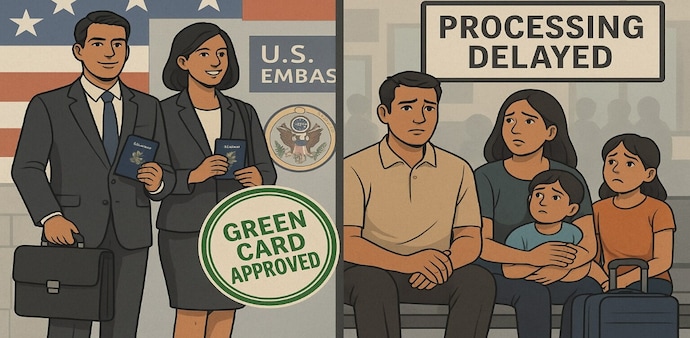
The US Department of State’s September 2026 Visa Bulletin has delivered a mixed picture for green card applicants. While most employment-based cutoff dates remained frozen compared with August, several family-sponsored categories moved forward sharply. For Indian applicants, however, the warning is clear: EB-1 could become unavailable before the end of the fiscal year, while EB-2 and EB-5 remain unavailable.
September’s bulletin is also the final bulletin of fiscal year 2026, which ends on September 30. The State Department said cutoff dates have “generally held steady from August 2026, with no forward movement or retrogression this month.” However, it cautioned that high demand and increased visa-number use could still force retrogression or make some categories unavailable before the fiscal year closes.
Most employment dates hold steady
There was no movement in the major employment-based categories for India between the August and September bulletins.
India’s EB-1 final action date remains October 15, 2022. EB-2 India continues to be listed as unavailable, while EB-3 India remains at January 1, 2014. EB-4 India, however, moved forward from October 15, 2022, in August to December 15, 2022, in September.
The EB-5 unreserved category remains unavailable for India. The three EB-5 set-aside categories, rural, high unemployment and infrastructure, remain current for all countries.
| Category | August 2026 | September 2026 |
Change
|
| EB-1 India | October 15, 2022 | October 15, 2022 |
No change
|
| EB-2 India | Unavailable | Unavailable |
No change
|
| EB-3 India | January 1, 2014 | January 1, 2014 |
No change
|
| EB-4 India | October 15, 2022 | December 15, 2022 |
Advanced by two months
|
| EB-5 unreserved India | Unavailable | Unavailable | No change |
The State Department has also warned that the EB-2 category could be retrogressed or made unavailable before September 30 if demand and number use continue to rise. The warning applies beyond India. China’s EB-2 final action date remains September 1, 2021, while EB-2 remains current for most other countries.
EB-1 India could become unavailable
Although EB-1 India remains available in September, the category is under pressure. The State Department said high demand and visa-number use by applicants chargeable to India may require EB-1 India to become unavailable in the coming weeks if the country’s prorated limit is reached before the fiscal year ends.
That would prevent further visa approvals in the category until visa numbers become available again. Applicants who are already eligible to file should therefore avoid unnecessary delays and check the applicable USCIS filing chart before submitting an adjustment-of-status application.
The department issued a similar warning for the EB-5 unreserved category, saying increased number use could require retrogression or unavailability before the end of September. For China, the EB-5 unreserved final action date remains December 1, 2016.
EB-3 Other Workers backlog remains long
The EB-3 Other Workers category continues to carry some of the longest waits.
Its September final action date is April 1, 2022, for most countries, May 1, 2019, for China, January 1, 2014, for India and December 1, 2021, for the Philippines. The dates were unchanged from August.
The India date highlights the depth of the backlog for workers in this category, which often receives less attention than EB-2 and the main EB-3 professional category.
DON'T MISS: Indian H-1B, F-1 visa applicants alert! US immigration authority to reject these forms from September 15
Family categories see major gains
The strongest movement in September came in family-sponsored categories, particularly for Indian applicants.
India’s F1 final action date advanced to January 22, 2020, from December 15, 2018, in August. The F1 category covers unmarried sons and daughters aged 21 or older of US citizens.
The F2B date moved to August 22, 2019, from January 1, 2018. F2B covers unmarried sons and daughters of US lawful permanent residents.
The biggest advance came in F3, for married sons and daughters of US citizens. Its final action date moved to October 22, 2014, from May 15, 2012, in August, an advance of more than two years.
F2A, covering spouses and minor children of permanent residents, also moved forward for most countries, including India, from July 22, 2026, to August 22, 2026. The category remains current under the September Dates for Filing chart.
|
Family category
| August 2026 | September 2026 | Change |
| F1 India | December 15, 2018 | January 22, 2020 | Advanced by about 13 months |
| F2A India | July 22, 2026 | August 22, 2026 | Advanced by one month |
| F2B India | January 1, 2018 | August 22, 2019 | Advanced by more than 19 months Advertisement |
| F3 India | May 15, 2012 | October 22, 2014 | Advanced by more than two years |
| F4 India | November 1, 2006 | November 1, 2006 | No change |
The F2B Dates for Filing cutoff is September 1, 2019, for most countries in September, excluding Mexico and the Philippines. Applicants should confirm which chart USCIS has authorised for adjustment-of-status filings before submitting their applications.
What applicants should watch
The September bulletin’s stability should not be mistaken for certainty. The State Department said it had advanced dates in earlier months to use available fiscal-year visa numbers as immigrant-visa issuance rates fell for applicants from some countries. As additional demand materialises or administrative actions change, the department may need to move dates backwards to remain within annual, category and per-country limits.
For Indian applicants, the practical takeaway is divided:
-
Family-sponsored applicants in F1, F2A, F2B and F3 may benefit from significant advances.
-
EB-1 India applicants should monitor the category closely because it could become unavailable before September 30.
-
EB-2 and EB-5 unreserved remain unavailable for India.
-
EB-3 India and EB-3 Other Workers India remain stuck at January 1, 2014.
-
Applicants who are eligible to file should verify the USCIS chart and consider filing promptly, as the September cutoffs could change before the fiscal year ends.
Advertisement
The bulletin therefore closes FY2026 with substantial relief for some family-based applicants, but little progress for India’s main employment-based queues, and a fresh risk of last-minute disruption.
The US Department of State’s September 2026 Visa Bulletin has delivered a mixed picture for green card applicants. While most employment-based cutoff dates remained frozen compared with August, several family-sponsored categories moved forward sharply. For Indian applicants, however, the warning is clear: EB-1 could become unavailable before the end of the fiscal year, while EB-2 and EB-5 remain unavailable.
September’s bulletin is also the final bulletin of fiscal year 2026, which ends on September 30. The State Department said cutoff dates have “generally held steady from August 2026, with no forward movement or retrogression this month.” However, it cautioned that high demand and increased visa-number use could still force retrogression or make some categories unavailable before the fiscal year closes.
Most employment dates hold steady
There was no movement in the major employment-based categories for India between the August and September bulletins.
India’s EB-1 final action date remains October 15, 2022. EB-2 India continues to be listed as unavailable, while EB-3 India remains at January 1, 2014. EB-4 India, however, moved forward from October 15, 2022, in August to December 15, 2022, in September.
The EB-5 unreserved category remains unavailable for India. The three EB-5 set-aside categories, rural, high unemployment and infrastructure, remain current for all countries.
| Category | August 2026 | September 2026 |
Change
|
| EB-1 India | October 15, 2022 | October 15, 2022 |
No change
|
| EB-2 India | Unavailable | Unavailable |
No change
|
| EB-3 India | January 1, 2014 | January 1, 2014 |
No change
|
| EB-4 India | October 15, 2022 | December 15, 2022 |
Advanced by two months
|
| EB-5 unreserved India | Unavailable | Unavailable | No change |
The State Department has also warned that the EB-2 category could be retrogressed or made unavailable before September 30 if demand and number use continue to rise. The warning applies beyond India. China’s EB-2 final action date remains September 1, 2021, while EB-2 remains current for most other countries.
EB-1 India could become unavailable
Although EB-1 India remains available in September, the category is under pressure. The State Department said high demand and visa-number use by applicants chargeable to India may require EB-1 India to become unavailable in the coming weeks if the country’s prorated limit is reached before the fiscal year ends.
That would prevent further visa approvals in the category until visa numbers become available again. Applicants who are already eligible to file should therefore avoid unnecessary delays and check the applicable USCIS filing chart before submitting an adjustment-of-status application.
The department issued a similar warning for the EB-5 unreserved category, saying increased number use could require retrogression or unavailability before the end of September. For China, the EB-5 unreserved final action date remains December 1, 2016.
EB-3 Other Workers backlog remains long
The EB-3 Other Workers category continues to carry some of the longest waits.
Its September final action date is April 1, 2022, for most countries, May 1, 2019, for China, January 1, 2014, for India and December 1, 2021, for the Philippines. The dates were unchanged from August.
The India date highlights the depth of the backlog for workers in this category, which often receives less attention than EB-2 and the main EB-3 professional category.
DON'T MISS: Indian H-1B, F-1 visa applicants alert! US immigration authority to reject these forms from September 15
Family categories see major gains
The strongest movement in September came in family-sponsored categories, particularly for Indian applicants.
India’s F1 final action date advanced to January 22, 2020, from December 15, 2018, in August. The F1 category covers unmarried sons and daughters aged 21 or older of US citizens.
The F2B date moved to August 22, 2019, from January 1, 2018. F2B covers unmarried sons and daughters of US lawful permanent residents.
The biggest advance came in F3, for married sons and daughters of US citizens. Its final action date moved to October 22, 2014, from May 15, 2012, in August, an advance of more than two years.
F2A, covering spouses and minor children of permanent residents, also moved forward for most countries, including India, from July 22, 2026, to August 22, 2026. The category remains current under the September Dates for Filing chart.
|
Family category
| August 2026 | September 2026 | Change |
| F1 India | December 15, 2018 | January 22, 2020 | Advanced by about 13 months |
| F2A India | July 22, 2026 | August 22, 2026 | Advanced by one month |
| F2B India | January 1, 2018 | August 22, 2019 | Advanced by more than 19 months Advertisement |
| F3 India | May 15, 2012 | October 22, 2014 | Advanced by more than two years |
| F4 India | November 1, 2006 | November 1, 2006 | No change |
The F2B Dates for Filing cutoff is September 1, 2019, for most countries in September, excluding Mexico and the Philippines. Applicants should confirm which chart USCIS has authorised for adjustment-of-status filings before submitting their applications.
What applicants should watch
The September bulletin’s stability should not be mistaken for certainty. The State Department said it had advanced dates in earlier months to use available fiscal-year visa numbers as immigrant-visa issuance rates fell for applicants from some countries. As additional demand materialises or administrative actions change, the department may need to move dates backwards to remain within annual, category and per-country limits.
For Indian applicants, the practical takeaway is divided:
-
Family-sponsored applicants in F1, F2A, F2B and F3 may benefit from significant advances.
-
EB-1 India applicants should monitor the category closely because it could become unavailable before September 30.
-
EB-2 and EB-5 unreserved remain unavailable for India.
-
EB-3 India and EB-3 Other Workers India remain stuck at January 1, 2014.
-
Applicants who are eligible to file should verify the USCIS chart and consider filing promptly, as the September cutoffs could change before the fiscal year ends.
Advertisement
The bulletin therefore closes FY2026 with substantial relief for some family-based applicants, but little progress for India’s main employment-based queues, and a fresh risk of last-minute disruption.