
Direct cash transfers: ‘Studies show that on average people save money for productive uses or invest’
Iqbal Dhaliwal, Global Executive Director, J-PAL, speaks on cash transfers, the need for skilling and the use of AI for social good.
- Oct 6, 2025,
- Updated Oct 6, 2025 1:31 PM IST
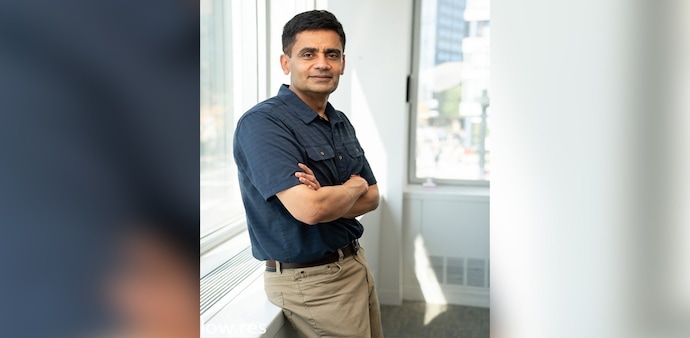
Iqbal Dhaliwal, Global Executive Director, J-PAL (Abdul Latif Jameel Poverty Action Lab), which is based at the Massachusetts Institute of Technology’s (MIT’s) economics department and works to reduce poverty by ensuring that policy is informed by scientific evidence, believes that cash transfers on average are being used for productive uses but underlines the need to experiment with the design of these programmes in India and to review and weed our legacy programmes. In an interview with BT on the sidelines of the Kautilya Economic Conclave, he also notes that the combination of tariffs and AI are both challenges for the Indian labour market. Edited excerpts:
What is your view on cash transfers in India with several states transferring money to women beneficiaries? There is a view that with the large subsidy and cash transfers, several beneficiaries do not want to work? Does the government need to focus on more productive ways to improve people’s lives?
This is a very interesting, but also a fairly complex subject. J-PAL has conducted several randomised control trials (RCTs) and multiple such RCTs show that the initial priority of people is exactly that if you give poor people money, they will not want to work. They will sit at home and in some cases buy alcohol and smoke. But we are finding in study after study that while this does happen with some people, on average people save this money for productive uses or invest it in things like better healthcare or better education for the children. On average, there is no evidence that this money gets frittered away. What is absolutely true is that the design of the programme matters and this is where there can be more experimentation in terms of should it be single payment, should it be one lump sum payment. Who should get it? What should be the frequency? These can lead to improvements.
The second thing unfortunately for us in India, very few legacy programmes ever end even as new ones are introduced. While the fiscal space being crowded out by these cash programmes which may not be a bad thing, we need to weed out the programmes that are not working. This is an area where evidence can help. One can do quick research to find out which programmes are having impact or not, and which ones to scale up. The final kink in this is the following—if you feel that by giving people cash, you are, in a sense, giving them the choice to buy those goods from the market versus being forced. Whether it’s public health or education, people can use the cash transfer to perhaps move to a private facility. It can be a very good thing if it allows more choice to emerge and more private sector and entrepreneurs to emerge. India is also at the forefront of this direct transfer revolution through the JAM trinity (Jan Dhan bank account, Aadhaar and mobile phone). This is our opportunity to be the Vishwaguru in this sector.
Do you think that, apart from these cash transfers, skilling is another way of making the population more productive? And how can this be done?
This is a huge issue and takes even more meaning given what we are seeing. The combination of tariffs and AI are both challenges for the Indian labour market at different frontiers. The impact of tariffs is already evident across sectors, whether it’s in the garment industry in Tiruppur or the Surat diamond polishing industry and across skill levels. Similarly, AI is another issue. India has a huge potential to benefit from AI because we are the application capital of the world, but also the country which is going to be affected a lot by the AI is India. Think about all the BPOs—the hit to them is going to be immense. The question is how do you further upskill them? The further upskilling has to be on the AI applications, on basic AI development tools, which is going to be a challenge.
But coming back to your question, I think the biggest thing is education. The New Education Policy has put a huge focus on learning outcomes, which is immensely important but that focus on learning outcomes has to come with this whole plethora of better teacher training, helping teacher motivation, parental engagement, good pedagogy, making sure no kid is left behind, and that all is hard work. The whole US tariff issues is a wakeup call that essentially the fundamentals matter.
In the past, you have spoken on how AI can be integrated in social programmes. Could you elaborate on this?
India is at the forefront of all of this. I think AI clearly, is going to be transformational and it has multimodality. So even if one doesn’t know how to read or write, one can access AI through photos or voice. I think there are five big areas in the social sector where we think you’ve seen some of this. The one that I’m most excited about is the productivity of frontline workers. One of the challenges that India has is while there are great doctors in city and district hospitals, not there aren’t enough in primary health centres. People don’t have somebody to consult with or discuss their cases. Here AI tools can be of great use. Similarly, in agriculture, farmers can put a photo of a diseased crop and ask AI what it is. They will not only get a likely diagnosis but also the chemicals to buy and the nearest place to purchase it. Similarly, in education. Improving the productivity of frontline health workers is a big thing.
The second is just providing more people access to services. For instance, we have this study in Bihar about providing early warning to people whose houses are in danger of getting flooded. And again, AI can provide customised early warning through WhatsApp in real time. The next thing that AI can help is tax collection. Studies after studies are finding that AI is helping in things like property taxes. And the final thing is in terms of transcribing notes for courts through Adalat AI. I think these are game changers.
But the challenge that I see in India is too much of a good thing. I think there are too many AI solutions and applications being created, but which AI application do you pick? What training data was used on the AI application? Was it Indian training data? Were there any biases in the algorithm or not, which then turned into bad outcomes for folks in India? I think that evaluation and testing of the AI models is extremely important. if I had one word of caution or advice to Indian policy makers who are adopting AI applications is that the potential is huge, but you can also end up harming the people. And so please evaluate these AI applications before you and evaluate them for issues like biases.
Do you expect the GST rate cuts to boost consumption? What does J-PAL’s own learnings show in terms of outcomes of tax cuts and consumption?
I’m not going to wear my J-PAL hat for this, but my economist hat. I think the biggest impact of the GST tax cuts is on the ease of doing business. There is so much geopolitical and geoeconomic fragmentation across the world, Trump has imposed tariffs on India. In this scenario, India has to go back to the fundamentals. The first fundamental is infrastructure where India has invested a lot in digital and physical infrastructure. Second, is human capital. The third are the three Ls—labour, land and legal reforms, and then the fourth is GST.
I wouldn’t worry about the consumption effects of GST. I think the ease of doing effects of GST on businesses is huge. Everybody from a Rs 10,000 food stall owner to $100 million corporate is affected by GST. I am very happy that this GST simplification has happened because it was supposed to simplify things. Another thing is the fiscal deficit, especially state deficits. I think the government of India is doing fine, but I think state deficits are completely going to be stressed because of cash transfers and continuing with legacy programmes. The sixth is climate and green transition. Climate change is happening and is on our heads right now. India can use the green transition to create new jobs while preparing our citizens and infrastructure against climate change and the health risk, but at the same time, create good jobs and export a lot of these industries.
Iqbal Dhaliwal, Global Executive Director, J-PAL (Abdul Latif Jameel Poverty Action Lab), which is based at the Massachusetts Institute of Technology’s (MIT’s) economics department and works to reduce poverty by ensuring that policy is informed by scientific evidence, believes that cash transfers on average are being used for productive uses but underlines the need to experiment with the design of these programmes in India and to review and weed our legacy programmes. In an interview with BT on the sidelines of the Kautilya Economic Conclave, he also notes that the combination of tariffs and AI are both challenges for the Indian labour market. Edited excerpts:
What is your view on cash transfers in India with several states transferring money to women beneficiaries? There is a view that with the large subsidy and cash transfers, several beneficiaries do not want to work? Does the government need to focus on more productive ways to improve people’s lives?
This is a very interesting, but also a fairly complex subject. J-PAL has conducted several randomised control trials (RCTs) and multiple such RCTs show that the initial priority of people is exactly that if you give poor people money, they will not want to work. They will sit at home and in some cases buy alcohol and smoke. But we are finding in study after study that while this does happen with some people, on average people save this money for productive uses or invest it in things like better healthcare or better education for the children. On average, there is no evidence that this money gets frittered away. What is absolutely true is that the design of the programme matters and this is where there can be more experimentation in terms of should it be single payment, should it be one lump sum payment. Who should get it? What should be the frequency? These can lead to improvements.
The second thing unfortunately for us in India, very few legacy programmes ever end even as new ones are introduced. While the fiscal space being crowded out by these cash programmes which may not be a bad thing, we need to weed out the programmes that are not working. This is an area where evidence can help. One can do quick research to find out which programmes are having impact or not, and which ones to scale up. The final kink in this is the following—if you feel that by giving people cash, you are, in a sense, giving them the choice to buy those goods from the market versus being forced. Whether it’s public health or education, people can use the cash transfer to perhaps move to a private facility. It can be a very good thing if it allows more choice to emerge and more private sector and entrepreneurs to emerge. India is also at the forefront of this direct transfer revolution through the JAM trinity (Jan Dhan bank account, Aadhaar and mobile phone). This is our opportunity to be the Vishwaguru in this sector.
Do you think that, apart from these cash transfers, skilling is another way of making the population more productive? And how can this be done?
This is a huge issue and takes even more meaning given what we are seeing. The combination of tariffs and AI are both challenges for the Indian labour market at different frontiers. The impact of tariffs is already evident across sectors, whether it’s in the garment industry in Tiruppur or the Surat diamond polishing industry and across skill levels. Similarly, AI is another issue. India has a huge potential to benefit from AI because we are the application capital of the world, but also the country which is going to be affected a lot by the AI is India. Think about all the BPOs—the hit to them is going to be immense. The question is how do you further upskill them? The further upskilling has to be on the AI applications, on basic AI development tools, which is going to be a challenge.
But coming back to your question, I think the biggest thing is education. The New Education Policy has put a huge focus on learning outcomes, which is immensely important but that focus on learning outcomes has to come with this whole plethora of better teacher training, helping teacher motivation, parental engagement, good pedagogy, making sure no kid is left behind, and that all is hard work. The whole US tariff issues is a wakeup call that essentially the fundamentals matter.
In the past, you have spoken on how AI can be integrated in social programmes. Could you elaborate on this?
India is at the forefront of all of this. I think AI clearly, is going to be transformational and it has multimodality. So even if one doesn’t know how to read or write, one can access AI through photos or voice. I think there are five big areas in the social sector where we think you’ve seen some of this. The one that I’m most excited about is the productivity of frontline workers. One of the challenges that India has is while there are great doctors in city and district hospitals, not there aren’t enough in primary health centres. People don’t have somebody to consult with or discuss their cases. Here AI tools can be of great use. Similarly, in agriculture, farmers can put a photo of a diseased crop and ask AI what it is. They will not only get a likely diagnosis but also the chemicals to buy and the nearest place to purchase it. Similarly, in education. Improving the productivity of frontline health workers is a big thing.
The second is just providing more people access to services. For instance, we have this study in Bihar about providing early warning to people whose houses are in danger of getting flooded. And again, AI can provide customised early warning through WhatsApp in real time. The next thing that AI can help is tax collection. Studies after studies are finding that AI is helping in things like property taxes. And the final thing is in terms of transcribing notes for courts through Adalat AI. I think these are game changers.
But the challenge that I see in India is too much of a good thing. I think there are too many AI solutions and applications being created, but which AI application do you pick? What training data was used on the AI application? Was it Indian training data? Were there any biases in the algorithm or not, which then turned into bad outcomes for folks in India? I think that evaluation and testing of the AI models is extremely important. if I had one word of caution or advice to Indian policy makers who are adopting AI applications is that the potential is huge, but you can also end up harming the people. And so please evaluate these AI applications before you and evaluate them for issues like biases.
Do you expect the GST rate cuts to boost consumption? What does J-PAL’s own learnings show in terms of outcomes of tax cuts and consumption?
I’m not going to wear my J-PAL hat for this, but my economist hat. I think the biggest impact of the GST tax cuts is on the ease of doing business. There is so much geopolitical and geoeconomic fragmentation across the world, Trump has imposed tariffs on India. In this scenario, India has to go back to the fundamentals. The first fundamental is infrastructure where India has invested a lot in digital and physical infrastructure. Second, is human capital. The third are the three Ls—labour, land and legal reforms, and then the fourth is GST.
I wouldn’t worry about the consumption effects of GST. I think the ease of doing effects of GST on businesses is huge. Everybody from a Rs 10,000 food stall owner to $100 million corporate is affected by GST. I am very happy that this GST simplification has happened because it was supposed to simplify things. Another thing is the fiscal deficit, especially state deficits. I think the government of India is doing fine, but I think state deficits are completely going to be stressed because of cash transfers and continuing with legacy programmes. The sixth is climate and green transition. Climate change is happening and is on our heads right now. India can use the green transition to create new jobs while preparing our citizens and infrastructure against climate change and the health risk, but at the same time, create good jobs and export a lot of these industries.