
Customers want affordable, not cheap discounted fashion: Jabong CEO Arun Chandra Mohan
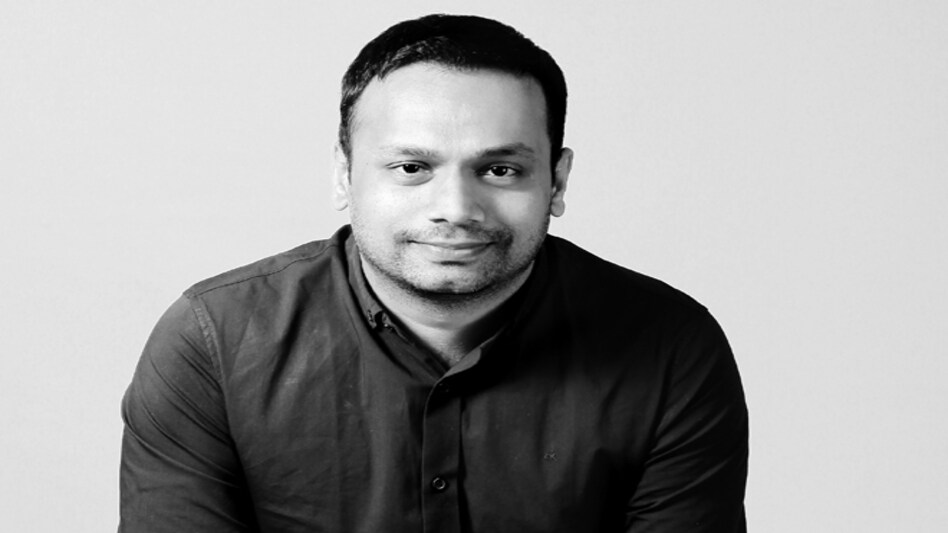
Arun Chandra Mohan, co-founder and CEO, Jabong spoke to Taslima Khan of Business Today about the company's initial days and how they see the future shaping up for the company.
- May 7, 2015,
- Updated May 7, 2015 5:38 PM IST
Arun Chandra Mohan, co-founder and CEO, Jabong, completed his B.Com (Hon.) from Loyola College and MBA from INSEAD. Prior to his MBA, Arun worked across Central Europe, Middle East, and Africa as a Consultant for IDC, where he helped tech companies devise and implement growth strategies for emerging markets. After INSEAD, he joined Rocket Internet as a Venture Partner before setting up Jabong.com. Mohan spoke to Taslima Khan of Business Today about the company's initial days and how they see the future shaping up for the company. Q- What are the exclusive things about Jabong?
A- Our catalogue is one of the broadest in terms of choice. I can make it five times bigger, but we have focused on relevant brands. Today, we offer 200,000 styles in fashion. We have a substantial international brand portfolio: Miss Selfridge, River Island, G- Star Raw, NBA, Sisters Point, Dorothy Perkins, Adidas Originals, Aldo, Burton Menswear London, Lola Skye, H.E by Mango, DC, Tom Tailor. There are about 20-plus of them which are unique assets. We were the first to bring many brands including Mango. We see Indian fashion consumer evolving; they want more of better fashion. We also have brand collaborations with Rohit Bal and Alia Bhatt. Our first international brand was Dorothy Perkins and it was extremely successful. It is our number one western wear brand today. Rohit Bal's collection is also very successful.
The commitment with international brands is to build the brand. We work very closely with respect to merchandising, marketing. These are not luxury but fast fashion products that vary from Rs 1,800 to Rs 3,000. They introduce styles faster; many new styles every two weeks. Customers know that there is a new collection coming in every two weeks. In contrast, most Indian brands launch their season collections which happens once every six months. India is attractive for international brands in terms of the opportunity but it is extremely complex in terms of logistics, limited stores, lack of interesting fashion malls etc. Offline retail is extremely expensive. We are able to provide them access in a very simple manner.
We started supporting small vendors early on. We also pioneered many services within logistics. Our private label has been also doing very well. We started with Phosphorus towards the end of 2013. We have four key brands now: Phosphorus, Sangria, Miss Bennett and Incult. About 20 per cent of Jabong's sales come from private labels. We have a design team in London that has developed this collection. The sales are very impressive. Talk about any big brand: Benetton, Lee or Lewis, the designs are coming from their home countries and they are bought by us. In India, we have not built many fashion brands, we don't have design talent here. There is still a huge scope for getting our supply chain and designing part right.
Q- What about discounting?
A- Discounting is the reality of ecommerce in India but we don't want to grow via discounting, because that can be easily replicated. Our focus is on differentiation.
Q- How are you investing in people?
A- We have a design team in London where we have people from ASOS and Arcadia group. We have hired a Chief Technology Officer Sachin Sinha. We have hired our men's wear and women's wear head from Madura garments. We will continue to invest in people. That is a critical area.Q- How do you think fashion customers are changing in India?
A- The customer is looking for affordable fashion, not cheap discounted fashion.
Q- What percentage of your sales are on mobile?
A- Over 55%.
Q- Which are the areas of heavy investment for you?
A- We are less concerned about growth and revenues but more about building differentiation and investing in mobile. We are investing in sourcing, brand building, mobile, people and technology.
Q- Any acquisitions that you are looking at?
A- No we are very comfortable with our current position. If there is something that helps us build differentiation, we will consider.
Q- Which are the Bollywood associations that have been fruitful for you?
A- Alia Bhatt has been the most successful one so far. She is a youth icon and connects very well with girls in the 18-25 age group. Instead of plain vanilla brand endorsement, we have developed a collection. We have never believed in brand endorsement. Alia Bhatt for Jabong is the collection which is designed by her team with her sense of style and bringing it to the market. This is what the customer wants. We are soon launching a new collection. We launched the first one in September last year which was all sold out. Fashion weeks are a great way to connect with great talent. It is also a great platform to showcase many of the international brands, like the recent one: Tom Tailor. It is also a platform to launch new talent on the Jabong Stage. We have done two Fashion Weeks, starting last year called Jabong Online Fashion Week. It is a platform for models, hair dressers, beauticians, designers and photographers.
Q- How many pin codes do you cover?
A- Close to 65 per cent per cent of our shipments are going to tier-II or tier-III towns. We cover about 15,000 pin codes.
Q- What is Jabong's character?
A- 'Express yourself, Be You' is what our new campaign is all about. We are at least three to five steps ahead when it comes to building new properties and bringing them to the market. We were the first to bring Mango, Dorothy Perkins, River island, Tom Tailor.
Q- What will you actually learn from Global Fashion Group?
A- Synergies when it comes to design teams, investment in mobile technologies, private labels, supply chain and sourcing will be great. Working with global brands, a lot of strategic fits.
Q- How will it help your private labels?
A- I will be buying 400 pieces of a white shirt that every entity will be buying from the same vendor. We will share great synergies in sourcing fabrics, say, from China, India for cotton and denim. That will boost our margins and better brand relationships globally. And then an IPO (though not planned yet) that will get all these five entities listed.Q- Tell me three things that you look forward to learn?
A- Some companies have done extremely well on social media, or brand building or private labels. Say, Zalora, which has done exceptional job of its private label.
Q- What are some of your HR policies that are different?
A- I think what is different in Jabong is we have a very transparent, open door policy. Anyone can come anytime and speak their mind. We give the freedom to employees to try different things. Failure is acceptable as long as that makes us learn. Also we are fine if people don't have the answers to some of the questions. We are a new company in a new industry so we ought to be dealing with ambiguity.
Q- One thing that makes you feel lucky about having an investor like Rocket internet?
A- We have about seven or eight large investors, none of which are Indian. Every investor, including Kinnevik which is our biggest investor, brought in a different value addition. We are very happy about the investors we have on board. We were always very clear about the direction we wanted to take and stuck to it, convincing the board..but in the end you have to eventually stick to your own vision on your business. Investors, suppliers and employees, they all are aligned to that.Q- How do you view competition for Jabong?
A- I think, the way we see our business is first, we are a retail company and second, we are an online company. If you look at the retail business, there are not many providers. You have the shoppers and the lifestyles of the world but their reach is very limited. Our competition is from all of them, not just online companies from day one. A lot of online companies are filing in the gaps of offline retail. For us, opportunities are much bigger than competition. Great delivery and great customer service is what drives us. We are here for the much longer run. The fact that started much later, in 2012, we have captured most of the growth that has happened in the fashion industry since then. We are happy with the way we have scaled the business. It makes things much easier. It is easier for any competitor to give discounts like crazy and become number one. That's not the right way to look at business. I think we have the most unique value proposition for the customer and want to strengthen that.
Arun Chandra Mohan, co-founder and CEO, Jabong, completed his B.Com (Hon.) from Loyola College and MBA from INSEAD. Prior to his MBA, Arun worked across Central Europe, Middle East, and Africa as a Consultant for IDC, where he helped tech companies devise and implement growth strategies for emerging markets. After INSEAD, he joined Rocket Internet as a Venture Partner before setting up Jabong.com. Mohan spoke to Taslima Khan of Business Today about the company's initial days and how they see the future shaping up for the company. Q- What are the exclusive things about Jabong?
A- Our catalogue is one of the broadest in terms of choice. I can make it five times bigger, but we have focused on relevant brands. Today, we offer 200,000 styles in fashion. We have a substantial international brand portfolio: Miss Selfridge, River Island, G- Star Raw, NBA, Sisters Point, Dorothy Perkins, Adidas Originals, Aldo, Burton Menswear London, Lola Skye, H.E by Mango, DC, Tom Tailor. There are about 20-plus of them which are unique assets. We were the first to bring many brands including Mango. We see Indian fashion consumer evolving; they want more of better fashion. We also have brand collaborations with Rohit Bal and Alia Bhatt. Our first international brand was Dorothy Perkins and it was extremely successful. It is our number one western wear brand today. Rohit Bal's collection is also very successful.
The commitment with international brands is to build the brand. We work very closely with respect to merchandising, marketing. These are not luxury but fast fashion products that vary from Rs 1,800 to Rs 3,000. They introduce styles faster; many new styles every two weeks. Customers know that there is a new collection coming in every two weeks. In contrast, most Indian brands launch their season collections which happens once every six months. India is attractive for international brands in terms of the opportunity but it is extremely complex in terms of logistics, limited stores, lack of interesting fashion malls etc. Offline retail is extremely expensive. We are able to provide them access in a very simple manner.
We started supporting small vendors early on. We also pioneered many services within logistics. Our private label has been also doing very well. We started with Phosphorus towards the end of 2013. We have four key brands now: Phosphorus, Sangria, Miss Bennett and Incult. About 20 per cent of Jabong's sales come from private labels. We have a design team in London that has developed this collection. The sales are very impressive. Talk about any big brand: Benetton, Lee or Lewis, the designs are coming from their home countries and they are bought by us. In India, we have not built many fashion brands, we don't have design talent here. There is still a huge scope for getting our supply chain and designing part right.
Q- What about discounting?
A- Discounting is the reality of ecommerce in India but we don't want to grow via discounting, because that can be easily replicated. Our focus is on differentiation.
Q- How are you investing in people?
A- We have a design team in London where we have people from ASOS and Arcadia group. We have hired a Chief Technology Officer Sachin Sinha. We have hired our men's wear and women's wear head from Madura garments. We will continue to invest in people. That is a critical area.Q- How do you think fashion customers are changing in India?
A- The customer is looking for affordable fashion, not cheap discounted fashion.
Q- What percentage of your sales are on mobile?
A- Over 55%.
Q- Which are the areas of heavy investment for you?
A- We are less concerned about growth and revenues but more about building differentiation and investing in mobile. We are investing in sourcing, brand building, mobile, people and technology.
Q- Any acquisitions that you are looking at?
A- No we are very comfortable with our current position. If there is something that helps us build differentiation, we will consider.
Q- Which are the Bollywood associations that have been fruitful for you?
A- Alia Bhatt has been the most successful one so far. She is a youth icon and connects very well with girls in the 18-25 age group. Instead of plain vanilla brand endorsement, we have developed a collection. We have never believed in brand endorsement. Alia Bhatt for Jabong is the collection which is designed by her team with her sense of style and bringing it to the market. This is what the customer wants. We are soon launching a new collection. We launched the first one in September last year which was all sold out. Fashion weeks are a great way to connect with great talent. It is also a great platform to showcase many of the international brands, like the recent one: Tom Tailor. It is also a platform to launch new talent on the Jabong Stage. We have done two Fashion Weeks, starting last year called Jabong Online Fashion Week. It is a platform for models, hair dressers, beauticians, designers and photographers.
Q- How many pin codes do you cover?
A- Close to 65 per cent per cent of our shipments are going to tier-II or tier-III towns. We cover about 15,000 pin codes.
Q- What is Jabong's character?
A- 'Express yourself, Be You' is what our new campaign is all about. We are at least three to five steps ahead when it comes to building new properties and bringing them to the market. We were the first to bring Mango, Dorothy Perkins, River island, Tom Tailor.
Q- What will you actually learn from Global Fashion Group?
A- Synergies when it comes to design teams, investment in mobile technologies, private labels, supply chain and sourcing will be great. Working with global brands, a lot of strategic fits.
Q- How will it help your private labels?
A- I will be buying 400 pieces of a white shirt that every entity will be buying from the same vendor. We will share great synergies in sourcing fabrics, say, from China, India for cotton and denim. That will boost our margins and better brand relationships globally. And then an IPO (though not planned yet) that will get all these five entities listed.Q- Tell me three things that you look forward to learn?
A- Some companies have done extremely well on social media, or brand building or private labels. Say, Zalora, which has done exceptional job of its private label.
Q- What are some of your HR policies that are different?
A- I think what is different in Jabong is we have a very transparent, open door policy. Anyone can come anytime and speak their mind. We give the freedom to employees to try different things. Failure is acceptable as long as that makes us learn. Also we are fine if people don't have the answers to some of the questions. We are a new company in a new industry so we ought to be dealing with ambiguity.
Q- One thing that makes you feel lucky about having an investor like Rocket internet?
A- We have about seven or eight large investors, none of which are Indian. Every investor, including Kinnevik which is our biggest investor, brought in a different value addition. We are very happy about the investors we have on board. We were always very clear about the direction we wanted to take and stuck to it, convincing the board..but in the end you have to eventually stick to your own vision on your business. Investors, suppliers and employees, they all are aligned to that.Q- How do you view competition for Jabong?
A- I think, the way we see our business is first, we are a retail company and second, we are an online company. If you look at the retail business, there are not many providers. You have the shoppers and the lifestyles of the world but their reach is very limited. Our competition is from all of them, not just online companies from day one. A lot of online companies are filing in the gaps of offline retail. For us, opportunities are much bigger than competition. Great delivery and great customer service is what drives us. We are here for the much longer run. The fact that started much later, in 2012, we have captured most of the growth that has happened in the fashion industry since then. We are happy with the way we have scaled the business. It makes things much easier. It is easier for any competitor to give discounts like crazy and become number one. That's not the right way to look at business. I think we have the most unique value proposition for the customer and want to strengthen that.