
'Seen demand come back quite strongly in last few weeks': Indriya CEO, Sandeep Kohli
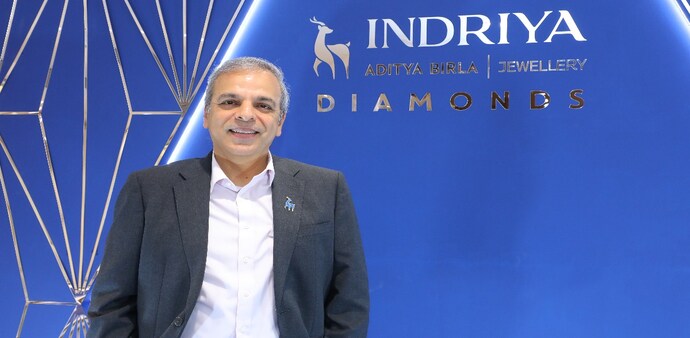
Sandeep Kohli, Chief Executive Officer, Indriya, on gold demand, recycling of gold, and more
- Jul 6, 2026,
- Updated Jul 6, 2026 11:42 AM IST
Aditya Birla Group forayed into the branded jewellery retail business in 2024 with the launch of its brand, Indriya, under the company Novel Jewels. With a projected 50% CAGR and 3x the industry growth over the next decade, Indriya aspires to become one of the top three jewellery retailers within the first five years of its launch, and potentially the largest direct-to-consumer retailer under Aditya Birla Group.
In a free-wheeling conversation with Business Today, Sandeep Kohli, Chief Executive Officer, Indriya, the jewellery business of the Aditya Birla Group, spoke about the impact of rising gold prices, customs duty, jewellery for Gen Z and what distinguishes Indriya from other jewellery companies. Edited excerpts:
Q: Between soaring gold prices, macro headwinds, and the PM’s appeal to buy less gold, the business landscape seems challenging. How are these factors impacting Indriya’s long-term growth plans?
Gold, or rather jewellery, is an integral part of Indian culture and forms a part of occasions, rituals, etc.
More than the Prime Minister's statement, I think the fact that the customs duty was increased by 9%, led to consumers holding back a little because people wanted to absorb the price. Almost 10% increase in price in any category would lead consumers to rethink, reset, etc. But in the last few weeks we've seen demand come back quite strongly with wedding dates also approaching. So, we are quite buoyant.
Q: So, are increasing gold prices not impacting growth overall?
I think the way to look at it is that generally over a 10-year period, gold prices will keep going up. There may be some ups and downs depending on geopolitical reasons but that has got nothing to do with demand in India because while India buys probably the most gold, paradoxically, it does not set the price of gold. So, I think what happens is that if the sentiment is that gold prices will keep going up, consumers keep buying.
Yes, when there is volatility in the gold price, then consumers wait and watch. For that, actually, we have come out with a scheme called Double Rate Protection. If you like a product but are not sure of the gold price, then you can book it, and when you come to collect it at a later date, we will charge the gold rate of the day you booked it or that day, whichever is lower.
Q: Given the high gold rates, are customers looking at recycling old gold?
Yes, we have a very good Gold Exchange Program, where you can bring in any caratage of gold, from any jeweller, and we will give you the value of gold without any deduction, processing charge etc. The scheme is popular, between 45-55% of the sales that we are doing are based on old gold exchange.
Q: You have seen exponential growth, but going forward, how many stores are we looking at, say, by end of 2030?
Today we are ahead of the business plan that was set for us. For us, what was important in the initial months was to ensure that we create scale for our brand. And now, with us being in 81 stores, soon we'll be in 85, in over 40 cities; I think we have created the scale.
And while doing that, we realised that from 0 stores to 81 stores, we have been the fastest across any retail brand in India, across any industry. But in the next phase of our expansion, what is important is that we continue opening stores at the right location with the right kind of jewellery inside, with the right trained people to be able to cater to consumers, etc., etc. So we are not on a treadmill which is chasing the number of stores. But we want to be in the top 3 jewellers in the country.
We are in metros, non-metros, Tier I and Tier II cities.
Q: With the younger generation being more experimental, are you looking at lighter jewellery, or does heavy bridal jewellery continue to be more important?
So that's a very interesting question, and I'll answer it in two parts.
The first part is that we are a brand that has been born in the 2020s. We are not a brand born like many other brands 40 years ago. For us, our target audience is Gen Z and their stakeholders. Today a large number of Gen Zs have the economic power. Some of them don't have it, and so their stakeholders then matter. So, our whole design philosophy, our in-store experience philosophy and our assortment philosophy is based on them and for them.
Now, if you look at Gen Z, they look at jewellery very differently from probably how their great-grandmothers looked at it. Gen Zs look at jewellery as a way of expressing their individuality and enhancing or expressing their beauty. Earlier, jewellery was seen mainly as a way of buying gold, which was considered an investment. For Gen Z it’s a balance between the design and buying something precious.
Gen Z could say that on the day of the wedding, I want to buy that one piece, but because I have 3 other functions, I also want to buy for 3 other looks.
How she spreads her budget across that may differ from earlier.
Q What gap did you see in the jewellery market that Indriya could fill?
I think the gap was on 3 counts. I think first, because jewellery continues to get more and more expensive, you want to have complete trust in what you're buying. Us coming from the house of the Aditya Birla Group, I think we inherit that trust; of course, I have to live up to it. I think the second thing was that people were yearning for some kind of difference and refreshment of design, which is why we created a huge in-house design team. That is not true for most of the retailers. Most of them are buying what the manufacturer designs.
We design based on our target audience. Third was the experience. We want to provide a comfortable in-store experience. We have bridal lounges complete with a changing room where you can try on the jewellery with your wedding wear. Then we use a lot of technology. All our jewellery consultants talk to you through a tablet. The complete breakdown of each jewellery piece is there. There is complete transparency.
The billing process we have made very simple. So, we try to make the experience pleasant and put people at ease. I like to think of our outlets, not as outlets, but as theatres.
There was a gap there. I think that is what we are trying to fill, to bring back and celebrate the craftsmanship and the love for jewellery.
Q: Indriya has been talking about the ‘Sparkle Effect’. Could you tell us a little more about that?
Traditionally, diamond jewellery is bought keeping in mind the 4Cs – cut, colour, clarity and carat. But at the end of the day, what everyone looks for is the shine or the chamak or sparkle.
If you take two diamonds of the same 4Cs, the sparkle in them could be different. So we as a company purchase diamonds that have a higher sparkle.
Every diamond that we buy is chosen based on sparkle, and that is a major distinguishing factor.
Aditya Birla Group forayed into the branded jewellery retail business in 2024 with the launch of its brand, Indriya, under the company Novel Jewels. With a projected 50% CAGR and 3x the industry growth over the next decade, Indriya aspires to become one of the top three jewellery retailers within the first five years of its launch, and potentially the largest direct-to-consumer retailer under Aditya Birla Group.
In a free-wheeling conversation with Business Today, Sandeep Kohli, Chief Executive Officer, Indriya, the jewellery business of the Aditya Birla Group, spoke about the impact of rising gold prices, customs duty, jewellery for Gen Z and what distinguishes Indriya from other jewellery companies. Edited excerpts:
Q: Between soaring gold prices, macro headwinds, and the PM’s appeal to buy less gold, the business landscape seems challenging. How are these factors impacting Indriya’s long-term growth plans?
Gold, or rather jewellery, is an integral part of Indian culture and forms a part of occasions, rituals, etc.
More than the Prime Minister's statement, I think the fact that the customs duty was increased by 9%, led to consumers holding back a little because people wanted to absorb the price. Almost 10% increase in price in any category would lead consumers to rethink, reset, etc. But in the last few weeks we've seen demand come back quite strongly with wedding dates also approaching. So, we are quite buoyant.
Q: So, are increasing gold prices not impacting growth overall?
I think the way to look at it is that generally over a 10-year period, gold prices will keep going up. There may be some ups and downs depending on geopolitical reasons but that has got nothing to do with demand in India because while India buys probably the most gold, paradoxically, it does not set the price of gold. So, I think what happens is that if the sentiment is that gold prices will keep going up, consumers keep buying.
Yes, when there is volatility in the gold price, then consumers wait and watch. For that, actually, we have come out with a scheme called Double Rate Protection. If you like a product but are not sure of the gold price, then you can book it, and when you come to collect it at a later date, we will charge the gold rate of the day you booked it or that day, whichever is lower.
Q: Given the high gold rates, are customers looking at recycling old gold?
Yes, we have a very good Gold Exchange Program, where you can bring in any caratage of gold, from any jeweller, and we will give you the value of gold without any deduction, processing charge etc. The scheme is popular, between 45-55% of the sales that we are doing are based on old gold exchange.
Q: You have seen exponential growth, but going forward, how many stores are we looking at, say, by end of 2030?
Today we are ahead of the business plan that was set for us. For us, what was important in the initial months was to ensure that we create scale for our brand. And now, with us being in 81 stores, soon we'll be in 85, in over 40 cities; I think we have created the scale.
And while doing that, we realised that from 0 stores to 81 stores, we have been the fastest across any retail brand in India, across any industry. But in the next phase of our expansion, what is important is that we continue opening stores at the right location with the right kind of jewellery inside, with the right trained people to be able to cater to consumers, etc., etc. So we are not on a treadmill which is chasing the number of stores. But we want to be in the top 3 jewellers in the country.
We are in metros, non-metros, Tier I and Tier II cities.
Q: With the younger generation being more experimental, are you looking at lighter jewellery, or does heavy bridal jewellery continue to be more important?
So that's a very interesting question, and I'll answer it in two parts.
The first part is that we are a brand that has been born in the 2020s. We are not a brand born like many other brands 40 years ago. For us, our target audience is Gen Z and their stakeholders. Today a large number of Gen Zs have the economic power. Some of them don't have it, and so their stakeholders then matter. So, our whole design philosophy, our in-store experience philosophy and our assortment philosophy is based on them and for them.
Now, if you look at Gen Z, they look at jewellery very differently from probably how their great-grandmothers looked at it. Gen Zs look at jewellery as a way of expressing their individuality and enhancing or expressing their beauty. Earlier, jewellery was seen mainly as a way of buying gold, which was considered an investment. For Gen Z it’s a balance between the design and buying something precious.
Gen Z could say that on the day of the wedding, I want to buy that one piece, but because I have 3 other functions, I also want to buy for 3 other looks.
How she spreads her budget across that may differ from earlier.
Q What gap did you see in the jewellery market that Indriya could fill?
I think the gap was on 3 counts. I think first, because jewellery continues to get more and more expensive, you want to have complete trust in what you're buying. Us coming from the house of the Aditya Birla Group, I think we inherit that trust; of course, I have to live up to it. I think the second thing was that people were yearning for some kind of difference and refreshment of design, which is why we created a huge in-house design team. That is not true for most of the retailers. Most of them are buying what the manufacturer designs.
We design based on our target audience. Third was the experience. We want to provide a comfortable in-store experience. We have bridal lounges complete with a changing room where you can try on the jewellery with your wedding wear. Then we use a lot of technology. All our jewellery consultants talk to you through a tablet. The complete breakdown of each jewellery piece is there. There is complete transparency.
The billing process we have made very simple. So, we try to make the experience pleasant and put people at ease. I like to think of our outlets, not as outlets, but as theatres.
There was a gap there. I think that is what we are trying to fill, to bring back and celebrate the craftsmanship and the love for jewellery.
Q: Indriya has been talking about the ‘Sparkle Effect’. Could you tell us a little more about that?
Traditionally, diamond jewellery is bought keeping in mind the 4Cs – cut, colour, clarity and carat. But at the end of the day, what everyone looks for is the shine or the chamak or sparkle.
If you take two diamonds of the same 4Cs, the sparkle in them could be different. So we as a company purchase diamonds that have a higher sparkle.
Every diamond that we buy is chosen based on sparkle, and that is a major distinguishing factor.