
The need to conserve India’s fuel & Rapido’s rise
As fuel conservation becomes a national priority following Prime Minister Narendra Modi’s call for austerity and reduced fuel consumption, India’s mobility landscape is undergoing a shift.
- May 16, 2026,
- Updated May 16, 2026 4:42 PM IST
After Prime Minister Modi’s call for austerity, avoiding unnecessary travel, conserving fuel and recent increase in prices, the need for saving fuel was never so urgent. Several measures have been taken, like Work From Home (WFH) on fixed days, car-pooling, cutting Minister’s convoys, etc. India’s urban mobility story is no longer being driven only by cars, increasingly, it is being powered by two-wheelers and technology-led aggregation platforms.
The recent surge in valuation of Rapido- now valued at nearly $3 billion after raising fresh funding of $240 million, with Dutch technology investor Prosus, West Bridge Capital and Accel joining the round, reflects not merely investor optimism at a time when several such investment proposals are being kept pending, but a deeper structural shift in India’s transformational need to travel.
At a time when fuel prices remain volatile, traffic congestion is worsening with frustrating time wasted on roads, and cities are struggling with pollution and parking shortages, Rapido’s business model appears particularly relevant to India’s evolving mobility needs.
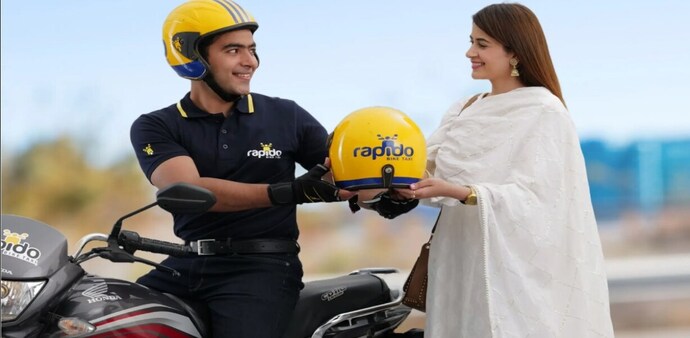
Unlike conventional ride-hailing companies that initially focused heavily on four-wheelers, Rapido built its core around bike taxis and affordable last-mile transport. This model addresses a uniquely Indian challenge: millions of commuters need fast, economical connectivity for short and medium distances, especially in congested urban areas and Tier-2 cities.
The fuel-saving implications are significant.
A single bike taxi consumes far less fuel than a car carrying one passenger. In densely populated Indian cities where traffic moves slowly, two-wheelers are inherently more fuel-efficient. Shared mobility also reduces the tendency for every commuter to rely on personal vehicles. Even marginal reductions in daily fuel consumption, when multiplied across millions of rides, can have a substantial macroeconomic effect on India’s oil import bill.
Equally important is Rapido’s multimodal strategy. The company is increasingly positioning itself not merely as a bike-taxi operator, but as an urban mobility platform spanning bikes, autos and cabs. Its emphasis on “first and last-mile connectivity” is aligned with India’s broader push towards integrated public transport systems.
The company’s expansion into over 400 cities also reflects an understanding often missed by global mobility giants: India’s next wave of demand will come from smaller cities where affordability matters more than luxury.
Another noteworthy aspect is employment generation. Rapido’s “captain” model has created flexible earning opportunities for thousands of youth, students and part-time workers. In a slowing global economy where formal job creation remains under pressure, such digital platforms can supplement incomes while improving urban productivity.
Of course, challenges remain. Regulatory uncertainty around bike taxis in several states, concerns about driver earnings, and competition from larger rivals continue to test the sustainability of the model. Public discussions on social platforms reveal both the convenience commuters enjoy and the preference by riders. Several states that earlier were dragging their feet are now recognizing the need and falling in line.
The broader direction for the present and future is clear. India needs mobility solutions that are affordable, fuel-efficient, employment-generating, time-saving and scalable. Rapido’s growth suggests that investors increasingly believe the future of Indian urban transport may not lie in owning more cars, but in sharing smarter rides.
There is no doubt that India must now move with the times.
Dhanendra Kumar, former Secretary MoRTH, India’s Executive Director in World Bank & First Chairman CCI. He is currently Chairman of COMPAD
After Prime Minister Modi’s call for austerity, avoiding unnecessary travel, conserving fuel and recent increase in prices, the need for saving fuel was never so urgent. Several measures have been taken, like Work From Home (WFH) on fixed days, car-pooling, cutting Minister’s convoys, etc. India’s urban mobility story is no longer being driven only by cars, increasingly, it is being powered by two-wheelers and technology-led aggregation platforms.
The recent surge in valuation of Rapido- now valued at nearly $3 billion after raising fresh funding of $240 million, with Dutch technology investor Prosus, West Bridge Capital and Accel joining the round, reflects not merely investor optimism at a time when several such investment proposals are being kept pending, but a deeper structural shift in India’s transformational need to travel.
At a time when fuel prices remain volatile, traffic congestion is worsening with frustrating time wasted on roads, and cities are struggling with pollution and parking shortages, Rapido’s business model appears particularly relevant to India’s evolving mobility needs.
Unlike conventional ride-hailing companies that initially focused heavily on four-wheelers, Rapido built its core around bike taxis and affordable last-mile transport. This model addresses a uniquely Indian challenge: millions of commuters need fast, economical connectivity for short and medium distances, especially in congested urban areas and Tier-2 cities.
The fuel-saving implications are significant.
A single bike taxi consumes far less fuel than a car carrying one passenger. In densely populated Indian cities where traffic moves slowly, two-wheelers are inherently more fuel-efficient. Shared mobility also reduces the tendency for every commuter to rely on personal vehicles. Even marginal reductions in daily fuel consumption, when multiplied across millions of rides, can have a substantial macroeconomic effect on India’s oil import bill.
Equally important is Rapido’s multimodal strategy. The company is increasingly positioning itself not merely as a bike-taxi operator, but as an urban mobility platform spanning bikes, autos and cabs. Its emphasis on “first and last-mile connectivity” is aligned with India’s broader push towards integrated public transport systems.
The company’s expansion into over 400 cities also reflects an understanding often missed by global mobility giants: India’s next wave of demand will come from smaller cities where affordability matters more than luxury.
Another noteworthy aspect is employment generation. Rapido’s “captain” model has created flexible earning opportunities for thousands of youth, students and part-time workers. In a slowing global economy where formal job creation remains under pressure, such digital platforms can supplement incomes while improving urban productivity.
Of course, challenges remain. Regulatory uncertainty around bike taxis in several states, concerns about driver earnings, and competition from larger rivals continue to test the sustainability of the model. Public discussions on social platforms reveal both the convenience commuters enjoy and the preference by riders. Several states that earlier were dragging their feet are now recognizing the need and falling in line.
The broader direction for the present and future is clear. India needs mobility solutions that are affordable, fuel-efficient, employment-generating, time-saving and scalable. Rapido’s growth suggests that investors increasingly believe the future of Indian urban transport may not lie in owning more cars, but in sharing smarter rides.
There is no doubt that India must now move with the times.
Dhanendra Kumar, former Secretary MoRTH, India’s Executive Director in World Bank & First Chairman CCI. He is currently Chairman of COMPAD