
ICICI Bank to start same-day cheque clearance from 4 Oct; check details
ICICI Bank, responding to the Reserve Bank of India’s directive, will move to same-day cheque processing on 4 October 2025. Customers must meet specific submission times for immediate funds and improved protection.
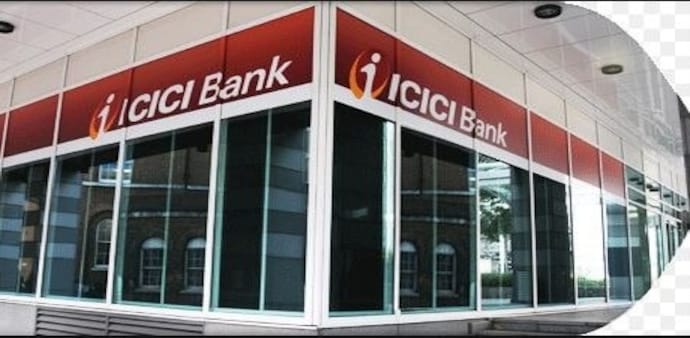
- Sep 23, 2025,
- Updated Sep 23, 2025 9:36 PM IST
ICICI Bank confirmed it will introduce same-day cheque processing from 4 October 2025, provided deposits are made within the designated branch cut-off periods. This adjustment directly follows the Reserve Bank of India (RBI)’s most recent regulations, which are intended to modernise cheque settlements and accelerate fund release throughout India. Customers have been contacted through e-mail, with particular attention drawn to the necessity of observing cut-off times for swift handling. The primary objective: shorter waiting periods, increased practicality, and faster access to deposited sums.
In August 2024, former RBI Governor Shaktikanta Das announced that the Reserve Bank of India is working on cutting cheque clearing time from the current two days to just a few hours.
At present, the Cheque Truncation System (CTS) operates in batch mode, which results in cheques being cleared in about two working days. The central bank now plans to move towards a continuous clearing framework with on-realisation settlement. Under the proposed system, cheques will be scanned, presented, and settled in real time during business hours. This would bring down the cycle from T+1 days to just a few hours, ensuring faster access to funds and smoother transactions.
RBI's transition plan features two distinct phases. The first phase starts on 4 October 2025; the second begins on 3 January 2026. The RBI states: "It has been decided to transition CTS to continuous clearing and settlement on realisation in two phases. Phase 1 shall be implemented on October 4, 2025, and Phase 2 on January 3, 2026." In the opening phase, cheque presentation windows will operate from 10:00 am until 4:00 pm. Within that period, cheques will be scanned and dispatched to the clearing house without delay, enabling uninterrupted delivery to the drawee banks. Real-time settlement follows immediately after.
Cheque processing currently relies on the Cheque Truncation System (CTS). This system transmits digital images, eradicating physical transfer. Presently, batch processing means settlements may take as much as two working days. Funds generally become accessible after the subsequent business day, following the return cycle. According to the RBI: "CTS currently processes cheques with a clearing cycle of up to two working days. To improve the efficiency of cheque clearing and reduce settlement risk for participants, and to enhance customer experience, it is proposed to transition CTS from the current approach of batch processing to continuous clearing with 'on-realisation-settlement'," the RBI said. "Cheques will be scanned, presented, and passed in a few hours and on a continuous basis during business hours. The clearing cycle will reduce from the present T+1 days to a few hours," it added.
ICICI Bank draws attention to the accuracy required for same-day cheque processing. Amounts must align in words and figures, dates must be current, and signatures should match bank records. No amendments or overwriting in the payee’s name, value, or date are accepted. For increased safety, ICICI Bank points customers to the Positive Pay service, particularly for cheques above ₹50,000. The bank noted: "As per RBI guidelines, to avoid fraudulent cheque transactions, ICICI Bank encourages customers to use the Positive Pay feature,". Cheques above ₹5,00,000 require Positive Pay confirmation. If such confirmation is missing, the cheque is returned. Only cheques confirmed through Positive Pay fall under the RBI’s dispute resolution protection
ICICI Bank confirmed it will introduce same-day cheque processing from 4 October 2025, provided deposits are made within the designated branch cut-off periods. This adjustment directly follows the Reserve Bank of India (RBI)’s most recent regulations, which are intended to modernise cheque settlements and accelerate fund release throughout India. Customers have been contacted through e-mail, with particular attention drawn to the necessity of observing cut-off times for swift handling. The primary objective: shorter waiting periods, increased practicality, and faster access to deposited sums.
In August 2024, former RBI Governor Shaktikanta Das announced that the Reserve Bank of India is working on cutting cheque clearing time from the current two days to just a few hours.
At present, the Cheque Truncation System (CTS) operates in batch mode, which results in cheques being cleared in about two working days. The central bank now plans to move towards a continuous clearing framework with on-realisation settlement. Under the proposed system, cheques will be scanned, presented, and settled in real time during business hours. This would bring down the cycle from T+1 days to just a few hours, ensuring faster access to funds and smoother transactions.
RBI's transition plan features two distinct phases. The first phase starts on 4 October 2025; the second begins on 3 January 2026. The RBI states: "It has been decided to transition CTS to continuous clearing and settlement on realisation in two phases. Phase 1 shall be implemented on October 4, 2025, and Phase 2 on January 3, 2026." In the opening phase, cheque presentation windows will operate from 10:00 am until 4:00 pm. Within that period, cheques will be scanned and dispatched to the clearing house without delay, enabling uninterrupted delivery to the drawee banks. Real-time settlement follows immediately after.
Cheque processing currently relies on the Cheque Truncation System (CTS). This system transmits digital images, eradicating physical transfer. Presently, batch processing means settlements may take as much as two working days. Funds generally become accessible after the subsequent business day, following the return cycle. According to the RBI: "CTS currently processes cheques with a clearing cycle of up to two working days. To improve the efficiency of cheque clearing and reduce settlement risk for participants, and to enhance customer experience, it is proposed to transition CTS from the current approach of batch processing to continuous clearing with 'on-realisation-settlement'," the RBI said. "Cheques will be scanned, presented, and passed in a few hours and on a continuous basis during business hours. The clearing cycle will reduce from the present T+1 days to a few hours," it added.
ICICI Bank draws attention to the accuracy required for same-day cheque processing. Amounts must align in words and figures, dates must be current, and signatures should match bank records. No amendments or overwriting in the payee’s name, value, or date are accepted. For increased safety, ICICI Bank points customers to the Positive Pay service, particularly for cheques above ₹50,000. The bank noted: "As per RBI guidelines, to avoid fraudulent cheque transactions, ICICI Bank encourages customers to use the Positive Pay feature,". Cheques above ₹5,00,000 require Positive Pay confirmation. If such confirmation is missing, the cheque is returned. Only cheques confirmed through Positive Pay fall under the RBI’s dispute resolution protection