
‘One number decides your fate’: Financial advisor questions foreign control of CIBIL data
“Technically, an American corporation is analyzing how 140 crore Indians spend, borrow, and repay their loans,” he said, calling it both “ironic” and “risky” for a country that champions digital innovation through platforms like UPI.
- Nov 17, 2025,
- Updated Nov 17, 2025 8:12 PM IST
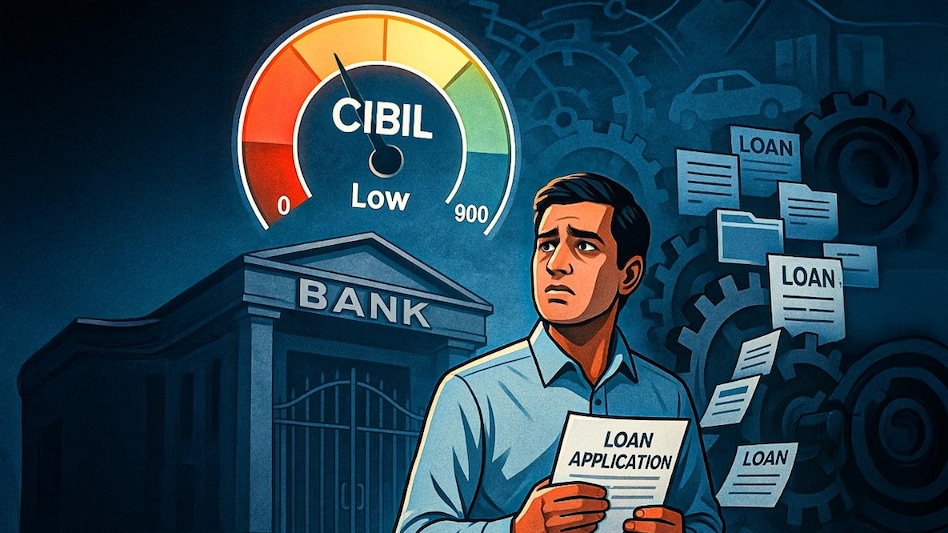
CIBIL score may be just three digits, but it can shape the course of an individual’s financial life — from loan approvals and interest rates to access to credit itself. In India’s rapidly digitising financial ecosystem, this single number often decides whether a dream moves forward or suddenly hits a wall. Against this backdrop, tax and finance expert CA Nitin Kaushik has sparked a debate on who really controls this crucial metric that determines the financial fate of millions.
In a detailed post on X (formally twitter), Kaushik highlighted how deeply the CIBIL score is entrenched in India’s lending landscape — and why its foreign ownership raises questions about financial sovereignty.
Kaushik wrote, “You walk into a bank, apply for a home loan, maybe a car loan… and before they even ask your name properly, they check your CIBIL score. That’s the moment of truth — either your dream moves forward or hits a wall.”
But what concerns him more is what lies behind that number. As he pointed out, India’s most widely used credit score is not owned by an Indian entity — it belongs to TransUnion, a US-based corporation.
“So, technically, an American corporation is analyzing how 140 crore Indians spend, borrow, and repay their loans,” he said, calling it both “ironic” and “risky” for a country that champions digital innovation through platforms like UPI.
Kaushik argued that this dependence is not just a data-privacy concern but a deeper issue of financial independence. Every repayment, delay, or borrowing behaviour becomes part of a digital trail processed and stored by systems outside India’s complete control — what he described as “giving away your financial DNA”.
He urged that the time has come for India to build its own indigenous credit-scoring framework. Kaushik proposed the idea of an “IndiaScore” — a credit system for Bharat, by Bharat, designed, owned, and regulated within India’s borders.
According to him, the country already has the necessary ingredients — technology, talent and a robust fintech ecosystem — to create a transparent, real-time credit infrastructure that aligns with Indian regulations and consumer protection norms.
“Countries like China, Japan, and even Brazil have domestic credit scoring frameworks that are homegrown and tightly regulated. Why not India — the world’s fastest-growing digital economy?” he asked.
Kaushik believes that a homegrown credit bureau would not only strengthen data sovereignty but also enhance trust in the financial system. “When financial sovereignty meets innovation, no dream will depend on someone else’s algorithm. It’ll depend on us,” he concluded.
Industry experts explain how CIBIL functions
1. Regulation: Credit scores are issued by licensed Credit Information Companies (CICs) under the Credit Information Companies (Regulation) Act, 2005 (CICRA), administered by the Reserve Bank of India (RBI). TransUnion CIBIL was the first RBI-licensed credit bureau in India and continues to operate strictly within this regulatory framework
2. Role of CICs: Credit Information Companies act solely as custodians of credit data provided by banks and financial institutions and do not forge, alter, or unilaterally change any data. Our role is limited to collecting, storing, and sharing information in accordance with RBI-mandated processes
3. Data Privacy: TransUnion CIBIL is an Indian company and fully abides by Indian law. All consumer data is stored within India under strict data security and privacy protocols. No financial data of Indian citizens is transferred outside the country
4. Availability of Multiple Domestic Credit Bureaus: India has multiple licensed Credit Information Companies — including TransUnion CIBIL, Experian Credit Information Company of India Private Limited, Equifax Credit Information Services Private Limited, and CRIF High Mark Credit Information Services Private Limited, all operating under the same Indian regulatory environment
CIBIL score may be just three digits, but it can shape the course of an individual’s financial life — from loan approvals and interest rates to access to credit itself. In India’s rapidly digitising financial ecosystem, this single number often decides whether a dream moves forward or suddenly hits a wall. Against this backdrop, tax and finance expert CA Nitin Kaushik has sparked a debate on who really controls this crucial metric that determines the financial fate of millions.
In a detailed post on X (formally twitter), Kaushik highlighted how deeply the CIBIL score is entrenched in India’s lending landscape — and why its foreign ownership raises questions about financial sovereignty.
Kaushik wrote, “You walk into a bank, apply for a home loan, maybe a car loan… and before they even ask your name properly, they check your CIBIL score. That’s the moment of truth — either your dream moves forward or hits a wall.”
But what concerns him more is what lies behind that number. As he pointed out, India’s most widely used credit score is not owned by an Indian entity — it belongs to TransUnion, a US-based corporation.
“So, technically, an American corporation is analyzing how 140 crore Indians spend, borrow, and repay their loans,” he said, calling it both “ironic” and “risky” for a country that champions digital innovation through platforms like UPI.
Kaushik argued that this dependence is not just a data-privacy concern but a deeper issue of financial independence. Every repayment, delay, or borrowing behaviour becomes part of a digital trail processed and stored by systems outside India’s complete control — what he described as “giving away your financial DNA”.
He urged that the time has come for India to build its own indigenous credit-scoring framework. Kaushik proposed the idea of an “IndiaScore” — a credit system for Bharat, by Bharat, designed, owned, and regulated within India’s borders.
According to him, the country already has the necessary ingredients — technology, talent and a robust fintech ecosystem — to create a transparent, real-time credit infrastructure that aligns with Indian regulations and consumer protection norms.
“Countries like China, Japan, and even Brazil have domestic credit scoring frameworks that are homegrown and tightly regulated. Why not India — the world’s fastest-growing digital economy?” he asked.
Kaushik believes that a homegrown credit bureau would not only strengthen data sovereignty but also enhance trust in the financial system. “When financial sovereignty meets innovation, no dream will depend on someone else’s algorithm. It’ll depend on us,” he concluded.
Industry experts explain how CIBIL functions
1. Regulation: Credit scores are issued by licensed Credit Information Companies (CICs) under the Credit Information Companies (Regulation) Act, 2005 (CICRA), administered by the Reserve Bank of India (RBI). TransUnion CIBIL was the first RBI-licensed credit bureau in India and continues to operate strictly within this regulatory framework
2. Role of CICs: Credit Information Companies act solely as custodians of credit data provided by banks and financial institutions and do not forge, alter, or unilaterally change any data. Our role is limited to collecting, storing, and sharing information in accordance with RBI-mandated processes
3. Data Privacy: TransUnion CIBIL is an Indian company and fully abides by Indian law. All consumer data is stored within India under strict data security and privacy protocols. No financial data of Indian citizens is transferred outside the country
4. Availability of Multiple Domestic Credit Bureaus: India has multiple licensed Credit Information Companies — including TransUnion CIBIL, Experian Credit Information Company of India Private Limited, Equifax Credit Information Services Private Limited, and CRIF High Mark Credit Information Services Private Limited, all operating under the same Indian regulatory environment