
Insurance query: Is there a plan to protect my belongings from natural, climatic disasters like rain, floods?
Natural disasters and insurance: Extreme weather events have a significant impact on the economy in two key phases. Initially, there is damage to both human and physical capital. Subsequently, there is a reduction in productivity as resources are diverted towards reconstruction efforts.
- Oct 20, 2024,
- Updated Oct 20, 2024 12:08 PM IST
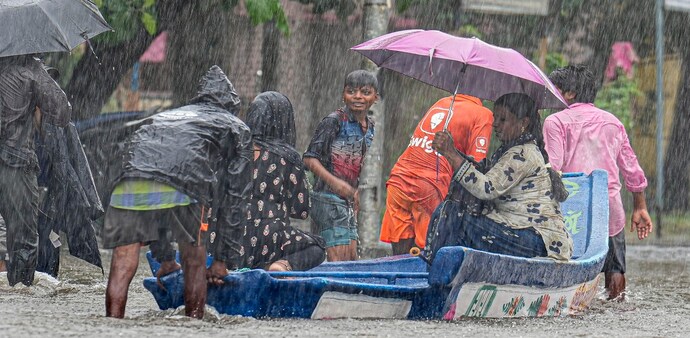
Last week, Chennai and its surrounding districts witnessed heavy to very heavy rainfall as the northeast monsoon season began. The region was placed on high alert due to a developing depression in the Bay of Bengal heading towards the Tamil Nadu coast. The consequential power outages and flight cancellations led to significant disruptions, leaving thousands of residents struggling amidst continuous downpours throughout the week.
This incident serves as a poignant example of the escalating frequency of extreme weather events in India. Over the past decade, the country has observed a surge in natural disasters. Between 2000 and 2019, India ranked third globally in the number of natural disaster occurrences. The outlook appears bleak as projections indicate a rise in both the frequency and intensity of these calamities, resulting in substantial financial losses amounting to billions of US dollars.
A report from the Centre for Science and Environment reveals that in the initial nine months of 2022 alone, India faced weather-related disasters almost every day. This alarming trend underscores the urgent need for robust disaster preparedness and mitigation measures to safeguard lives and infrastructure in the face of increasingly volatile climatic conditions. Between 2019 and 2023, these disasters led to damages worth $56 billion.
Extreme weather events have a significant impact on the economy in two key phases. Initially, there is damage to both human and physical capital. Subsequently, there is a reduction in productivity as resources are diverted towards reconstruction efforts.
One effective way to ensure the timely, targeted, and transparent allocation of funds for reconstruction is through the use of specialized climate insurance. Climate insurance operates by providing financial compensation to insurers in the event of a natural disaster. By transferring funds from one party to compensate for the losses of another, albeit at an additional premium cost, climate insurance can play a crucial role in climate adaptation strategies.
"The frequency and severity of natural disasters like torrential rains and floods are increasing year on year. To safeguard yourself and your financial assets, it is crucial to prioritize insurance coverage. Whether you live in a city or tier-2 or tier-3 towns, incessant rains causing havoc each year have become common in India. Most metropolitan cities are exposed to urban flooding that disrupts daily lives every season. They have the potential to not only damage and destroy homes but also your two- or four-wheeler vehicles. Floods and rain also bring with them various water-borne, vector-borne, and other types of diseases. It is, hence, crucial to have 360-degree protection and take a comprehensive health, motor, and home insurance plan," said Vivek Chaturvedi, CMO and Head of Direct Sales, Go Digit General Insurance.
Insurance cover for home, car
Climatic disasters such as cyclones lead to significant damage to many motor vehicles. Affected vehicles may qualify for coverage under comprehensive motor insurance policies. To ensure enhanced protection, consider adding features like zero depreciation and engine protection. Insurance claims can be filed in cases where vehicles have been swept away while parked or involved in collisions due to floods or other unexpected natural disasters.
"If your car is stuck in a waterlogged area or drowns due to flooding in your area or basementand gets damaged, comprehensive motor insurance can cover the repair costs. Even if your car is swept away and goes missing and is not found, it can be considered total loss, and you may be able to get a claimfor the same up to the Insured Declared Value (IDV). To provide enhanced protection to your vehicle, consider add-ons like Engine and Gearbox Protect Cover, Return to Invoice Cover, Roadside Assistance Cover, Zero Depreciation Cover, and Consumable Cover," Chaturvedi added.
He further said: "Amidst the changing weather and increased risk of waterborne or vector-borne diseases that see a spike when there are floods, taking health insurance is essential. Utilizing the vast network of cashless hospitals would ensure that you receive timely and qualitative care without worrying about any upfront cost."
For home insurance, Chaturvedi said: "Your home is not only a place of comfort but also one of the biggest financial investments you make. Any damage to your property can have severe consequences. Comprehensive Home insurance can protect you against any type of inundation caused due to floods, torrential rains, etc.,and pay for the costs of repairing your home structure as well as the contents of the house. and its contents if they are damaged due to flooding."
Government's stand
During a recent discussion, P K Mishra, the principal secretary to the Prime Minister, expressed concern about the escalating frequency and intensity of disasters. He stressed the pressing need to provide accessible disaster risk insurance to vulnerable communities. Mishra highlighted the importance of public-private partnerships in expanding insurance options and ensuring financial sustainability. For instance, after Cyclone Nilam struck Tamil Nadu in 2010, the insurance industry and the Finance Ministry collaborated to establish a dedicated catastrophe pool to mitigate losses from natural disasters.
In February 2024, the Standing Committee on Finance of the 17th Lok Sabha suggested that the government consider ways to provide insurance for homes and properties, particularly for economically vulnerable groups in disaster-prone areas, through collaboration with Central/State Governments. This initiative aims to reduce the financial burden of rebuilding lives after disasters and offer significant relief to citizens, the government, and the insurance sector. If implemented nationwide, the proposed Insurance for Natural Catastrophes and Pandemics (INCIP) could potentially cost up to Rs 5,000 crore.
In a 2023 report, the State Bank of India noted: “What we need is a public-private solution, say a Disaster Pool, for natural disaster risk involving the insurance sector could offer many benefits over government crisis loans and grants. If we consider the 2020 floods in India, the total economic loss was of $7.5 billion (Rs 52,500 crore) but insurance cover of only 11 per cent.” the SBI report said.
It further noted that besides the loss of human life, natural disasters also lead to significant economic impacts. In India, for instance, there has been a reported economic loss of $150 billion since 1900, with floods accounting for $92.1 billion and storms for $44.7 billion of that total. The frequency and intensity of natural calamities, particularly cyclones, have significantly increased in recent years. Of note, the occurrence of cyclones on the west coast of India, specifically Maharashtra and Gujarat, has seen a notable uptick. Despite this, only 8% of total losses are currently covered by insurance, leaving a protection gap of 93% from 1991 to 2022. It is imperative to take early action to address this gap across all lines of insurance.
Last week, Chennai and its surrounding districts witnessed heavy to very heavy rainfall as the northeast monsoon season began. The region was placed on high alert due to a developing depression in the Bay of Bengal heading towards the Tamil Nadu coast. The consequential power outages and flight cancellations led to significant disruptions, leaving thousands of residents struggling amidst continuous downpours throughout the week.
This incident serves as a poignant example of the escalating frequency of extreme weather events in India. Over the past decade, the country has observed a surge in natural disasters. Between 2000 and 2019, India ranked third globally in the number of natural disaster occurrences. The outlook appears bleak as projections indicate a rise in both the frequency and intensity of these calamities, resulting in substantial financial losses amounting to billions of US dollars.
A report from the Centre for Science and Environment reveals that in the initial nine months of 2022 alone, India faced weather-related disasters almost every day. This alarming trend underscores the urgent need for robust disaster preparedness and mitigation measures to safeguard lives and infrastructure in the face of increasingly volatile climatic conditions. Between 2019 and 2023, these disasters led to damages worth $56 billion.
Extreme weather events have a significant impact on the economy in two key phases. Initially, there is damage to both human and physical capital. Subsequently, there is a reduction in productivity as resources are diverted towards reconstruction efforts.
One effective way to ensure the timely, targeted, and transparent allocation of funds for reconstruction is through the use of specialized climate insurance. Climate insurance operates by providing financial compensation to insurers in the event of a natural disaster. By transferring funds from one party to compensate for the losses of another, albeit at an additional premium cost, climate insurance can play a crucial role in climate adaptation strategies.
"The frequency and severity of natural disasters like torrential rains and floods are increasing year on year. To safeguard yourself and your financial assets, it is crucial to prioritize insurance coverage. Whether you live in a city or tier-2 or tier-3 towns, incessant rains causing havoc each year have become common in India. Most metropolitan cities are exposed to urban flooding that disrupts daily lives every season. They have the potential to not only damage and destroy homes but also your two- or four-wheeler vehicles. Floods and rain also bring with them various water-borne, vector-borne, and other types of diseases. It is, hence, crucial to have 360-degree protection and take a comprehensive health, motor, and home insurance plan," said Vivek Chaturvedi, CMO and Head of Direct Sales, Go Digit General Insurance.
Insurance cover for home, car
Climatic disasters such as cyclones lead to significant damage to many motor vehicles. Affected vehicles may qualify for coverage under comprehensive motor insurance policies. To ensure enhanced protection, consider adding features like zero depreciation and engine protection. Insurance claims can be filed in cases where vehicles have been swept away while parked or involved in collisions due to floods or other unexpected natural disasters.
"If your car is stuck in a waterlogged area or drowns due to flooding in your area or basementand gets damaged, comprehensive motor insurance can cover the repair costs. Even if your car is swept away and goes missing and is not found, it can be considered total loss, and you may be able to get a claimfor the same up to the Insured Declared Value (IDV). To provide enhanced protection to your vehicle, consider add-ons like Engine and Gearbox Protect Cover, Return to Invoice Cover, Roadside Assistance Cover, Zero Depreciation Cover, and Consumable Cover," Chaturvedi added.
He further said: "Amidst the changing weather and increased risk of waterborne or vector-borne diseases that see a spike when there are floods, taking health insurance is essential. Utilizing the vast network of cashless hospitals would ensure that you receive timely and qualitative care without worrying about any upfront cost."
For home insurance, Chaturvedi said: "Your home is not only a place of comfort but also one of the biggest financial investments you make. Any damage to your property can have severe consequences. Comprehensive Home insurance can protect you against any type of inundation caused due to floods, torrential rains, etc.,and pay for the costs of repairing your home structure as well as the contents of the house. and its contents if they are damaged due to flooding."
Government's stand
During a recent discussion, P K Mishra, the principal secretary to the Prime Minister, expressed concern about the escalating frequency and intensity of disasters. He stressed the pressing need to provide accessible disaster risk insurance to vulnerable communities. Mishra highlighted the importance of public-private partnerships in expanding insurance options and ensuring financial sustainability. For instance, after Cyclone Nilam struck Tamil Nadu in 2010, the insurance industry and the Finance Ministry collaborated to establish a dedicated catastrophe pool to mitigate losses from natural disasters.
In February 2024, the Standing Committee on Finance of the 17th Lok Sabha suggested that the government consider ways to provide insurance for homes and properties, particularly for economically vulnerable groups in disaster-prone areas, through collaboration with Central/State Governments. This initiative aims to reduce the financial burden of rebuilding lives after disasters and offer significant relief to citizens, the government, and the insurance sector. If implemented nationwide, the proposed Insurance for Natural Catastrophes and Pandemics (INCIP) could potentially cost up to Rs 5,000 crore.
In a 2023 report, the State Bank of India noted: “What we need is a public-private solution, say a Disaster Pool, for natural disaster risk involving the insurance sector could offer many benefits over government crisis loans and grants. If we consider the 2020 floods in India, the total economic loss was of $7.5 billion (Rs 52,500 crore) but insurance cover of only 11 per cent.” the SBI report said.
It further noted that besides the loss of human life, natural disasters also lead to significant economic impacts. In India, for instance, there has been a reported economic loss of $150 billion since 1900, with floods accounting for $92.1 billion and storms for $44.7 billion of that total. The frequency and intensity of natural calamities, particularly cyclones, have significantly increased in recent years. Of note, the occurrence of cyclones on the west coast of India, specifically Maharashtra and Gujarat, has seen a notable uptick. Despite this, only 8% of total losses are currently covered by insurance, leaving a protection gap of 93% from 1991 to 2022. It is imperative to take early action to address this gap across all lines of insurance.