
From EVs to geopolitics: Why graphite mining is back in focus in the US. How Indians can invest?
India is not just a producer but an emerging exporter in the global graphite market: In 2023, India exported around $24.3 million worth of artificial graphite, with the United States being the largest destination at over $10.1 million — roughly 41% of total exports.
- Dec 26, 2025,
- Updated Dec 26, 2025 2:30 PM IST
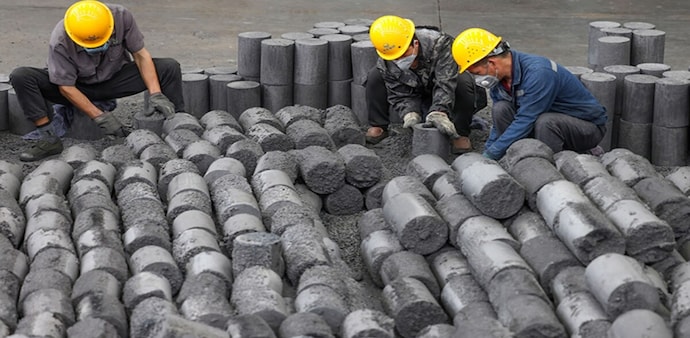
Graphite, a critical mineral essential for electric vehicle (EV) batteries, renewable energy storage and advanced electronics, is back in focus as the United States pushes to reduce its heavy dependence on imports. With global supply chains being reshaped and China’s dominance under scrutiny, graphite mining is emerging as a strategic priority — opening new opportunities for exporters and investors, including those in India.
The renewed interest in graphite is being driven by the rapid expansion of the EV industry. Every lithium-ion battery requires graphite for its anode, and demand is expected to multiply several times by the early 2030s. Rising geopolitical tensions, export restrictions and supply security concerns have prompted Washington to classify graphite as a “critical mineral”.
New projects & government momentum
US companies such as Titan Mining are restarting graphite mining projects, with plans to bring production online by the late 2020s. Federal agencies have designated graphite as a critical mineral, unlocking support for expedited permitting and incentives, according to a report by AP.
Projects span states including New York, Alaska, Alabama, and Montana, marking the first significant push for domestic supply in decades, it added.
Federal financing mechanisms, such as Letters of Interest from the US Export-Import Bank, suggest hundreds of millions in potential funding for integrated supply chain projects (e.g., mining plus advanced graphite material production).
Geopolitical & supply chain
The US push isn’t happening in isolation: trade tensions and tariffs on Chinese graphite imports — running into the 90-plus percent range in anti-dumping duties — are further motivating the US to cut dependence on China’s dominant role in the battery minerals chain.
Washington think tanks and policymakers emphasise securing critical minerals like graphite to support both clean energy industries and national security priorities. Globally, graphite demand is rising sharply due to battery demand, with forecasts pointing to robust growth into the 2030s.
India’s role & Export linkages with the US
India holds commercially viable graphite reserves and already has an established manufacturing base for graphite electrodes and carbon products used in steelmaking, EVs and energy storage. The Indian government has also stepped-up efforts to boost domestic critical mineral production by rationalising royalty structures and encouraging private participation.
India is not just a producer but an emerging exporter in the global graphite market: In 2023, India exported around $24.3 million worth of artificial graphite, with the United States being the largest destination at over $10.1 million — roughly 41% of total exports.
This export performance indicates that the US already depends on Indian graphite to some extent, especially as it diversifies away from Chinese suppliers. In 2025, the US issued an executive order that provides zero-duty access for Indian graphite, subject to trade framework conditions — a potential boost for Indian exporters into the US EV supply chain.
How to invest in graphite from India
If you’re interested in gaining exposure to the graphite sector from India, here are key avenues:
- Indian publicly-listed graphite/Carbon firms: Companies such as HEG Ltd and Graphite India Limited are established players in electrodes and graphite products, with significant export businesses.
- Global graphite & battery material stocks: Indian investors can consider stocks traded internationally that are focused on graphite and related materials. Examples include: Graphite One Inc. — developing integrated graphite mining + advanced battery material projects in the US. Other global miners and battery-material specialists in Canada, Europe, and Australia. (Risk tip: Investing in international equities involves currency risk, geopolitical risk, and sector volatility.)
- ETFs & thematic funds (via global brokers): Some commodity or battery-material ETFs include graphite producers among battery metals holdings. These can provide diversified exposure without picking single stocks.
- Commodities or specialised funds: A few niche funds or structured products track critical minerals and battery metals — including graphite — though liquidity and availability can vary for Indian retail investors.
Investment considerations
Bullish Factors
- Structural demand growth from EVs and renewable energy storage.
- Policy incentives in the US and other countries for local graphite supply.
- Trade advantages for Indian exporters due to tariff concessions and shifting supply chains.
Risks
- Graphite prices can be volatile based on global demand/supply balance.
- Many US mining projects are still in early stages and subject to capital, permitting, and technical risks.
- China remains a dominant force in graphite production and processing.
The Big Picture
Graphite is no longer just an industrial input — it is fast becoming a strategic asset in the global energy transition. As the US rebuilds its domestic supply and looks to trusted partners, India stands to gain as a major exporter. For investors, the graphite story offers a long-term thematic opportunity tied closely to EV growth, geopolitics and supply-chain realignment.
Graphite, a critical mineral essential for electric vehicle (EV) batteries, renewable energy storage and advanced electronics, is back in focus as the United States pushes to reduce its heavy dependence on imports. With global supply chains being reshaped and China’s dominance under scrutiny, graphite mining is emerging as a strategic priority — opening new opportunities for exporters and investors, including those in India.
The renewed interest in graphite is being driven by the rapid expansion of the EV industry. Every lithium-ion battery requires graphite for its anode, and demand is expected to multiply several times by the early 2030s. Rising geopolitical tensions, export restrictions and supply security concerns have prompted Washington to classify graphite as a “critical mineral”.
New projects & government momentum
US companies such as Titan Mining are restarting graphite mining projects, with plans to bring production online by the late 2020s. Federal agencies have designated graphite as a critical mineral, unlocking support for expedited permitting and incentives, according to a report by AP.
Projects span states including New York, Alaska, Alabama, and Montana, marking the first significant push for domestic supply in decades, it added.
Federal financing mechanisms, such as Letters of Interest from the US Export-Import Bank, suggest hundreds of millions in potential funding for integrated supply chain projects (e.g., mining plus advanced graphite material production).
Geopolitical & supply chain
The US push isn’t happening in isolation: trade tensions and tariffs on Chinese graphite imports — running into the 90-plus percent range in anti-dumping duties — are further motivating the US to cut dependence on China’s dominant role in the battery minerals chain.
Washington think tanks and policymakers emphasise securing critical minerals like graphite to support both clean energy industries and national security priorities. Globally, graphite demand is rising sharply due to battery demand, with forecasts pointing to robust growth into the 2030s.
India’s role & Export linkages with the US
India holds commercially viable graphite reserves and already has an established manufacturing base for graphite electrodes and carbon products used in steelmaking, EVs and energy storage. The Indian government has also stepped-up efforts to boost domestic critical mineral production by rationalising royalty structures and encouraging private participation.
India is not just a producer but an emerging exporter in the global graphite market: In 2023, India exported around $24.3 million worth of artificial graphite, with the United States being the largest destination at over $10.1 million — roughly 41% of total exports.
This export performance indicates that the US already depends on Indian graphite to some extent, especially as it diversifies away from Chinese suppliers. In 2025, the US issued an executive order that provides zero-duty access for Indian graphite, subject to trade framework conditions — a potential boost for Indian exporters into the US EV supply chain.
How to invest in graphite from India
If you’re interested in gaining exposure to the graphite sector from India, here are key avenues:
- Indian publicly-listed graphite/Carbon firms: Companies such as HEG Ltd and Graphite India Limited are established players in electrodes and graphite products, with significant export businesses.
- Global graphite & battery material stocks: Indian investors can consider stocks traded internationally that are focused on graphite and related materials. Examples include: Graphite One Inc. — developing integrated graphite mining + advanced battery material projects in the US. Other global miners and battery-material specialists in Canada, Europe, and Australia. (Risk tip: Investing in international equities involves currency risk, geopolitical risk, and sector volatility.)
- ETFs & thematic funds (via global brokers): Some commodity or battery-material ETFs include graphite producers among battery metals holdings. These can provide diversified exposure without picking single stocks.
- Commodities or specialised funds: A few niche funds or structured products track critical minerals and battery metals — including graphite — though liquidity and availability can vary for Indian retail investors.
Investment considerations
Bullish Factors
- Structural demand growth from EVs and renewable energy storage.
- Policy incentives in the US and other countries for local graphite supply.
- Trade advantages for Indian exporters due to tariff concessions and shifting supply chains.
Risks
- Graphite prices can be volatile based on global demand/supply balance.
- Many US mining projects are still in early stages and subject to capital, permitting, and technical risks.
- China remains a dominant force in graphite production and processing.
The Big Picture
Graphite is no longer just an industrial input — it is fast becoming a strategic asset in the global energy transition. As the US rebuilds its domestic supply and looks to trusted partners, India stands to gain as a major exporter. For investors, the graphite story offers a long-term thematic opportunity tied closely to EV growth, geopolitics and supply-chain realignment.