
Gold, silver: Spot gold gains, silver slips - Will US court Trump tariff matter drive metals movement?
On Comex, spot gold climbed to $5,130 per ounce, gaining 2.65% in 24 hours as investors sought safety. The uptick follows heightened volatility after the US Supreme Court struck down Trump-era tariffs and a temporary 10% import duty was imposed.
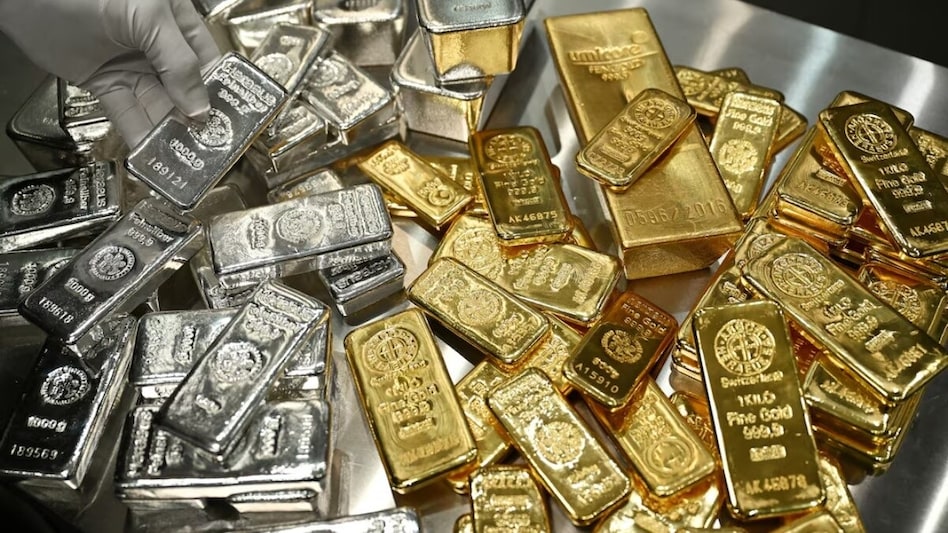
- Feb 21, 2026,
- Updated Feb 21, 2026 4:44 PM IST
Gold prices extended gains on February 21 as investors navigated heightened geopolitical tensions and fresh uncertainty surrounding US trade policy after recent tariff changes. The metal’s safe-haven appeal strengthened even as a firmer US dollar capped the pace of the rally.
On Comex, spot gold was trading at $5,130 per ounce at 4:17 am GMT, up 2.65% in the last 24 hours, reflecting renewed demand for defensive assets. The move comes amid volatility linked to the US Supreme Court ruling on Trump-era tariffs and the subsequent imposition of a temporary 10% across-the-board import duty under Section 122 of the Trade Act.
Domestic Gold
In the physical market, domestic prices saw marginal gains. According to GoodReturns, the price of 24-carat gold rose ₹10, with ten grams trading at ₹1,57,380 on Saturday morning.
Mumbai & Kolkata: ₹1,57,380 per 10 grams
Chennai: ₹1,57,300 per 10 grams
Delhi: ₹1,57,530 per 10 grams
Meanwhile, 22-carat gold increased by ₹10, with ten grams priced at ₹1,44,260.
On the futures side, MCX gold closed Friday’s session at ₹1,56,993 per 10 grams, up 0.07% from the previous close. The Indian Bullion Jewellers Association (IBJA) pegged standard gold (999 purity) at ₹1,55,066 per 10 grams, marking a 0.33% gain. These IBJA rates serve as the benchmark for RBI Sovereign Gold Bond (SGB) valuations.
Silver slips marginally
Silver prices, however, witnessed a slight pullback. The price of one kilogram of silver fell ₹100 to ₹2,69,900 in early trade. Despite the dip, the broader structure remains constructive on technical charts.
On MCX, silver continues to hold above the ₹2,43,000–₹2,45,000 structural demand zone, with prices consolidating near the ₹2,52,000–₹2,55,000 resistance band. Analysts suggest that sustained trade above ₹2,55,000 could open momentum toward ₹2,58,000–₹2,62,000.
Tariff changes add to market uncertainty
The recalibration of US tariffs — replacing reciprocal tariffs with a uniform 10% temporary levy — has added another layer of macro uncertainty. Trade policy shifts often influence currency flows and risk appetite, indirectly impacting bullion demand.
The Augmont Bullion report dated February 20 noted that gold prices advanced as investors gravitated toward safe-haven assets. While geopolitical risks remain supportive, the strength of the US dollar has emerged as the dominant driver in recent sessions.
Dollar strength
January’s softer US inflation data initially supported expectations of multiple rate cuts in 2026. However, robust nonfarm payroll data, steady private hiring, and resilient economic growth have dampened hopes of aggressive monetary easing. This shift has bolstered the dollar, creating headwinds for gold and silver.
Geopolitical developments — including renewed US–Iran nuclear talks and ongoing Russia–Ukraine negotiations — continue to underpin gold’s defensive appeal. Yet, in the current phase, currency dynamics are exerting a stronger influence than geopolitical headlines.
Markets are now awaiting minutes from the Federal Reserve’s January meeting, which could provide clarity on the rate trajectory and set the tone for precious metals.
Technical outlook
Augmont expects gold to consolidate within the $4,650–$5,100 range globally (₹1,47,000–₹1,60,000 domestically) in the near term. A “buy-on-dips and sell-on-rallies” strategy is recommended given prevailing volatility.
Ponmudi R, CEO of Enrich Money, said metals are currently in a phase of controlled consolidation after sharp directional moves. According to him, market internals indicate absorption at higher levels in metals, suggesting structural strength rather than exhaustion.
On MCX, gold continues to trade within a rising channel, rebounding from the ₹1,49,000 demand base and consolidating below the ₹1,55,000 resistance zone. A decisive breakout above ₹1,55,000 could push prices toward ₹1,56,500–₹1,58,000, while downside risk intensifies only below ₹1,49,000.
With US–Iran tensions, evolving trade policy, and Federal Reserve signals in play, volatility is likely to remain elevated. Any diplomatic breakthrough could trigger profit booking, while escalation may propel bullion to fresh highs.
For now, gold holds firm on safe-haven flows, while silver builds a base for potential breakout — both navigating a landscape shaped by geopolitics, currency shifts, and tariff-driven uncertainty.
Gold prices extended gains on February 21 as investors navigated heightened geopolitical tensions and fresh uncertainty surrounding US trade policy after recent tariff changes. The metal’s safe-haven appeal strengthened even as a firmer US dollar capped the pace of the rally.
On Comex, spot gold was trading at $5,130 per ounce at 4:17 am GMT, up 2.65% in the last 24 hours, reflecting renewed demand for defensive assets. The move comes amid volatility linked to the US Supreme Court ruling on Trump-era tariffs and the subsequent imposition of a temporary 10% across-the-board import duty under Section 122 of the Trade Act.
Domestic Gold
In the physical market, domestic prices saw marginal gains. According to GoodReturns, the price of 24-carat gold rose ₹10, with ten grams trading at ₹1,57,380 on Saturday morning.
Mumbai & Kolkata: ₹1,57,380 per 10 grams
Chennai: ₹1,57,300 per 10 grams
Delhi: ₹1,57,530 per 10 grams
Meanwhile, 22-carat gold increased by ₹10, with ten grams priced at ₹1,44,260.
On the futures side, MCX gold closed Friday’s session at ₹1,56,993 per 10 grams, up 0.07% from the previous close. The Indian Bullion Jewellers Association (IBJA) pegged standard gold (999 purity) at ₹1,55,066 per 10 grams, marking a 0.33% gain. These IBJA rates serve as the benchmark for RBI Sovereign Gold Bond (SGB) valuations.
Silver slips marginally
Silver prices, however, witnessed a slight pullback. The price of one kilogram of silver fell ₹100 to ₹2,69,900 in early trade. Despite the dip, the broader structure remains constructive on technical charts.
On MCX, silver continues to hold above the ₹2,43,000–₹2,45,000 structural demand zone, with prices consolidating near the ₹2,52,000–₹2,55,000 resistance band. Analysts suggest that sustained trade above ₹2,55,000 could open momentum toward ₹2,58,000–₹2,62,000.
Tariff changes add to market uncertainty
The recalibration of US tariffs — replacing reciprocal tariffs with a uniform 10% temporary levy — has added another layer of macro uncertainty. Trade policy shifts often influence currency flows and risk appetite, indirectly impacting bullion demand.
The Augmont Bullion report dated February 20 noted that gold prices advanced as investors gravitated toward safe-haven assets. While geopolitical risks remain supportive, the strength of the US dollar has emerged as the dominant driver in recent sessions.
Dollar strength
January’s softer US inflation data initially supported expectations of multiple rate cuts in 2026. However, robust nonfarm payroll data, steady private hiring, and resilient economic growth have dampened hopes of aggressive monetary easing. This shift has bolstered the dollar, creating headwinds for gold and silver.
Geopolitical developments — including renewed US–Iran nuclear talks and ongoing Russia–Ukraine negotiations — continue to underpin gold’s defensive appeal. Yet, in the current phase, currency dynamics are exerting a stronger influence than geopolitical headlines.
Markets are now awaiting minutes from the Federal Reserve’s January meeting, which could provide clarity on the rate trajectory and set the tone for precious metals.
Technical outlook
Augmont expects gold to consolidate within the $4,650–$5,100 range globally (₹1,47,000–₹1,60,000 domestically) in the near term. A “buy-on-dips and sell-on-rallies” strategy is recommended given prevailing volatility.
Ponmudi R, CEO of Enrich Money, said metals are currently in a phase of controlled consolidation after sharp directional moves. According to him, market internals indicate absorption at higher levels in metals, suggesting structural strength rather than exhaustion.
On MCX, gold continues to trade within a rising channel, rebounding from the ₹1,49,000 demand base and consolidating below the ₹1,55,000 resistance zone. A decisive breakout above ₹1,55,000 could push prices toward ₹1,56,500–₹1,58,000, while downside risk intensifies only below ₹1,49,000.
With US–Iran tensions, evolving trade policy, and Federal Reserve signals in play, volatility is likely to remain elevated. Any diplomatic breakthrough could trigger profit booking, while escalation may propel bullion to fresh highs.
For now, gold holds firm on safe-haven flows, while silver builds a base for potential breakout — both navigating a landscape shaped by geopolitics, currency shifts, and tariff-driven uncertainty.