
HDFC's former CEO Keki Mistry rejects 'Rent vs Buy' theory: Here's why he backs homeownership
Former HDFC Ltd Vice Chairman and CEO Keki Mistry has weighed in on the long-running rent-versus-buy debate, firmly backing homeownership over renting. He argues that a house is not just a place to live but a long-term asset that can provide financial security and even serve as a retirement cushion.
- Jul 30, 2026,
- Updated Jul 30, 2026 12:55 PM IST
As home prices continue to soar and the rent-versus-buy debate dominates personal finance discussions, former HDFC Ltd Vice Chairman and CEO Keki Mistry has firmly backed homeownership, arguing that buying a house remains one of the best long-term financial decisions.
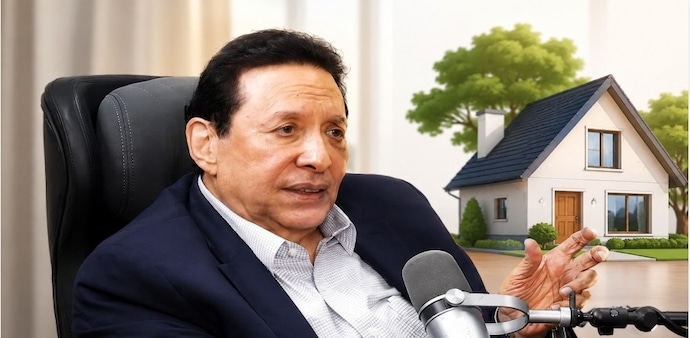
Speaking in a podcast interview, Mistry rejected the increasingly popular argument that renting and investing the savings is a better wealth-creation strategy. Instead, he said owning a home can serve as a valuable retirement asset while also providing financial security over the long term.
"I don't buy that theory. In my opinion, you should buy a house," Mistry said when asked whether renting makes more financial sense than buying.
A home can become a retirement asset
Explaining his rationale, Mistry said homeowners often benefit from long-term appreciation in property values. He cited examples of people who purchased homes in their late 30s or 40s, lived in them through their working years and monetised the asset after retirement.
"The property prices would have appreciated a lot. They would sell off that house and move to a distant city or another location where prices are lower, and invest the difference. That would be like a pension that they receive every month," he said.
According to Mistry, purchasing a house is essentially a long-term savings decision that can generate financial benefits later in life.
"It's a savings that you make one time but it'll give you benefit in the long term," he added.
MUST READ: New Tax Regime is changing how Indians think about home loans: Here's why
His own approach was different
Interestingly, despite spending more than four decades building India's largest mortgage lender, Mistry revealed that he never took a home loan himself.
"As a principle in life I never borrowed. I've never in my life borrowed money," he said, stressing that it was a personal philosophy rather than investment advice.
Instead, he waited until he had accumulated enough savings before purchasing a house.
"I bought my first house when I was probably 45 plus... only when I was able to buy a house from my own money, not by taking a loan from anywhere, not even from HDFC," he said.
MUST READ: Home loan PSL limit should be raised to ₹1 crore in metros, education loan cap to ₹50 lakh: Report
Housing demand has a long runway
Mistry's comments also reflect his broader optimism on India's housing market. He noted that the average age of a first-time homebuyer in India is around 37-38 years, while nearly two-thirds of the country's population is below the age of 35. As this younger population enters its peak earning years, demand for housing is likely to remain structurally strong for decades.
He also pointed out that India's mortgage penetration is only about 12% of GDP, far below levels seen in developed economies, indicating significant room for expansion in the housing finance market.
MUST READ: EPFO rules 2026: Before buying a flat or repaying a home loan, read these PF withdrawal norms
While the rent-versus-buy debate ultimately depends on an individual's finances, career mobility and investment goals, Mistry's view is clear: for those planning to stay invested for the long term, a home is more than just a place to live—it is an asset that can create wealth and provide financial security well into retirement.
As home prices continue to soar and the rent-versus-buy debate dominates personal finance discussions, former HDFC Ltd Vice Chairman and CEO Keki Mistry has firmly backed homeownership, arguing that buying a house remains one of the best long-term financial decisions.
Speaking in a podcast interview, Mistry rejected the increasingly popular argument that renting and investing the savings is a better wealth-creation strategy. Instead, he said owning a home can serve as a valuable retirement asset while also providing financial security over the long term.
"I don't buy that theory. In my opinion, you should buy a house," Mistry said when asked whether renting makes more financial sense than buying.
A home can become a retirement asset
Explaining his rationale, Mistry said homeowners often benefit from long-term appreciation in property values. He cited examples of people who purchased homes in their late 30s or 40s, lived in them through their working years and monetised the asset after retirement.
"The property prices would have appreciated a lot. They would sell off that house and move to a distant city or another location where prices are lower, and invest the difference. That would be like a pension that they receive every month," he said.
According to Mistry, purchasing a house is essentially a long-term savings decision that can generate financial benefits later in life.
"It's a savings that you make one time but it'll give you benefit in the long term," he added.
MUST READ: New Tax Regime is changing how Indians think about home loans: Here's why
His own approach was different
Interestingly, despite spending more than four decades building India's largest mortgage lender, Mistry revealed that he never took a home loan himself.
"As a principle in life I never borrowed. I've never in my life borrowed money," he said, stressing that it was a personal philosophy rather than investment advice.
Instead, he waited until he had accumulated enough savings before purchasing a house.
"I bought my first house when I was probably 45 plus... only when I was able to buy a house from my own money, not by taking a loan from anywhere, not even from HDFC," he said.
MUST READ: Home loan PSL limit should be raised to ₹1 crore in metros, education loan cap to ₹50 lakh: Report
Housing demand has a long runway
Mistry's comments also reflect his broader optimism on India's housing market. He noted that the average age of a first-time homebuyer in India is around 37-38 years, while nearly two-thirds of the country's population is below the age of 35. As this younger population enters its peak earning years, demand for housing is likely to remain structurally strong for decades.
He also pointed out that India's mortgage penetration is only about 12% of GDP, far below levels seen in developed economies, indicating significant room for expansion in the housing finance market.
MUST READ: EPFO rules 2026: Before buying a flat or repaying a home loan, read these PF withdrawal norms
While the rent-versus-buy debate ultimately depends on an individual's finances, career mobility and investment goals, Mistry's view is clear: for those planning to stay invested for the long term, a home is more than just a place to live—it is an asset that can create wealth and provide financial security well into retirement.