
Hedge to core asset: Gold’s record rally reshapes portfolios in 2025 — how investors can play it in 2026
Gold prices are up about 70% so far this year, while silver has surged more than 150%, marking their strongest annual gains in decades. Despite the strong momentum, market participants urge caution at elevated levels. Buying gold at record highs carries risks, and experts advise against aggressive lump-sum purchases.
- Dec 26, 2025,
- Updated Dec 26, 2025 2:59 PM IST
Gold’s role in the global financial system is being redefined in 2025. Once seen largely as a defensive hedge, the metal has emerged as one of the year’s strongest performers, alongside silver, with both trading at record highs. The rally reflects more than short-term fear. It signals deeper concerns around currency stability, rising debt and the resilience of the global economic order.
Gold prices are up about 70% so far this year, while silver has surged more than 150%, marking their strongest annual gains in decades. Escalating geopolitical risks, including tensions involving the US and Venezuela, have reinforced safe-haven demand. At the same time, a weaker US dollar and expectations of future interest-rate cuts have increased the appeal of non-yielding assets such as gold.
How to invest in gold amid a record rally
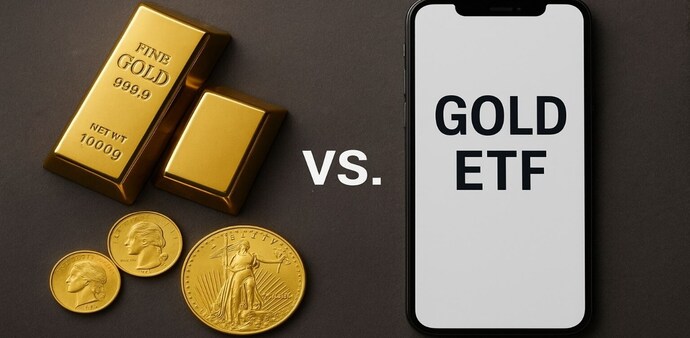
Physical gold
Physical gold retains a unique appeal because it is tangible and culturally significant, particularly in India, where jewellery plays an important role during weddings and festivals. For many households, this emotional connection and sense of permanence remain key reasons to hold physical gold.
However, physical ownership comes with costs. Making charges, purity concerns, and expenses related to storage or insurance add to the overall price. When selling, deductions for purity checks, design depreciation and jewellers’ margins can reduce the realised value. These factors can significantly impact smaller purchases, unless one opts for high-purity coins or bars.
For larger investments—typically ₹2–3 lakh or more—physical gold may become relatively more cost-efficient than digital platforms that levy custody fees and wider spreads. The actual cost advantage depends on holding period, platform efficiency and the investor’s objective.
Physical gold is commonly held as bars or bullion (investment-focused, usually 24 karat), coins (liquid and flexible), and jewellery, which remains the most popular but is less efficient from an investment perspective due to making charges and lower purity.
Digital gold
Digital gold allows investors to buy gold online without worrying about storage or insurance, often starting with investments as low as Rs 10. The gold is backed by physical reserves stored in vaults by providers such as MMTC PAMP, Augmont and SafeGold. The model appeals for its convenience, liquidity and accessibility.
However, Sebi has cautioned that digital gold is not regulated under existing securities or commodity frameworks, exposing investors to counterparty and operational risks. Despite this, interest has surged in 2025. World Gold Council estimates show Indian investors bought around 12 tonnes of digital gold between January and November, nearly 50% higher than last year, valued at about Rs 16,670 crore at current prices. Younger investors are driving much of this demand.
To address regulatory gaps, the India Bullion & Jewellers Association is working on a self-regulatory framework for the sector.
Gold ETFs and gold funds
Physically backed gold exchange-traded funds (ETFs) offer a simple, transparent way to gain exposure to gold prices without owning the metal. ETFs track domestic gold prices, avoid storage and purity issues, and allow real-time trading on stock exchanges, with investments starting from one unit.
Gold funds, or ETF funds of funds (FoFs), invest in gold ETFs but are priced at end-of-day NAVs. They allow SIPs, often starting at ₹500, and do not require a demat account, making them accessible to a wider base. ETFs involve brokerage and demat charges, while FoFs may levy exit loads.
In 2025, performance has been strong. Gold funds have delivered average returns of about 65%, led by Quantum Gold Saving Fund, while gold ETFs have slightly outperformed at around 66%, with UTI Gold ETF and Tata Gold ETF among the top performers.
Sovereign Gold Bonds
Sovereign Gold Bonds (SGBs), issued by the RBI on behalf of the government, provide gold exposure without physical ownership. Denominated in grams of gold, they are redeemed in cash at prevailing prices and carry sovereign backing.
SGBs eliminate storage and purity concerns and offer an added advantage: a fixed interest payout over and above price appreciation. With capital gains at maturity exempt from tax for individuals, SGBs remain among the most cost-efficient options for long-term investors seeking stable exposure to gold.
Should you invest in gold now?
Despite the strong momentum, market participants urge caution at elevated levels. Buying gold at record highs carries risks, and experts advise against aggressive lump-sum purchases. Instead, they recommend using gold as a portfolio diversifier and adopting staggered buying during price dips. While the broader trend for gold and silver remains bullish, near-term volatility and consolidation cannot be ruled out after sharp gains.
Rahul Kalantri said precious metals are benefiting from safe-haven demand amid geopolitical tensions and expectations of multiple US rate cuts, supported by central-bank buying and ETF inflows. Kunal Shah of Nirmal Bang Securities noted the rally reflects deeper fears over rising debt and instability in global bond markets. Dr Renisha Chainani of Augmont added that gold is increasingly seen as a long-term portfolio allocation, not just a crisis hedge.
Gold’s role in the global financial system is being redefined in 2025. Once seen largely as a defensive hedge, the metal has emerged as one of the year’s strongest performers, alongside silver, with both trading at record highs. The rally reflects more than short-term fear. It signals deeper concerns around currency stability, rising debt and the resilience of the global economic order.
Gold prices are up about 70% so far this year, while silver has surged more than 150%, marking their strongest annual gains in decades. Escalating geopolitical risks, including tensions involving the US and Venezuela, have reinforced safe-haven demand. At the same time, a weaker US dollar and expectations of future interest-rate cuts have increased the appeal of non-yielding assets such as gold.
How to invest in gold amid a record rally
Physical gold
Physical gold retains a unique appeal because it is tangible and culturally significant, particularly in India, where jewellery plays an important role during weddings and festivals. For many households, this emotional connection and sense of permanence remain key reasons to hold physical gold.
However, physical ownership comes with costs. Making charges, purity concerns, and expenses related to storage or insurance add to the overall price. When selling, deductions for purity checks, design depreciation and jewellers’ margins can reduce the realised value. These factors can significantly impact smaller purchases, unless one opts for high-purity coins or bars.
For larger investments—typically ₹2–3 lakh or more—physical gold may become relatively more cost-efficient than digital platforms that levy custody fees and wider spreads. The actual cost advantage depends on holding period, platform efficiency and the investor’s objective.
Physical gold is commonly held as bars or bullion (investment-focused, usually 24 karat), coins (liquid and flexible), and jewellery, which remains the most popular but is less efficient from an investment perspective due to making charges and lower purity.
Digital gold
Digital gold allows investors to buy gold online without worrying about storage or insurance, often starting with investments as low as Rs 10. The gold is backed by physical reserves stored in vaults by providers such as MMTC PAMP, Augmont and SafeGold. The model appeals for its convenience, liquidity and accessibility.
However, Sebi has cautioned that digital gold is not regulated under existing securities or commodity frameworks, exposing investors to counterparty and operational risks. Despite this, interest has surged in 2025. World Gold Council estimates show Indian investors bought around 12 tonnes of digital gold between January and November, nearly 50% higher than last year, valued at about Rs 16,670 crore at current prices. Younger investors are driving much of this demand.
To address regulatory gaps, the India Bullion & Jewellers Association is working on a self-regulatory framework for the sector.
Gold ETFs and gold funds
Physically backed gold exchange-traded funds (ETFs) offer a simple, transparent way to gain exposure to gold prices without owning the metal. ETFs track domestic gold prices, avoid storage and purity issues, and allow real-time trading on stock exchanges, with investments starting from one unit.
Gold funds, or ETF funds of funds (FoFs), invest in gold ETFs but are priced at end-of-day NAVs. They allow SIPs, often starting at ₹500, and do not require a demat account, making them accessible to a wider base. ETFs involve brokerage and demat charges, while FoFs may levy exit loads.
In 2025, performance has been strong. Gold funds have delivered average returns of about 65%, led by Quantum Gold Saving Fund, while gold ETFs have slightly outperformed at around 66%, with UTI Gold ETF and Tata Gold ETF among the top performers.
Sovereign Gold Bonds
Sovereign Gold Bonds (SGBs), issued by the RBI on behalf of the government, provide gold exposure without physical ownership. Denominated in grams of gold, they are redeemed in cash at prevailing prices and carry sovereign backing.
SGBs eliminate storage and purity concerns and offer an added advantage: a fixed interest payout over and above price appreciation. With capital gains at maturity exempt from tax for individuals, SGBs remain among the most cost-efficient options for long-term investors seeking stable exposure to gold.
Should you invest in gold now?
Despite the strong momentum, market participants urge caution at elevated levels. Buying gold at record highs carries risks, and experts advise against aggressive lump-sum purchases. Instead, they recommend using gold as a portfolio diversifier and adopting staggered buying during price dips. While the broader trend for gold and silver remains bullish, near-term volatility and consolidation cannot be ruled out after sharp gains.
Rahul Kalantri said precious metals are benefiting from safe-haven demand amid geopolitical tensions and expectations of multiple US rate cuts, supported by central-bank buying and ETF inflows. Kunal Shah of Nirmal Bang Securities noted the rally reflects deeper fears over rising debt and instability in global bond markets. Dr Renisha Chainani of Augmont added that gold is increasingly seen as a long-term portfolio allocation, not just a crisis hedge.