
'I will get trolled for saying this...': Edelweiss MF's Radhika Gupta challenges the active vs passive funds mindset
Gupta emphasized that since passive investing is a newer and evolving category, more attention should be paid to factors such as index construction, methodology, valuations, and market cap exposure.
- Sep 25, 2024,
- Updated Sep 25, 2024 9:30 AM IST
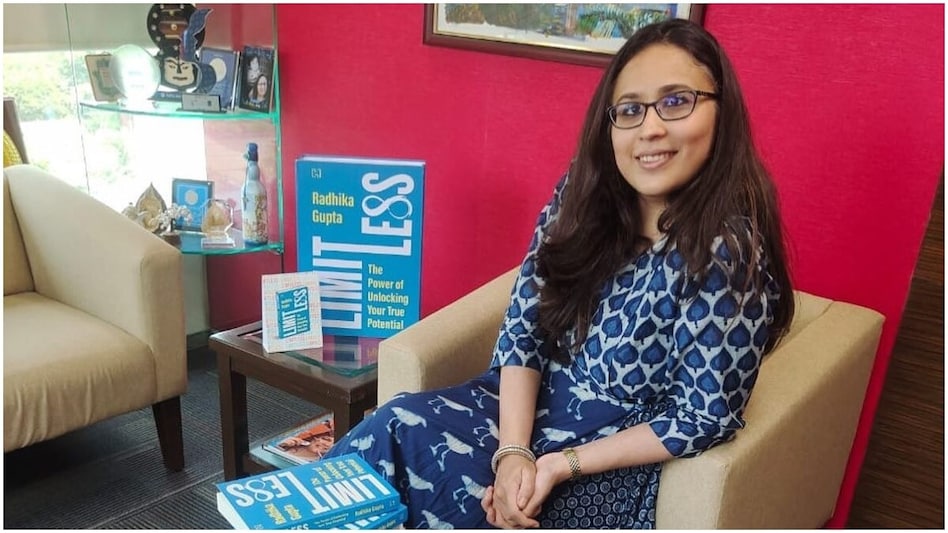
Radhika Gupta, CEO of Edelweiss Mutual Fund, urged investors to look beyond the traditional categories of active and passive funds and focus on evaluating each fund individually, based on its merits.
"We need to move beyond the buckets of active vs. passive and start understanding funds for what they are — good or bad," she wrote in a post on X, highlighting that there are brilliant and terrible funds in both categories.
However, Gupta emphasized that since passive investing is a newer and evolving category, more attention should be paid to factors such as index construction, methodology, valuations, and market cap exposure. "It isn't as simple as buying an index fund based on the last 1 or 3 years of returns," she added.
Gupta has a unique approach to portfolio management, which she likens to an Indian ‘dal chawal thaali,’ where 80% of an investor’s portfolio should be allocated to stable funds and 20% to more thematic, experimental ones. Gupta, in an Economic Times interview, elaborated on this analogy, explaining that much like how a simple diet of ‘dal chawal’ (rice and lentils) forms the foundation of a balanced meal, stable investment options like multi-caps, flexicap, hybrid, balanced advantage, and index funds should be the core of any investment strategy.
The remaining 20% can be allocated to more adventurous investments, akin to adding 'pickle and papad' to the meal.
Gupta acknowledged that as India's capital markets evolve, many young investors and high-net-worth individuals (HNIs) are drawn to more complex, high-risk investment products, much like the allure of trying new cuisines like sushi.
She noted, "Many young people and HNIs believe that now that they are wealthy, they no longer need to eat 'dal chawal' and will instead opt for sushi. But eventually, they realize that it’s hard to digest, and they go back to what they grew up eating."
Gupta emphasized that just as dietitians recommend sticking to simple, home-cooked meals for overall health, investors should build their portfolios around stable, well-balanced funds to ensure long-term financial stability.
She further explained that a balanced approach of 80-20 — with the bulk of investments in stable funds and a smaller portion in riskier, thematic funds — allows for both financial security and some room for growth.
"If you tell a young person to never go out to a restaurant or order from a food delivery platform, they will resist. But an 80-20 balance is a good approach — 80% home food, 20% experimentation. This keeps life interesting while valuing stability."
Track live Budget updates, breaking news, expert opinions and in-depth analysis only on BusinessToday.in
Radhika Gupta, CEO of Edelweiss Mutual Fund, urged investors to look beyond the traditional categories of active and passive funds and focus on evaluating each fund individually, based on its merits.
"We need to move beyond the buckets of active vs. passive and start understanding funds for what they are — good or bad," she wrote in a post on X, highlighting that there are brilliant and terrible funds in both categories.
However, Gupta emphasized that since passive investing is a newer and evolving category, more attention should be paid to factors such as index construction, methodology, valuations, and market cap exposure. "It isn't as simple as buying an index fund based on the last 1 or 3 years of returns," she added.
Gupta has a unique approach to portfolio management, which she likens to an Indian ‘dal chawal thaali,’ where 80% of an investor’s portfolio should be allocated to stable funds and 20% to more thematic, experimental ones. Gupta, in an Economic Times interview, elaborated on this analogy, explaining that much like how a simple diet of ‘dal chawal’ (rice and lentils) forms the foundation of a balanced meal, stable investment options like multi-caps, flexicap, hybrid, balanced advantage, and index funds should be the core of any investment strategy.
The remaining 20% can be allocated to more adventurous investments, akin to adding 'pickle and papad' to the meal.
Gupta acknowledged that as India's capital markets evolve, many young investors and high-net-worth individuals (HNIs) are drawn to more complex, high-risk investment products, much like the allure of trying new cuisines like sushi.
She noted, "Many young people and HNIs believe that now that they are wealthy, they no longer need to eat 'dal chawal' and will instead opt for sushi. But eventually, they realize that it’s hard to digest, and they go back to what they grew up eating."
Gupta emphasized that just as dietitians recommend sticking to simple, home-cooked meals for overall health, investors should build their portfolios around stable, well-balanced funds to ensure long-term financial stability.
She further explained that a balanced approach of 80-20 — with the bulk of investments in stable funds and a smaller portion in riskier, thematic funds — allows for both financial security and some room for growth.
"If you tell a young person to never go out to a restaurant or order from a food delivery platform, they will resist. But an 80-20 balance is a good approach — 80% home food, 20% experimentation. This keeps life interesting while valuing stability."
Track live Budget updates, breaking news, expert opinions and in-depth analysis only on BusinessToday.in