
'Not a guaranteed win': Soha Ali Khan schools investors on IPO reality amid Lenskart stock debut frenzy
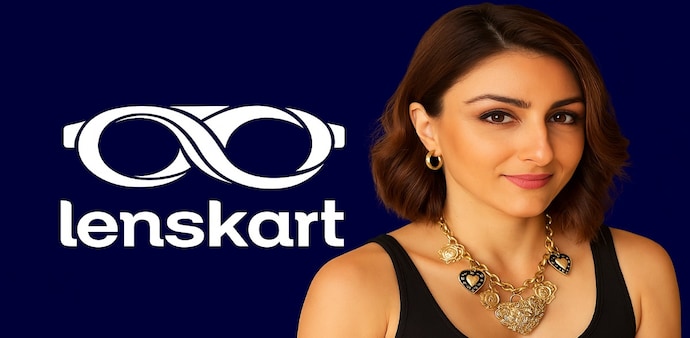
Bollywood actor and author Soha Ali Khan has turned her spotlight to financial literacy, dissecting the hype around Lenskart’s Rs 7,278 crore IPO with sharp investor insights. Drawing on her London School of Economics background, she broke down IPO basics and risks for everyday investors. Her candid reminder — “it’s not a guaranteed win” — struck a chord amid India’s latest IPO mania.
- Nov 5, 2025,
- Updated Nov 5, 2025 4:28 PM IST
Bollywood actor Soha Ali Khan has brought renewed focus to financial literacy as she engaged with the subject of Lenskart's Rs 7,278 crore IPO, which opened on 31 October and closed on 4 November. The eyewear retailer's public issue has captured widespread interest, underlining the strength of the brand and the complexities of investing in high-profile IPOs. Khan, a London School of Economics graduate, shared her insights on social media and through her podcast, providing guidance to both new and seasoned investors amid the IPO frenzy.
The Lenskart IPO saw overall subscription of 28.27 times, according to exchange data. Retail investors subscribed 7.56 times, qualified institutional buyers 40.36 times, and non-institutional investors 18.23 times. This demand reflects the brand's strong position in India's expanding eyewear market. However, experts have warned that heavy oversubscription can signal short-term enthusiasm rather than long-term conviction in the company's fundamentals.
Soha Ali Khan addressed her audience about the risks and expectations surrounding the IPO. She emphasised caution, stating, "The IPO is expensive compared to the current profits. Some of the money is going to the existing investors who are looking to cash out. Like any investment, it is not a guaranteed win. Is it good or bad? That really depends on you. If you believe in the brand long term, then great. But if you're hoping to get rich by next Friday, then maybe have another think."
During her financial literacy campaign, Khan explained the basics of IPO participation: "An IPO or initial public offering is when a private company sells its shares to the public for the first time. Basically, it's saying, 'Hey, now you can own a tiny piece of our company.' In the case of this company, you can buy a share and not just their glasses." By simplifying market terminology, Khan aimed to encourage a broader understanding of investment opportunities, especially for women.
Discussing the appeal of Lenskart's offer, Khan stated, "It is backed by investors, but what's good about it?" She added, "It's a strong brand, it's a growing business, and it's a chance to be an early part of a well-known Indian company's story." These comments highlight both the attraction of a recognised brand and the importance of informed decision-making when approaching equity offerings.
Market activity around the IPO points to shifting sentiment. The grey market premium (GMP), regarded as an early indicator of listing performance, fell sharply ahead of Lenskart's stock market debut. The last reported GMP on 5 November stood at Rs 42, indicating a potential listing gain of 10.45% over the issue price, but also reflecting waning investor enthusiasm amid market volatility and valuation concerns.
Industry analysts echoed concerns about the sustainability of the demand observed during the subscription phase. Gaurav Garg, Research Analyst at Lemonn Markets Desk, commented, "The IPO saw an overwhelming rush from investors across the board. That said, while the numbers look stellar on paper, such heavy oversubscription often reflects short-term market excitement rather than deep conviction in the company's fundamentals."
Lenskart Solutions' IPO comprised a fresh issue of Rs 2,150 crore and an offer for sale of Rs 5,128.02 crore by existing shareholders. The price band was set at Rs 382 to Rs 402 per share, with a minimum investment of Rs 14,874 for retail investors at the upper band. The company is set to finalise share allotment on 6 November and expects to debut on both the BSE and NSE on 10 November. Founded in 2008, Lenskart operates through online and offline channels in India and abroad, offering a wide range of eyewear products and accessories.
Bollywood actor Soha Ali Khan has brought renewed focus to financial literacy as she engaged with the subject of Lenskart's Rs 7,278 crore IPO, which opened on 31 October and closed on 4 November. The eyewear retailer's public issue has captured widespread interest, underlining the strength of the brand and the complexities of investing in high-profile IPOs. Khan, a London School of Economics graduate, shared her insights on social media and through her podcast, providing guidance to both new and seasoned investors amid the IPO frenzy.
The Lenskart IPO saw overall subscription of 28.27 times, according to exchange data. Retail investors subscribed 7.56 times, qualified institutional buyers 40.36 times, and non-institutional investors 18.23 times. This demand reflects the brand's strong position in India's expanding eyewear market. However, experts have warned that heavy oversubscription can signal short-term enthusiasm rather than long-term conviction in the company's fundamentals.
Soha Ali Khan addressed her audience about the risks and expectations surrounding the IPO. She emphasised caution, stating, "The IPO is expensive compared to the current profits. Some of the money is going to the existing investors who are looking to cash out. Like any investment, it is not a guaranteed win. Is it good or bad? That really depends on you. If you believe in the brand long term, then great. But if you're hoping to get rich by next Friday, then maybe have another think."
During her financial literacy campaign, Khan explained the basics of IPO participation: "An IPO or initial public offering is when a private company sells its shares to the public for the first time. Basically, it's saying, 'Hey, now you can own a tiny piece of our company.' In the case of this company, you can buy a share and not just their glasses." By simplifying market terminology, Khan aimed to encourage a broader understanding of investment opportunities, especially for women.
Discussing the appeal of Lenskart's offer, Khan stated, "It is backed by investors, but what's good about it?" She added, "It's a strong brand, it's a growing business, and it's a chance to be an early part of a well-known Indian company's story." These comments highlight both the attraction of a recognised brand and the importance of informed decision-making when approaching equity offerings.
Market activity around the IPO points to shifting sentiment. The grey market premium (GMP), regarded as an early indicator of listing performance, fell sharply ahead of Lenskart's stock market debut. The last reported GMP on 5 November stood at Rs 42, indicating a potential listing gain of 10.45% over the issue price, but also reflecting waning investor enthusiasm amid market volatility and valuation concerns.
Industry analysts echoed concerns about the sustainability of the demand observed during the subscription phase. Gaurav Garg, Research Analyst at Lemonn Markets Desk, commented, "The IPO saw an overwhelming rush from investors across the board. That said, while the numbers look stellar on paper, such heavy oversubscription often reflects short-term market excitement rather than deep conviction in the company's fundamentals."
Lenskart Solutions' IPO comprised a fresh issue of Rs 2,150 crore and an offer for sale of Rs 5,128.02 crore by existing shareholders. The price band was set at Rs 382 to Rs 402 per share, with a minimum investment of Rs 14,874 for retail investors at the upper band. The company is set to finalise share allotment on 6 November and expects to debut on both the BSE and NSE on 10 November. Founded in 2008, Lenskart operates through online and offline channels in India and abroad, offering a wide range of eyewear products and accessories.