
Silent silver squeeze: How India’s renewable energy drive is tightening global supplies
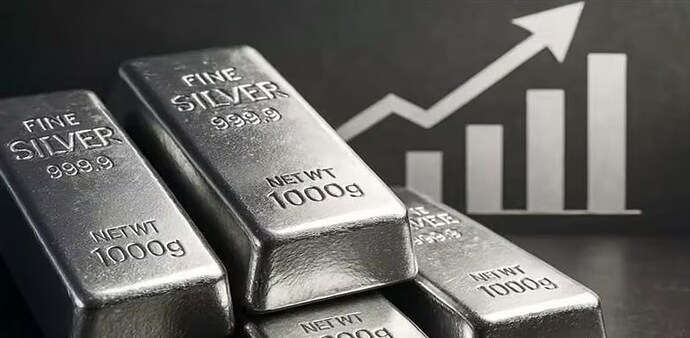
In 2025, India imported more than 5,000 tonnes of silver, a figure that amounts to nearly 20% of global annual mine production. Market participants say this scale of buying is not typical trading activity.
- Jan 19, 2026,
- Updated Jan 19, 2026 9:08 PM IST
While global markets remain fixated on China’s gold accumulation and central banks’ bullion strategies, a far quieter shift is unfolding in India — one that could have far-reaching implications for the silver market.
Chartered accountant and market commentator Nitin Kaushik highlighted the trend in a recent post on X (formally twitter), noting that silver is “disappearing” from global markets means that have little to do with speculation or headline-grabbing trades. Instead, the metal is being steadily absorbed through structural demand, driven by India’s expanding industrial base — particularly its solar ambitions.
In 2025, India imported more than 5,000 tonnes of silver, a figure that amounts to nearly 20% of global annual mine production. Market participants say this scale of buying is not typical trading activity. Rather, it represents physical metal moving into long-term use, fundamentally altering supply-demand dynamics.
“When a single country absorbs supply at this magnitude, it’s not about short-term price bets,” Kaushik noted. “It’s structural.”
Unlike previous cycles where silver demand was dominated by jewellery, coins, or seasonal buying, the current trend is being powered by industry. India’s push to become a global solar manufacturing hub has quietly transformed silver from a precious metal into an industrial input of strategic importance.
Large-scale solar manufacturing facilities — particularly concentrated in western India — consume silver paste daily for photovoltaic panels. Each new production line and every expansion in capacity increases silver usage, embedding the metal deeper into India’s energy transition.
Crucially, India does not mine silver in any meaningful quantity. This leaves the country almost entirely dependent on imports to meet rising demand. As New Delhi accelerates its renewable energy targets, silver imports are set to move in tandem, regardless of price fluctuations.
Globally, the picture is similar. Solar energy alone now consumes hundreds of millions of ounces of silver annually, according to industry estimates. Unlike investment demand, which can retreat when prices rise or sentiment shifts, industrial demand is far less elastic. Solar manufacturers continue to buy silver even during price spikes, as it remains a critical component with limited substitutes at scale.
This dynamic is beginning to reshape market perceptions of silver. Long viewed as a volatile cousin of gold — prone to speculative swings — silver is increasingly being priced as an industrial metal with constrained supply and persistent demand.
Analysts say the implications could be significant. With mine output growing only marginally and recycling unable to fill the gap, sustained import demand from India could tighten global inventories over time. Unlike gold, much of the silver used in solar panels is not easily recoverable, effectively removing supply from circulation for decades.
The shift has largely gone unnoticed outside specialist circles, overshadowed by geopolitical headlines and gold-centric narratives. Yet market watchers caution that ignoring these “quiet” trends could prove costly.
While global markets remain fixated on China’s gold accumulation and central banks’ bullion strategies, a far quieter shift is unfolding in India — one that could have far-reaching implications for the silver market.
Chartered accountant and market commentator Nitin Kaushik highlighted the trend in a recent post on X (formally twitter), noting that silver is “disappearing” from global markets means that have little to do with speculation or headline-grabbing trades. Instead, the metal is being steadily absorbed through structural demand, driven by India’s expanding industrial base — particularly its solar ambitions.
In 2025, India imported more than 5,000 tonnes of silver, a figure that amounts to nearly 20% of global annual mine production. Market participants say this scale of buying is not typical trading activity. Rather, it represents physical metal moving into long-term use, fundamentally altering supply-demand dynamics.
“When a single country absorbs supply at this magnitude, it’s not about short-term price bets,” Kaushik noted. “It’s structural.”
Unlike previous cycles where silver demand was dominated by jewellery, coins, or seasonal buying, the current trend is being powered by industry. India’s push to become a global solar manufacturing hub has quietly transformed silver from a precious metal into an industrial input of strategic importance.
Large-scale solar manufacturing facilities — particularly concentrated in western India — consume silver paste daily for photovoltaic panels. Each new production line and every expansion in capacity increases silver usage, embedding the metal deeper into India’s energy transition.
Crucially, India does not mine silver in any meaningful quantity. This leaves the country almost entirely dependent on imports to meet rising demand. As New Delhi accelerates its renewable energy targets, silver imports are set to move in tandem, regardless of price fluctuations.
Globally, the picture is similar. Solar energy alone now consumes hundreds of millions of ounces of silver annually, according to industry estimates. Unlike investment demand, which can retreat when prices rise or sentiment shifts, industrial demand is far less elastic. Solar manufacturers continue to buy silver even during price spikes, as it remains a critical component with limited substitutes at scale.
This dynamic is beginning to reshape market perceptions of silver. Long viewed as a volatile cousin of gold — prone to speculative swings — silver is increasingly being priced as an industrial metal with constrained supply and persistent demand.
Analysts say the implications could be significant. With mine output growing only marginally and recycling unable to fill the gap, sustained import demand from India could tighten global inventories over time. Unlike gold, much of the silver used in solar panels is not easily recoverable, effectively removing supply from circulation for decades.
The shift has largely gone unnoticed outside specialist circles, overshadowed by geopolitical headlines and gold-centric narratives. Yet market watchers caution that ignoring these “quiet” trends could prove costly.