
Silver sinks below Rs 3.5 lakh, gold drops Rs 11,000 as bullion rally cracks after record highs
Silver sinks below Rs 3.5 lakh, gold drops Rs 11,000 as bullion rally cracks after record highs
Gold and silver prices have suffered a sharp correction after scaling record highs, triggering renewed volatility across precious metals. Analysts say the sell-off reflects stretched valuations in silver, even as long-term fundamentals remain intact.
Business Today Desk
- Jan 30, 2026,
- Updated Jan 30, 2026 9:37 PM IST
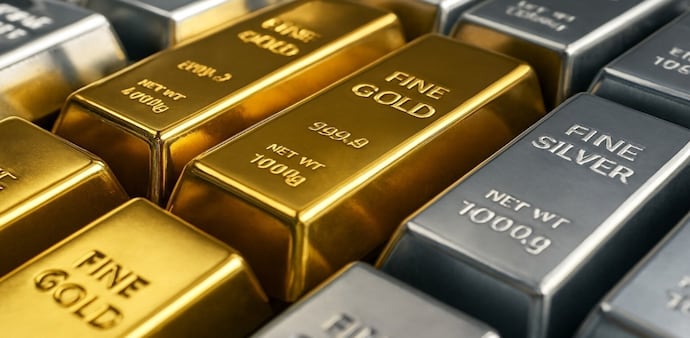
Gold and silver prices suffered one of their sharpest corrections in years on Friday, snapping a powerful rally that had pushed both metals to record highs and forcing investors to reassess near-term risk. Silver plunged nearly 17% to below ₹3.5 lakh per kg on the MCX, while gold fell more than 7%, wiping out around ₹11,000 per 10 grams. While the speed of the decline startled markets, analysts say the correction had been increasingly signalled by stretched valuations and rising volatility—particularly in silver.
Advertisement
According to a recent report by Motilal Oswal Financial Services (MOFSL), silver’s exceptional outperformance over the past year may itself have become a warning signal. Silver prices have surged more than 200% over the last 12 months, sharply outperforming gold’s roughly 80% rise and making silver one of the best-performing global assets. MOFSL cautioned that such sharp divergence historically precedes phases of consolidation or correction.
Gold–silver ratio
A key indicator highlighted in the report is the gold–silver ratio, which measures how many ounces of silver are needed to buy one ounce of gold. Historically, the ratio averages around 65–70. During the Covid-19 shock in 2020, it spiked above 125, signalling extreme undervaluation of silver relative to gold and setting the stage for a powerful catch-up rally.
Advertisement
That catch-up trade, MOFSL noted, has largely played out. The ratio has now compressed to around 50 and at times dipped below it. “When the ratio falls to these levels, a large part of silver’s re-rating is already behind us,” the brokerage said, adding that silver is no longer cheap relative to gold, even if its long-term fundamentals remain constructive.
Volatility gap widens
The report also underscored silver’s significantly higher volatility. Since 2020, silver’s annualised volatility has been nearly double that of gold, with wider daily swings and deeper drawdowns. Gold, by contrast, has continued to move in a more orderly, trend-driven manner.
“In uncertain macro environments, risk-adjusted returns matter more than headline returns,” MOFSL said. Silver may still offer upside, but it now carries disproportionately higher drawdown risk at current levels—a reality that became evident in Friday’s sharp sell-off.
Advertisement
Fundamentals remain strong
Despite the correction, commodity experts say silver’s rally has been underpinned by strong fundamentals. Hareesh V, Head of Commodity Research at Geojit Investments Limited, said silver prices surged to record highs due to a potent mix of geopolitical shocks, supply deficits and a shift toward safe-haven assets.
“Recent escalation of geopolitical tensions—such as U.S.–EU tariff threats linked to Greenland—triggered a flight to precious metals, pushing silver above $120 per ounce,” Hareesh said. At the same time, a persistent global supply gap has intensified, with 2025 marking the fifth straight year of deficits. Industrial demand from solar energy, electric vehicles and AI-related electronics has further tightened supplies.
Monetary factors have also played a role. Expectations of US Federal Reserve rate cuts and a weakening dollar amplified investment flows into silver. However, Hareesh cautioned that silver’s historical volatility means steep corrections can occur at any time. “Technical indicators show the market is overbought. A stabilisation in geopolitics, a stronger dollar, reduced risk aversion or improved mine output could ease upward pressure on prices,” he said.
Advertisement
ETF flows
MOFSL also highlighted a shift in investor behaviour. Despite elevated prices, global silver ETFs have recorded outflows of more than 3 million ounces since the start of 2026. In contrast, gold ETFs continue to see steady inflows.
This divergence suggests a rotation rather than an exit from precious metals. Large investors appear to be locking in silver gains and reallocating toward gold, which offers lower volatility and stronger defensive characteristics in uncertain macro conditions.
Liquidity and geopolitics add to swings
The broader macro backdrop is further amplifying volatility. Global liquidity continues to expand, with US M2 near $22 trillion and China’s M2 exceeding ¥340 trillion. Excess liquidity, MOFSL noted, tends to increase asset price volatility rather than stability. Combined with geopolitical tensions in the Middle East, frictions involving Iran and Venezuela, and uncertainty around US fiscal and trade policy, the environment remains prone to sharp price swings.
Rebalancing, not abandoning silver
Importantly, MOFSL stressed that its stance is not bearish on silver. Structural drivers—industrial demand, energy transition use cases and supply constraints—remain intact. However, after a move from around ₹60,000 to above ₹3.2 lakh, portfolio rebalancing is increasingly likely.
The brokerage recommends trimming silver exposure, tilting allocations more toward gold in the near term and maintaining silver as a long-term core holding. One illustrative approach suggests a 75% gold and 25% silver allocation as a more stable way to remain invested in precious metals while managing volatility.
Advertisement
The message from analysts is clear: silver has already delivered extraordinary gains. At this stage of the cycle, gold offers better risk-adjusted returns as markets transition from momentum-driven rallies to a phase defined by sharp corrections and heightened uncertainty.
Gold and silver prices suffered one of their sharpest corrections in years on Friday, snapping a powerful rally that had pushed both metals to record highs and forcing investors to reassess near-term risk. Silver plunged nearly 17% to below ₹3.5 lakh per kg on the MCX, while gold fell more than 7%, wiping out around ₹11,000 per 10 grams. While the speed of the decline startled markets, analysts say the correction had been increasingly signalled by stretched valuations and rising volatility—particularly in silver.
Advertisement
According to a recent report by Motilal Oswal Financial Services (MOFSL), silver’s exceptional outperformance over the past year may itself have become a warning signal. Silver prices have surged more than 200% over the last 12 months, sharply outperforming gold’s roughly 80% rise and making silver one of the best-performing global assets. MOFSL cautioned that such sharp divergence historically precedes phases of consolidation or correction.
Gold–silver ratio
A key indicator highlighted in the report is the gold–silver ratio, which measures how many ounces of silver are needed to buy one ounce of gold. Historically, the ratio averages around 65–70. During the Covid-19 shock in 2020, it spiked above 125, signalling extreme undervaluation of silver relative to gold and setting the stage for a powerful catch-up rally.
Advertisement
That catch-up trade, MOFSL noted, has largely played out. The ratio has now compressed to around 50 and at times dipped below it. “When the ratio falls to these levels, a large part of silver’s re-rating is already behind us,” the brokerage said, adding that silver is no longer cheap relative to gold, even if its long-term fundamentals remain constructive.
Volatility gap widens
The report also underscored silver’s significantly higher volatility. Since 2020, silver’s annualised volatility has been nearly double that of gold, with wider daily swings and deeper drawdowns. Gold, by contrast, has continued to move in a more orderly, trend-driven manner.
“In uncertain macro environments, risk-adjusted returns matter more than headline returns,” MOFSL said. Silver may still offer upside, but it now carries disproportionately higher drawdown risk at current levels—a reality that became evident in Friday’s sharp sell-off.
Advertisement
Fundamentals remain strong
Despite the correction, commodity experts say silver’s rally has been underpinned by strong fundamentals. Hareesh V, Head of Commodity Research at Geojit Investments Limited, said silver prices surged to record highs due to a potent mix of geopolitical shocks, supply deficits and a shift toward safe-haven assets.
“Recent escalation of geopolitical tensions—such as U.S.–EU tariff threats linked to Greenland—triggered a flight to precious metals, pushing silver above $120 per ounce,” Hareesh said. At the same time, a persistent global supply gap has intensified, with 2025 marking the fifth straight year of deficits. Industrial demand from solar energy, electric vehicles and AI-related electronics has further tightened supplies.
Monetary factors have also played a role. Expectations of US Federal Reserve rate cuts and a weakening dollar amplified investment flows into silver. However, Hareesh cautioned that silver’s historical volatility means steep corrections can occur at any time. “Technical indicators show the market is overbought. A stabilisation in geopolitics, a stronger dollar, reduced risk aversion or improved mine output could ease upward pressure on prices,” he said.
Advertisement
ETF flows
MOFSL also highlighted a shift in investor behaviour. Despite elevated prices, global silver ETFs have recorded outflows of more than 3 million ounces since the start of 2026. In contrast, gold ETFs continue to see steady inflows.
This divergence suggests a rotation rather than an exit from precious metals. Large investors appear to be locking in silver gains and reallocating toward gold, which offers lower volatility and stronger defensive characteristics in uncertain macro conditions.
Liquidity and geopolitics add to swings
The broader macro backdrop is further amplifying volatility. Global liquidity continues to expand, with US M2 near $22 trillion and China’s M2 exceeding ¥340 trillion. Excess liquidity, MOFSL noted, tends to increase asset price volatility rather than stability. Combined with geopolitical tensions in the Middle East, frictions involving Iran and Venezuela, and uncertainty around US fiscal and trade policy, the environment remains prone to sharp price swings.
Rebalancing, not abandoning silver
Importantly, MOFSL stressed that its stance is not bearish on silver. Structural drivers—industrial demand, energy transition use cases and supply constraints—remain intact. However, after a move from around ₹60,000 to above ₹3.2 lakh, portfolio rebalancing is increasingly likely.
The brokerage recommends trimming silver exposure, tilting allocations more toward gold in the near term and maintaining silver as a long-term core holding. One illustrative approach suggests a 75% gold and 25% silver allocation as a more stable way to remain invested in precious metals while managing volatility.
Advertisement
The message from analysts is clear: silver has already delivered extraordinary gains. At this stage of the cycle, gold offers better risk-adjusted returns as markets transition from momentum-driven rallies to a phase defined by sharp corrections and heightened uncertainty.
Read more!