
'EMIs now eat up 45% of salaries': Viral post flags ‘false prosperity’ in middle-class India
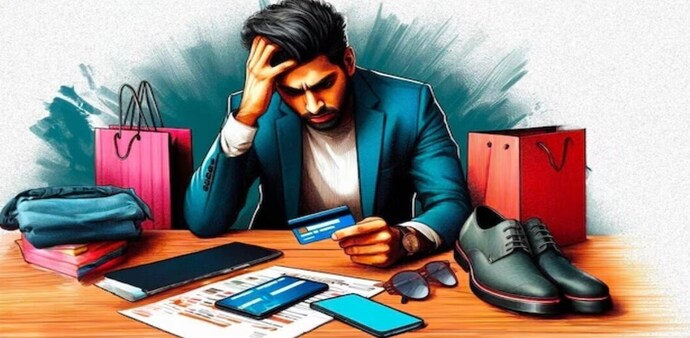
The post pointed out that everywhere — from phones and cars to vacations and furniture — lifestyles are increasingly funded by monthly instalments. While this may appear as financial progress, the post argues it is instead creating a “trap” that leaves families vulnerable.
- Sep 1, 2025,
- Updated Sep 1, 2025 2:26 PM IST
A thought-provoking post on Reddit has sparked debate over whether India’s growing dependence on EMIs is quietly eroding the financial stability of the middle class.
The user pointed out that everywhere — from phones and cars to vacations and furniture — lifestyles are increasingly funded by monthly installments. While this may appear as financial progress, the post argues it is instead creating a “trap” that leaves families vulnerable.
Backing the concern with data, the Redditor cited a PwC-Perfios survey showing that 33-45% of salaried Indians’ income goes into EMI repayments. At the same time, India’s household savings have plunged to a 47-year low, just 5.3% of GDP.
Other red flags include:
- 45% of middle-class families now have debt-service ratios above 40% of income.
- 43% of smartphones among youth are bought on EMI, often with hidden charges.
- Personal loan delinquency rates (90+ days overdue) have already crossed 5%.
According to the post, this trend encourages people to buy “wants” over “needs.” A ₹50,000 smartphone feels affordable at ₹2,500 a month, but the cumulative debt leaves households with no cushion for emergencies like job loss or illness.
“Banks and corporates profit, but families carry the long-term burden,” the Redditor wrote, warning that the culture of easy EMIs is “creating a false image of prosperity while hollowing out financial stability.”
The post quickly gathered traction, drawing comments from users who linked the problem to stagnant incomes, inflation and changing cultural values.
One user wrote: “It's the new normal I think. Income is the main setback as it did not grow much… My uncle in state police earns more than his father did, but while the earlier generation could buy land, build a home, and marry off children with savings, my uncle had to dip into his EPF just for his son’s education — and today even with his full EPF, he couldn’t afford the same kind of home.”
Another comment pointed to lifestyle changes: “India was traditionally a high-savings economy, with gold heirlooms and FDs. Thanks to western influence and FOMO in the last five years, the same India has turned into a lending-oriented economy. I see people earning ₹20k-30k a month buying iPhones and merchandise worth lakhs. Easy access to credit is ruining our financial stability.”
A third user took a global perspective: “India's 41.9% household debt-to-GDP is still below the 46.6% average for emerging economies. We're not uniquely reckless, but the trajectory is concerning. The problem is that we've normalized borrowing for consumption instead of investment. Housing loans are just 29% of household debt — the rest is going into depreciating assets or pure consumption. Stagnant real income growth is forcing people to borrow just to maintain purchasing power.”
A thought-provoking post on Reddit has sparked debate over whether India’s growing dependence on EMIs is quietly eroding the financial stability of the middle class.
The user pointed out that everywhere — from phones and cars to vacations and furniture — lifestyles are increasingly funded by monthly installments. While this may appear as financial progress, the post argues it is instead creating a “trap” that leaves families vulnerable.
Backing the concern with data, the Redditor cited a PwC-Perfios survey showing that 33-45% of salaried Indians’ income goes into EMI repayments. At the same time, India’s household savings have plunged to a 47-year low, just 5.3% of GDP.
Other red flags include:
- 45% of middle-class families now have debt-service ratios above 40% of income.
- 43% of smartphones among youth are bought on EMI, often with hidden charges.
- Personal loan delinquency rates (90+ days overdue) have already crossed 5%.
According to the post, this trend encourages people to buy “wants” over “needs.” A ₹50,000 smartphone feels affordable at ₹2,500 a month, but the cumulative debt leaves households with no cushion for emergencies like job loss or illness.
“Banks and corporates profit, but families carry the long-term burden,” the Redditor wrote, warning that the culture of easy EMIs is “creating a false image of prosperity while hollowing out financial stability.”
The post quickly gathered traction, drawing comments from users who linked the problem to stagnant incomes, inflation and changing cultural values.
One user wrote: “It's the new normal I think. Income is the main setback as it did not grow much… My uncle in state police earns more than his father did, but while the earlier generation could buy land, build a home, and marry off children with savings, my uncle had to dip into his EPF just for his son’s education — and today even with his full EPF, he couldn’t afford the same kind of home.”
Another comment pointed to lifestyle changes: “India was traditionally a high-savings economy, with gold heirlooms and FDs. Thanks to western influence and FOMO in the last five years, the same India has turned into a lending-oriented economy. I see people earning ₹20k-30k a month buying iPhones and merchandise worth lakhs. Easy access to credit is ruining our financial stability.”
A third user took a global perspective: “India's 41.9% household debt-to-GDP is still below the 46.6% average for emerging economies. We're not uniquely reckless, but the trajectory is concerning. The problem is that we've normalized borrowing for consumption instead of investment. Housing loans are just 29% of household debt — the rest is going into depreciating assets or pure consumption. Stagnant real income growth is forcing people to borrow just to maintain purchasing power.”