
This SBI manager's ₹35 lakh salary is going viral. Here's what actually lands in the bank account
The person who shared the document explained that the figure mentioned in the Form 16 should not be interpreted as the employee's regular annual salary.
- Jul 7, 2026,
- Updated Jul 7, 2026 6:29 PM IST
The difference between gross salary and take-home pay has come under the spotlight after an SBI manager's Form 16 showing annual earnings of ₹35.24 lakh went viral, leaving many social media users surprised by the numbers.
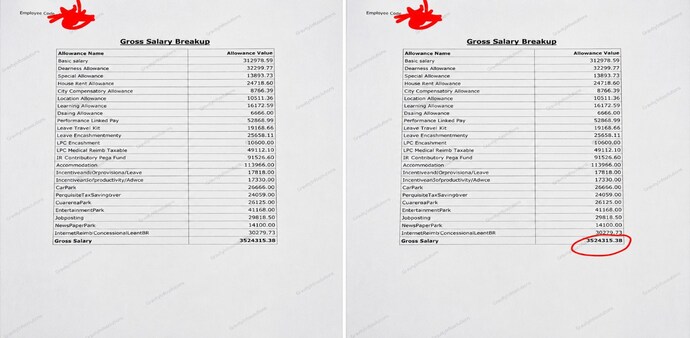
The discussion began after an X user shared the Form 16 of a State Bank of India (SBI) Scale 3 Manager, claiming the employee joined the bank as a Probationary Officer (PO) eight years ago and has since been promoted. According to the Form 16 for FY 2025-26, the manager's gross annual salary stood at ₹35,24,315.88.
Don't Miss: Is your PAN still linked to Aadhaar? Ignoring this check could block your income tax refund
"People often say that SBI employees have a "settled life" but this Scale 3 Manager's salary slip might completely change your perspective," the post read.
Gross salary includes one-time benefits
The person who shared the document explained that the figure mentioned in the Form 16 should not be interpreted as the employee's regular annual salary. According to the post, the gross amount includes one-time or occasional payments that are not part of the monthly salary.
"At first glance, the figure looks huge But the reality is quite different. The gross salary includes LFC Encashment and Leave Encashment, which are one time benefits received only once every four years, not part of the regular monthly salary," the post added.
The post noted that Leave Fare Concession (LFC) encashment and leave encashment are paid only once every four years, which significantly increases the gross annual salary reflected in the tax document.
Why the take-home salary is lower
The post further said that the employee's monthly income is reduced by several deductions before the salary is credited to the bank account.
These include income tax, contributions to the National Pension System (NPS) and Employees' Provident Fund (EPF), as well as repayments for a home loan, car loan and two-wheeler loan.
As a result, the amount the employee receives every month is considerably lower than the ₹35.24 lakh gross annual salary shown in the Form 16, fuelling a wider discussion online about the gap between gross compensation and actual take-home pay.
The difference between gross salary and take-home pay has come under the spotlight after an SBI manager's Form 16 showing annual earnings of ₹35.24 lakh went viral, leaving many social media users surprised by the numbers.
The discussion began after an X user shared the Form 16 of a State Bank of India (SBI) Scale 3 Manager, claiming the employee joined the bank as a Probationary Officer (PO) eight years ago and has since been promoted. According to the Form 16 for FY 2025-26, the manager's gross annual salary stood at ₹35,24,315.88.
Don't Miss: Is your PAN still linked to Aadhaar? Ignoring this check could block your income tax refund
"People often say that SBI employees have a "settled life" but this Scale 3 Manager's salary slip might completely change your perspective," the post read.
Gross salary includes one-time benefits
The person who shared the document explained that the figure mentioned in the Form 16 should not be interpreted as the employee's regular annual salary. According to the post, the gross amount includes one-time or occasional payments that are not part of the monthly salary.
"At first glance, the figure looks huge But the reality is quite different. The gross salary includes LFC Encashment and Leave Encashment, which are one time benefits received only once every four years, not part of the regular monthly salary," the post added.
The post noted that Leave Fare Concession (LFC) encashment and leave encashment are paid only once every four years, which significantly increases the gross annual salary reflected in the tax document.
Why the take-home salary is lower
The post further said that the employee's monthly income is reduced by several deductions before the salary is credited to the bank account.
These include income tax, contributions to the National Pension System (NPS) and Employees' Provident Fund (EPF), as well as repayments for a home loan, car loan and two-wheeler loan.
As a result, the amount the employee receives every month is considerably lower than the ₹35.24 lakh gross annual salary shown in the Form 16, fuelling a wider discussion online about the gap between gross compensation and actual take-home pay.