
Explainer: Can the Income Tax Department access your e-mails, social media from April 1, 2026?
According to PIB Fact Check, the claim misrepresents the scope of the law. The government has emphasised that there is no blanket or routine authority for the Income Tax Department to monitor or access private digital accounts of taxpayers.
- Dec 22, 2025,
- Updated Dec 22, 2025 6:35 PM IST
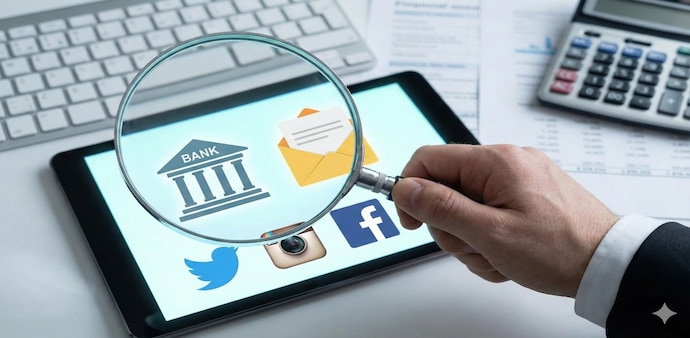
A claim circulating on social media has sparked concern among taxpayers, suggesting that from April 1, 2026, the Income Tax Department will gain sweeping powers to access personal digital platforms such as emails and social media accounts to curb tax evasion. The government’s fact-checking arm, PIB Fact Check, has flagged this claim as misleading and issued a detailed clarification.
What is the claim?
A post by @IndianTechGuide alleged that under new income tax provisions, authorities would be able to access individuals’ private digital spaces — including emails and social media — starting April 1, 2026, as part of efforts to tackle tax evasion.
According to PIB Fact Check, the claim misrepresents the scope of the law. The government has emphasised that there is no blanket or routine authority for the Income Tax Department to monitor or access private digital accounts of taxpayers.
What does Section 247 of the Income Tax Act, 2025 actually say?
The provisions under Section 247 are strictly limited to search and survey operations. These powers come into play only when a taxpayer is subject to a formal search based on credible evidence of significant tax evasion.
In other words, digital access is not automatic and cannot be exercised arbitrarily.
Who is affected by these provisions?
- Not applicable to regular taxpayers: Law-abiding citizens and salaried individuals are not the target.
- Not for routine cases: The powers cannot be used for routine information collection, data processing, or even during scrutiny assessments.
- Targeted use only: These measures are designed to tackle black money and large-scale tax evasion, and only during authorised search and survey operations.
Are these powers new?
No. PIB Fact Check has pointed out that the authority to seize documents and evidence during search and survey operations has existed since the Income Tax Act of 1961. The newer law does not introduce unprecedented surveillance powers over taxpayers’ digital lives.
There is no provision that allows the Income Tax Department to freely access emails, social media accounts, or digital platforms of citizens from April 1, 2026. Any such access is limited, conditional, and legally bound, applicable only during authorised search and survey operations backed by evidence of serious tax evasion.
A claim circulating on social media has sparked concern among taxpayers, suggesting that from April 1, 2026, the Income Tax Department will gain sweeping powers to access personal digital platforms such as emails and social media accounts to curb tax evasion. The government’s fact-checking arm, PIB Fact Check, has flagged this claim as misleading and issued a detailed clarification.
What is the claim?
A post by @IndianTechGuide alleged that under new income tax provisions, authorities would be able to access individuals’ private digital spaces — including emails and social media — starting April 1, 2026, as part of efforts to tackle tax evasion.
According to PIB Fact Check, the claim misrepresents the scope of the law. The government has emphasised that there is no blanket or routine authority for the Income Tax Department to monitor or access private digital accounts of taxpayers.
What does Section 247 of the Income Tax Act, 2025 actually say?
The provisions under Section 247 are strictly limited to search and survey operations. These powers come into play only when a taxpayer is subject to a formal search based on credible evidence of significant tax evasion.
In other words, digital access is not automatic and cannot be exercised arbitrarily.
Who is affected by these provisions?
- Not applicable to regular taxpayers: Law-abiding citizens and salaried individuals are not the target.
- Not for routine cases: The powers cannot be used for routine information collection, data processing, or even during scrutiny assessments.
- Targeted use only: These measures are designed to tackle black money and large-scale tax evasion, and only during authorised search and survey operations.
Are these powers new?
No. PIB Fact Check has pointed out that the authority to seize documents and evidence during search and survey operations has existed since the Income Tax Act of 1961. The newer law does not introduce unprecedented surveillance powers over taxpayers’ digital lives.
There is no provision that allows the Income Tax Department to freely access emails, social media accounts, or digital platforms of citizens from April 1, 2026. Any such access is limited, conditional, and legally bound, applicable only during authorised search and survey operations backed by evidence of serious tax evasion.