
GST 2.0: School supplies gets cheaper, JEE/NEET, private coaching to draw 18% rate
GST 2.0 brings big changes for education in India, making school fees and supplies more affordable while keeping coaching and online courses under the 18% GST slab. Parents, students, and institutions must now understand how these reforms affect costs across schools, colleges, and skill training.
- Sep 5, 2025,
- Updated Sep 5, 2025 4:30 PM IST
The government’s new GST 2.0 system promises to simplify India’s tax structure, and for the education sector, it brings a mix of good news and continued challenges. Parents and students will benefit from cheaper supplies and tax-free school fees, but families spending on coaching classes and online courses will still face high costs under the 18% slab. From September 22, 2025, India’s five-tier GST system will largely shrink to two rates — 5% and 18%. Essentials for common man remain tax-free, while ultra-luxury items and sin goods will move to a steep 40%. The simplified structure aims to reduce confusion, streamline compliance, and ensure greater clarity in taxation.
School, college fees
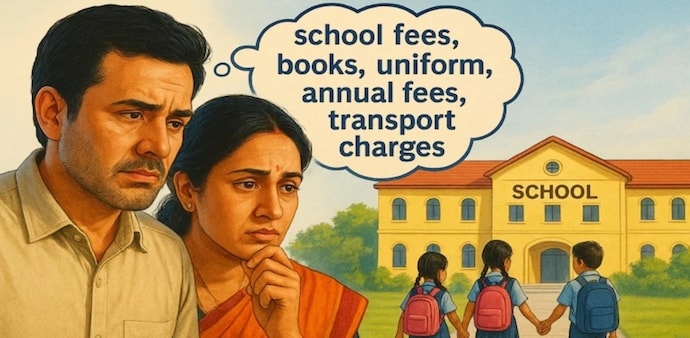
The biggest relief for parents is that school and college fees remain outside the GST net. This includes all government and private schools, from pre-school to Class 12, as well as university degree programmes. The exemption also covers student transport, mid-day meals, and vocational training programmes recognised by the NSDC. Parents will not see GST added to admission or monthly fees, reinforcing the government’s commitment to keeping formal education affordable and accessible.
School supplies
From now on, maps and hydrographic or similar charts of all kinds, including atlases, wall maps, topographical plans, and globes; pencil sharpeners; pencils (including propelling or sliding pencils); crayons; pastels; drawing charcoals and tailor’s chalk; erasers; exercise books; graph books; laboratory notebooks; and notebooks are tax free. Items like notebooks, pencils, erasers, maps, globes, and educational charts earlier carried 12% GST. Geometry boxes and mathematical instruments have dropped to 5%. For a family spending Rs 2,000 a year on stationery, this translates into annual savings of around Rs 240. Lower input costs could also help schools manage their overall expenses.
Coaching and online courses
Despite these positives, commercial coaching and online learning remain heavily taxed. Private tuition centres, JEE and NEET coaching classes, edtech platforms, and test-preparation programmes continue under the 18% GST slab. For example, a Rs 50,000 coaching course still carries an additional Rs 9,000 in tax, a significant burden for middle-class families. Online certification and executive education courses are also unaffected by exemptions.
Cost pressures on schools
While schools themselves do not charge GST on fees, they must pay taxes on services like IT, security, cleaning, and maintenance—often at 18%. Since schools cannot claim input credits (as their main service is tax-free), rising operational costs may eventually lead to small fee increases. On the other hand, savings on supplies and educational materials could help balance some of this impact.
Vocational training
A major positive is the complete exemption restored for NSDC-recognised skill development courses. These programmes are now tax-free, ensuring affordable access to vocational training for students across income groups.
The government’s new GST 2.0 system promises to simplify India’s tax structure, and for the education sector, it brings a mix of good news and continued challenges. Parents and students will benefit from cheaper supplies and tax-free school fees, but families spending on coaching classes and online courses will still face high costs under the 18% slab. From September 22, 2025, India’s five-tier GST system will largely shrink to two rates — 5% and 18%. Essentials for common man remain tax-free, while ultra-luxury items and sin goods will move to a steep 40%. The simplified structure aims to reduce confusion, streamline compliance, and ensure greater clarity in taxation.
School, college fees
The biggest relief for parents is that school and college fees remain outside the GST net. This includes all government and private schools, from pre-school to Class 12, as well as university degree programmes. The exemption also covers student transport, mid-day meals, and vocational training programmes recognised by the NSDC. Parents will not see GST added to admission or monthly fees, reinforcing the government’s commitment to keeping formal education affordable and accessible.
School supplies
From now on, maps and hydrographic or similar charts of all kinds, including atlases, wall maps, topographical plans, and globes; pencil sharpeners; pencils (including propelling or sliding pencils); crayons; pastels; drawing charcoals and tailor’s chalk; erasers; exercise books; graph books; laboratory notebooks; and notebooks are tax free. Items like notebooks, pencils, erasers, maps, globes, and educational charts earlier carried 12% GST. Geometry boxes and mathematical instruments have dropped to 5%. For a family spending Rs 2,000 a year on stationery, this translates into annual savings of around Rs 240. Lower input costs could also help schools manage their overall expenses.
Coaching and online courses
Despite these positives, commercial coaching and online learning remain heavily taxed. Private tuition centres, JEE and NEET coaching classes, edtech platforms, and test-preparation programmes continue under the 18% GST slab. For example, a Rs 50,000 coaching course still carries an additional Rs 9,000 in tax, a significant burden for middle-class families. Online certification and executive education courses are also unaffected by exemptions.
Cost pressures on schools
While schools themselves do not charge GST on fees, they must pay taxes on services like IT, security, cleaning, and maintenance—often at 18%. Since schools cannot claim input credits (as their main service is tax-free), rising operational costs may eventually lead to small fee increases. On the other hand, savings on supplies and educational materials could help balance some of this impact.
Vocational training
A major positive is the complete exemption restored for NSDC-recognised skill development courses. These programmes are now tax-free, ensuring affordable access to vocational training for students across income groups.